

At the bottom of this page: Latest news at this hour
Pentagon holds up Patriot missiles for Ukraine; EU presents 22nd sanctions package against Russia; Russia to spend $576 million on ferries to Kaliningrad.
Editor’s note:
Love in wartime is complicated enough. While many couples are separated by the war, others meet and get married. And sometimes love is used to achieve military objectives.
For soldiers on both sides, a sweet message from a stranger can be a chance at connection, or the first step of an intelligence operation.
The full story is available to paid subscribers, so start with a free subscription to get our reporting from Kyiv in your inbox, and upgrade anytime to read every story in full.
OUR LEAD STORY:
KYIV, Ukraine — In 2024, a Russian military engineer loved showing off his creations. He designed anti-drone weapon turrets for his military unit.
“Who do you work with? I imagine you can’t pull all of this off on your own,” a message popped up on his phone.
He liked talking to this person. They showed interest in his work and knew how to make him feel appreciated.
“Here’s my latest creation. I’m showing it only to you,” the engineer wrote, sending a photo in the chat.
Soon, he shared much more than that: pictures of colleagues, his supervisor, and how his unit was preparing for a holiday celebration.
“We’ve decided not to go anywhere. We’ll be staying where we always do. It’s sad you can’t come visit us there. I would have invited you, too,” the engineer texted. This would be one of his last messages.
If Nvidia’s CEO ever served in the Ukrainian military, he’d quickly learn one rule: “Any woman who shows an interest in you could be a spy.” Since the beginning of Russia’s full-scale invasion, both Ukraine and Russia have increasingly used honey traps and dating apps to build espionage networks and gather military intelligence. In recent months alone, for example, Ukraine has seen several high-profile cases in which the FSB recruited Ukrainian women to help carry out assassinations of Ukrainian military personnel, when they thought they were going for a casual date.
Intimacy and romance have always made people vulnerable. But in wartime, it can become a security breach or even a death sentence for entire units
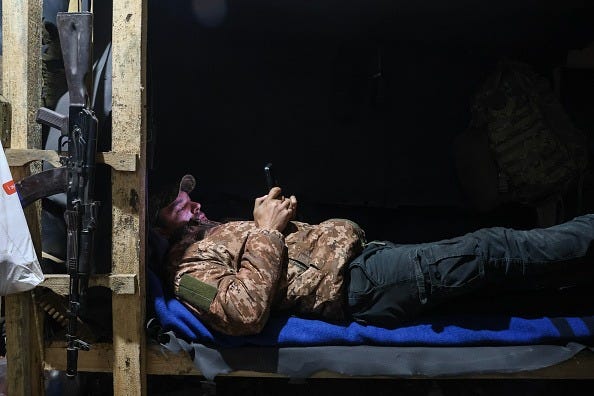
“Oh, who do we have here? Is that Olichka or Tanichka?” a fellow soldier jokes, calling Serhii* affectionate female nicknames when he approaches.
Serhii laughs. Not all his comrades know that he assumes different identities to extract information from unsuspecting Russians. He had served a few years, before starting his own business.
Serhii, though, didn’t set out to become Tanichka or Olichka deliberately. It happened almost by accident, when the Ukrainian military realised that publicly available data about the Russian army was sometimes no longer enough. They needed to verify what they already knew or obtain additional details.
“Most people serving in the Russian military are men. And the easiest way to get them talking is to pose as a woman they might find attractive,” Serhii said.
After the paywall:
How a Ukrainian soldier learned to flirt like a woman;
How Russia uses dating apps to spy;
The personal toll of dating-app espionage.