


At the bottom of this page: Latest news at this hour
Ukraine attacks critical targets in Russia… Ukrainians in the U.S. might lose protection… African countries to return citizens Ukraine holds as POWs…

Editor’s note:
When news of a possible plague case in Siberia started spreading, our Kyiv team mostly shrugged. After years of living next to Russia, a secretive lab, a sudden death, and a flat official denial don’t sound shocking anymore.
That’s one of the side effects of life here — your sense of danger gets blurred.
If someone forwarded this to you, welcome. Subscribe for free to get more reports from Kyiv that land straight in your inbox.
OUR LEAD STORY:
KYIV, Ukraine – “There is quite possibly panic [in Russia] because even if something like that did happen, maybe they can’t hide it.”
For Andrii Aleksandrin, a person that deals with infections every day, one unconfirmed plague case reported in the media is not enough to stress about. Even if it’s something as dangerous as pneumonic plague.

A suspected plague outbreak occurred in Russia’s Irkutsk region in Siberia. 28-year-old Darya Shipilova, a researcher at a Russian anti-plague institute, was admitted to a hospital in the town of Shelekhov on September 29 due to severe pneumonia and died within the next 72 hours.
The woman allegedly broke a tube containing a pneumonic plague pathogen in a lab on September 25, according to Russian media.
Although Russian authorities officially denied that plague caused her death, approximately 200 people who were in contact with her were placed under medical observation — which immediately increased concerns regarding the incident. Although there have been media reports of a second anti-plague institute employee with pneumonia of undetermined cause, they haven’t been verified, and no new incidents have been reported.
On October 8, the quarantine measures in Irkutsk were reportedly lifted. Since Soviet times, Russia has tried to hide the real situation during similar outbreaks. Still deeply traumatized by the COVID-19 pandemic, the world fears that this may lead to the spread of disease.
Andrii Aleksandrin is a Ukrainian epidemiologist with more than 20 years of professional experience. He has first-hand experience dealing with many dangerous infections, including tuberculosis, rabies, leptospirosis and AIDS.
“An epidemiologist is the detective of healthcare,” Andrii said. The work is highly investigative, focusing on finding the cause of the disease. Epidemiologists also work within the healthcare system, helping ensure society survives any disease outbreak.
Today, Andrii is very active in the Ukrainian public health sector. He is the founder and CEO of the National Expert Group of Infection Control (NEGIC), a Ukrainian infection prevention consulting company.
For epidemiologists, the first step in tackling any outbreak is establishing the type of infection that they’re dealing with.
Plague as it is medically defined is caused by the bacterium Yersinia pestis and is transmitted to humans by infected small mammals and fleas. Pneumonic plague is the most virulent type; it can spread among humans through respiratory droplets. Its symptoms appear quickly and include shortness of breath and coughing, sometimes with blood.
“A person develops a very high fever, chills, and shortness of breath…. The illness can progress to respiratory failure, sepsis, and shock,” said Andrii.
Pneumonic plague can be fatal unless treated with antibiotics within the first 24 hours after the first symptoms appear.
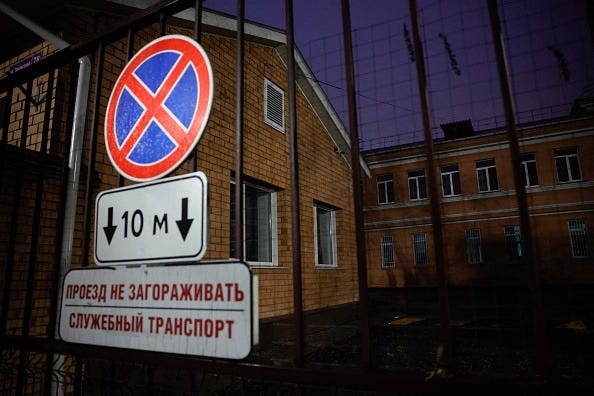
Russia’s Siberia region has been historically used to study dangerous pathogens like the different types of plagues that can occur naturally in wild animals there. The Irkutsk Anti-Plague Research Institute, where the supposed outbreak occurred, was established in 1934 as a Soviet scientific body for plague control. It also worked on other dangerous diseases like cholera and anthrax.
Throughout Soviet history there were plenty of plague or other highly lethal outbreaks of different scales. But in all cases, the USSR government kept the real state of things top secret, even from epidemiologists tasked with tackling the outbreaks. Soviet citizens were often simply misinformed about whether the catastrophe was big or small.
For example, in 1979 an anthrax outbreak in Sverdlovsk (now Yekaterinburg) was caused by the release of spores from a military biological research facility in a restricted military compound. For years, Soviet authorities concealed the outbreak’s true cause, claiming it was the result of contaminated meat sold at a local market. Dozens of people ultimately died from the disease.
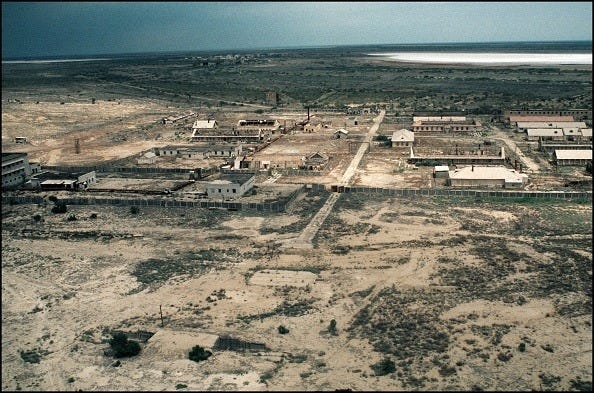
The practice of hiding the real causes and consequences of similar outbreaks may still be deeply ingrained in modern Russia, as a post-Soviet heritage.
This is something Andrii came across himself even in Ukraine in the early 2000’s. “Perhaps it also goes back to Soviet times.… The sanitary and epidemiological service was used to cover everything up,” he recalled.
Back then Andrii worked for the sanitary and epidemiological service in the Luhansk region, and he witnessed a major hepatitis A outbreak.
Thousands of people fell ill, he recalled, due to problems with the centralized water supply. Epidemiologists and the military set up a field hospital and organized water deliveries, while infectious disease specialists and general practitioners treated large numbers of patients. However, Andrii says official Health Ministry figures for the number of victims were significantly lower than the actual.
Andrii has no doubt the Russian authorities might be covering up the real situation. He especially does not believe the narrative suggested by the Russian media that the researcher in the Irkutsk region died because of the broken tube.
The last time Andrii personally used a glass test tube in his work was about 10 years ago. This was not even in a town but in a rural area, where more modern equipment is often unavailable. Instead, plastic Vacutainer tubes are more commonly used for dangerous infectious diseases, especially when a live strain is involved.
“I’m surprised by all this chatter in the Russian media suggesting that they’re still playing around with these pathogens. They’re talking about a young female lab technician, implying that she lacks experience,” Andrii believes. “But specialists without the necessary experience aren’t allowed to work with live [bacteria] cultures, especially those of particularly dangerous infectious diseases.”
The initial version of the circumstances of the incident is denied even by the mother of the researcher who died, who says it’s impossible to simply break the tube with plague as they are usually well-protected.
The World Health Organization has asked Moscow for more details on the potential plague incident on October 7. Russia’s neighbor Kazakhstan, along with other Central Asian nations Kyrgyzstan, Tajikistan and Uzbekistan, announced health checks at border crossings. Armenia, another of Russia’s neighbors, set up a special task force to coordinate measures to prevent the infection from spreading into the country.
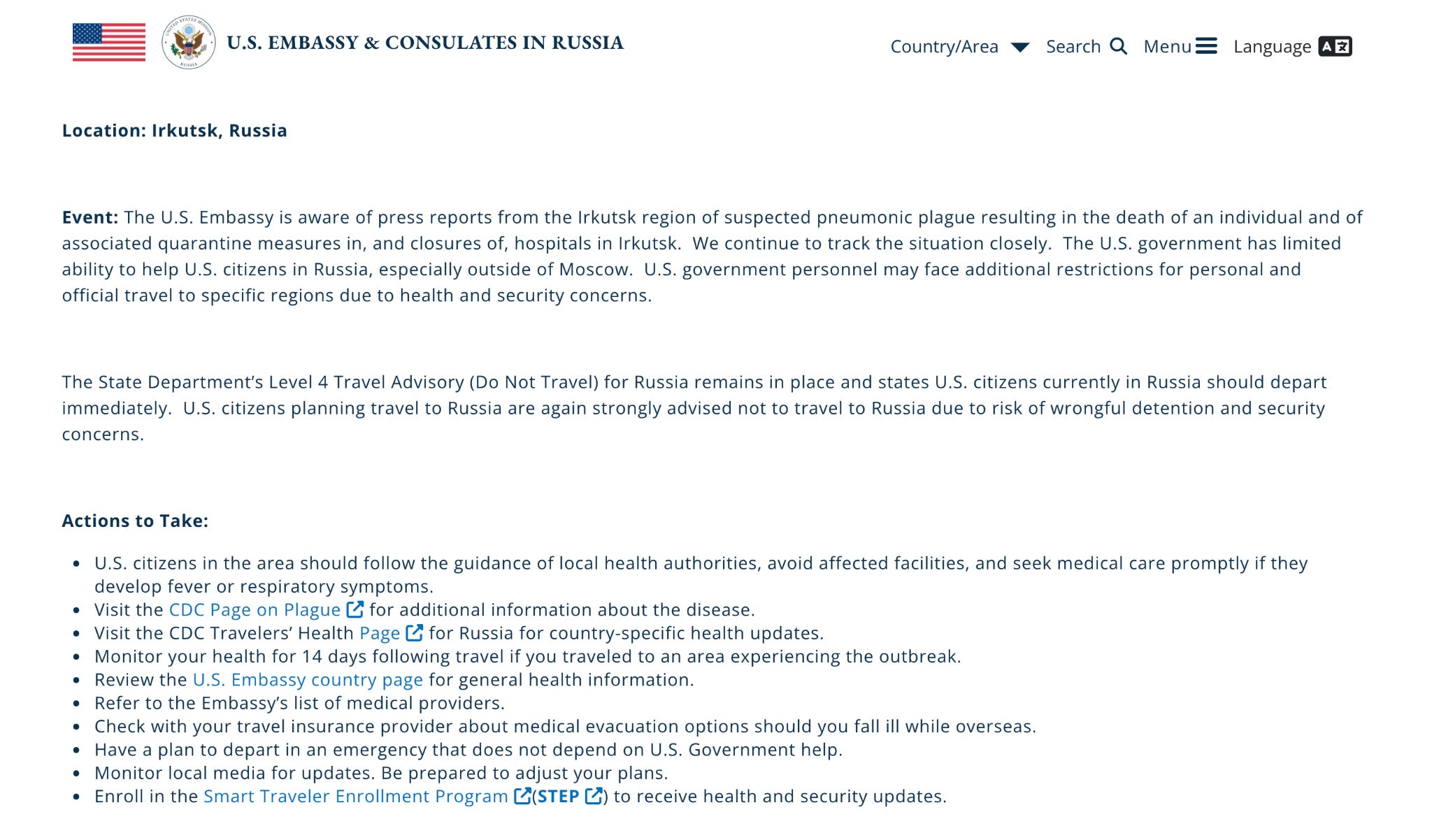
Meanwhile, the U.S. Embassy in Moscow again urged U.S. citizens to leave Russia and strongly advised against traveling there.
Since Russian authorities had already used numerous civilian research institutions for secret military-biological programs during the Soviet era, it has also provoked some thoughts about whether the death of the researcher was related to the development of a biological weapon.
On October 8, Donald Trump said U.S. officials don’t believe this speculation. “We’re going to find out soon enough, but we don’t think so,” he said.
Although Russia officially states that it abides by the Biological Weapons Convention, there are signs that it has its own biological warfare program.
In its 2025 Arms Control Treaty Compliance Report, the U.S. Department of State asserts that Russia continues to develop the bioweapons program it inherited from the Soviet Union. In 2024, The Washington Post reported that Russia was modernizing its Soviet-era research center for biological weapons, Sergiev Posad-6, near Moscow. The renovated and newly built buildings resemble a high-containment biological facility. Another biolab complex was reportedly built in Russia’s Tver region.
Plague has been used as a biological weapon before. During World War II, the Japanese dispersed disease-carrying fleas in China. During the Cold War, the Soviet Union researched using plague in aerosol form as a bioweapon. The WHO investigated this scenario and concluded that if 50 kilograms of Yersinia pestis were dispersed over a city with a population of 5 million, 150,000 people would contract the plague, and 36,000 of them would die.
“Biological weapons have the viable characteristics to kill a huge city like Kyiv in just a single working day…In my opinion, it is a hundred percent worse than nuclear weapons,” Andrii said.
Andrii doesn’t believe a major pneumonic plague epidemic or pandemic is possible in the modern world. Antibiotics can now cure it in standard pharmacies if it’s identified in time. Moreover, limited plague outbreaks still happen in different parts of the world, but according to him they are diagnosed pretty quickly and “in a week everyone forgets about it.”
“In the Middle Ages, this [major epidemic] was possible because there were no diagnostic methods. There were no antibiotics, and naturally, any treatment for the plague was simply in vain,” believes Andrii.
To an experienced professional like Andrii, even the deadliest plagues aren’t scary, since humanity already knows how to deal with them.
“Our biggest threat is [national healthcare] management’s irresponsibility. This is a big problem for our society. But everything else, we will beat, for sure.”
Interested in reading more stories about Russia’s illegal warfare practices? Take a look at these:
How the Russians could make Chornobyl deadly again by Oleksandra Poda.
Ukraine’s new Ecocide war crime theory by Mariana Lastovyria, Myroslava Tanska-Vikulova, Anastasiia Kryvoruchenko and Tim Mak.
Russia’s increasing illegal chemical weapons usage in Ukraine by Tim Mak, Alessandra Hay and Oksana Ostapchuk.
Editor’s Note:
When news of a possible plague case in Siberia started spreading, our Kyiv team mostly shrugged. After years of living next to Russia, a secretive lab, a sudden death, and a flat official denial don’t sound shocking anymore.
That’s one of the side effects of life here — your sense of danger gets blurred.
You make it possible for us to chase stories like this one, the kind that take time, trust, and sources willing to speak. Support our team!
THE LATEST NEWS AT THIS HOUR:
By: Oleksandra Khelemendyk
Good morning to readers; Kyiv remains in Ukrainian hands.
UKRAINE ATTACKS CRITICAL TARGETS IN RUSSIA: Ukrainian FP-1 deep strike drones have hit Russia’s largest oil refinery in Omsk, over 2,500 km away from Ukraine’s border. It supplies about 50 separate petroleum products, including jet fuel, lubricants, and the biggest share of Russia’s domestic gasoline output. As a result, lines formed at the gas stations. This is not the first attack on the oil refinery, with the previous successful strike launched on July 6.
Over the past two days, two data centers of Russia’s IT company Yandex in the Ryazan and Kaluga regions were also damaged. The strikes disrupted 38 of 70 Yandex Cloud services, social media, banking platforms, mobile operators, postal services, and the Russian Railways site. President Zelenskyy called the attacks a mirror response to Russia’s actions.
Still, Ukraine has to prepare for a harsh winter, as Russia plans to cut off major Ukrainian cities, such as Kyiv, Kharkiv, and Odesa, from their electricity, heating, and water supplies. It would need about 770 jet drones, 170 aerial bombs, and 75 ballistic missiles specifically to target power plants, power lines for energy imports from Europe, water pumping stations, and boiler rooms in densely populated areas.
UKRAINIANS IN THE U.S. MIGHT LOSE PROTECTION: Donald Trump’s administration may cancel temporary protection status for Ukrainian refugees in the U.S. and put over 100,000 people at risk of deportation.
If it is not prolonged by October 19, protection will expire automatically in 6 months, in mid-April. According to Politico, some lawmakers support this option ahead of the midterm elections to avoid a major political backlash from both anti-immigrant hardliners and those who oppose a mass deportation to a war zone.
AFRICAN COUNTRIES TO RETURN CITIZENS UKRAINE HOLDS AS POWs: The governments of two African nations are calling on Ukraine to repatriate their citizens who were illegally recruited to fight for Russia and captured as POWs.
Botswana is working to return one man, while Kenya wants the other five prisoners repatriated and asks to treat them as victims of international human trafficking rather than POWs.
According to Ukrainian estimates referred to by Bloomberg, Russia has recruited over 28,000 foreign fighters from 135 countries. At least 5,000 of them have been killed, and 213, excluding North Koreans, have been captured by the Ukrainian Armed Forces. 37 of them are nationals of African countries.
CAT OF CONFLICT:
Mariana’s parents sent her this picture of their cat Simba to lure her back home. In Kyiv, it’s not that easy to find a bottle of her favorite Coke Zero these days.

Stay safe out there!
Best,
Mariana, Mariana and Petro.
Excellent report. Thanks for the in depth look at Russia's plague event. trump puts so many innocent people in harm's way because he is so beholden to putin and is a repulsive racist.
The US has had its share of lab spills of deadly pathogens, e.g. [1]. There is no cause for complacency in any country.
The main concern here, I think, is that Russia is poorly-equipped to handle an epidemic. Certainly that was the case with Covid [2], and things cannot be better in a nation at war.
Compounding the risk is the tendency of Russia to lie. It's one thing if the lies are about battlefield deaths. But when the lies are about an epidemic, they are far more dangerous.
Thanks to the lying, the world cannot even trust that this is not a bioengineered pathogen that won't respond to antibiotic therapy. What a mess, all due to Russia's failure to transition to democracy.
1. https://kffhealthnews.org/public-health/lab-leak-biohazard-wastewater-book-excerpt-pandoras-gamble-alison-young/
2. https://www.csis.org/analysis/russias-response-covid-19