

At the bottom of this page: Latest news at this hour
Ukraine to purchase arms through NATO agency… Putin to resume peace talks with Ukraine and the U.S… Bulgaria refuses to fund arms for Ukraine…

Editor’s note:
You’re reading this because we have internet. For now.
In our Kyiv office, we have a backup — a Starlink terminal — for days when the power or the cables go down. But after watching Starlink get restricted for Ukraine’s military last week, we know a backup isn’t a guarantee. A day may come when there’s no plan B left.
Until then, we’ll keep writing, and we hope you’ll keep reading. Subscribe for free, and our reporting from Kyiv will land in your inbox, as long as the internet holds.
OUR LEAD STORY:
KYIV, Ukraine – In the morning, you find your phone clear from any notifications. You might shrug and carry on, but something immediately feels off. You pack your lunch in silence, as both Spotify and YouTube are dead.
The low howling of sirens startles you on your way to the rapid tram station, and your phone cannot tell you what’s coming. You gasp on the crisp autumn air, rushing to the shelter just in case there’s a ballistic missile alert.
After waiting out several loud explosions, you can still grab something for lunch. At a nearby store, the line seems endless as people are frantically searching their pockets for cash. No digital IDs and no payments via your banking app are available.
If Russia cut Kyiv off from the internet, many people would picture such an analogue nightmare, but not Artur Veles. After almost 20 years of working for various Ukrainian internet providers, he dismisses the worst-case scenario.
“The only thing we wouldn’t be able to deal with is a nuclear strike,” he joked.

Today, we largely rely on the web to work, purchase, socialize and relax. For Ukrainians, the internet is crucial during wartime for receiving state services, applying for aid, staying informed about aerial attacks, and reporting on enemy troops in areas under Russian occupation.
In late September, Russian drones targeted 8 data centers in Kyiv within a week, disrupting the signal for a dozen internet providers, a handful of leading TV channels, and a major online public broadcasting platform. As a result, about 100,000 consumers were cut off from internet in the Kyiv region. New reports about data center destruction keep emerging almost every day.
But two can play at this game. From October 8, Ukraine also started targeting Russia’s largest data centers after ceasing strikes on oil refineries due to pressure from the Trump Administration. Russians are facing difficulty ordering food, booking taxis online, accessing their bank accounts, instant payments, and even their electronic keys for luxury apartments.
As data centers become a new focus of modern warfare and a potential bargaining chip in political negotiations, this exposes the fragility of global infrastructure, largely dependent on the internet and telecommunications.
Artur knows better than most why the internet should be safe and sound. He has worked for multiple internet providers since 2008. With two degrees in industrial electronics and economics, it took a long time to find where he belonged and to learn the necessary skills. Now, he is sincerely passionate about telecommunications and takes pride in giving people access to the internet — something just as vital as electricity and water.
His company provides internet across the Kyiv region. In case of emergencies with the internet network, rapid response is key, Artur thinks. As the network operation center engineer, he is the first to know when something goes wrong.
“It takes some time to determine the cause: whether the power went out, a cable was severed, or the equipment itself failed,” Artur said. “Depending on the capabilities of the system administrators and network engineers, we can fix some issues on our own. If the cause is physical, we dispatch repair crews to fix it.”
The network can be damaged even without Russian missiles or drones — for example, if construction workers accidentally cut a cable, it might leave an entire neighborhood without internet, communication, and electricity.
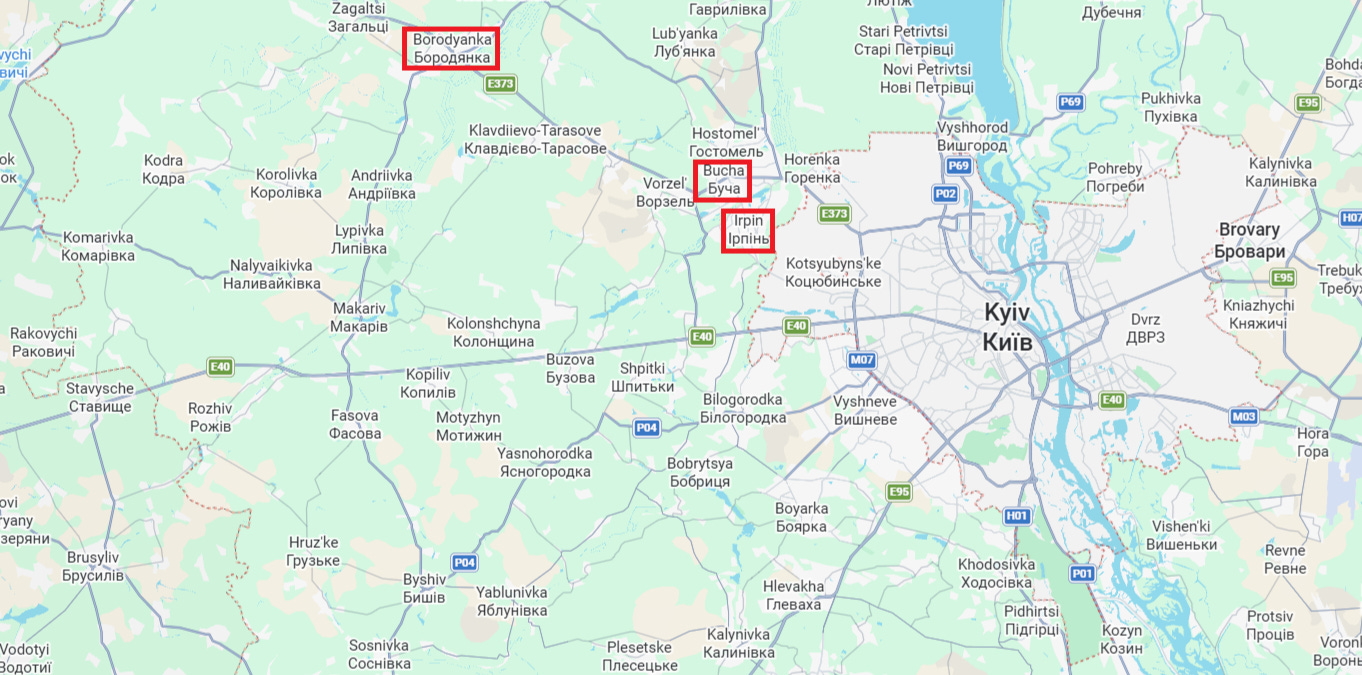
According to Artur, small towns, such as Irpin, Bucha, or Borodianka, are more vulnerable to physical damage from human errors or a Russian drone strike than large cities, where most cables run underground. These towns also used to host most network nodes owned by Artur’s provider, so the Russian occupation in the first weeks of full-scale war nearly ruined the business.
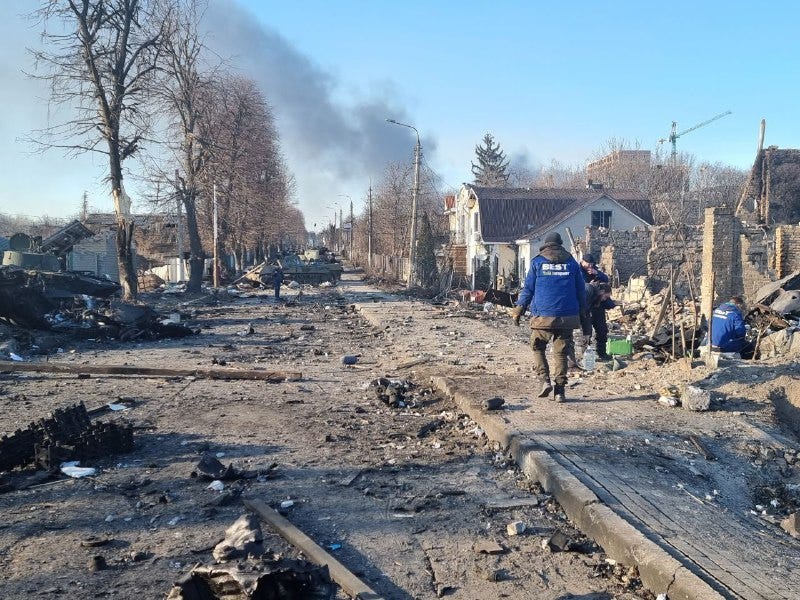
“Our network survived the occupation, during which we’ve lost approximately 80 percent of our clients and network infrastructure… Everything up to Borodianka, all the way to the Zhytomyr region, all of it was destroyed.”
After months of “titanic labor,” as Artur put it, the provider consolidated smaller server nodes into the larger ones and transferred them to secure spots like deep basements. This way, it’s much easier to ensure power supply and protect equipment from Russian strikes.
“We have several network cores, and if one goes down, it won’t bring down the entire network,” he said. “We have reserve servers, so if equipment fails at one of our data centers, it only takes about five minutes to switch to the backup. So there won’t be any major network outages.”
This flexible network structure is what makes some internet providers more resilient than others.
According to the Ministry of Digital Transformation, about 128 nationwide and regional providers could work with no electricity in 2025, delivering internet to over 96,000 households. Since then, this number has been growing steadily, as more and more companies are investing in backup power supplies. Still, most of them operate in large cities, such as Kyiv, Lviv, Odesa, and others, so smaller towns and villages are likely to lose the signal if the energy infrastructure is damaged.
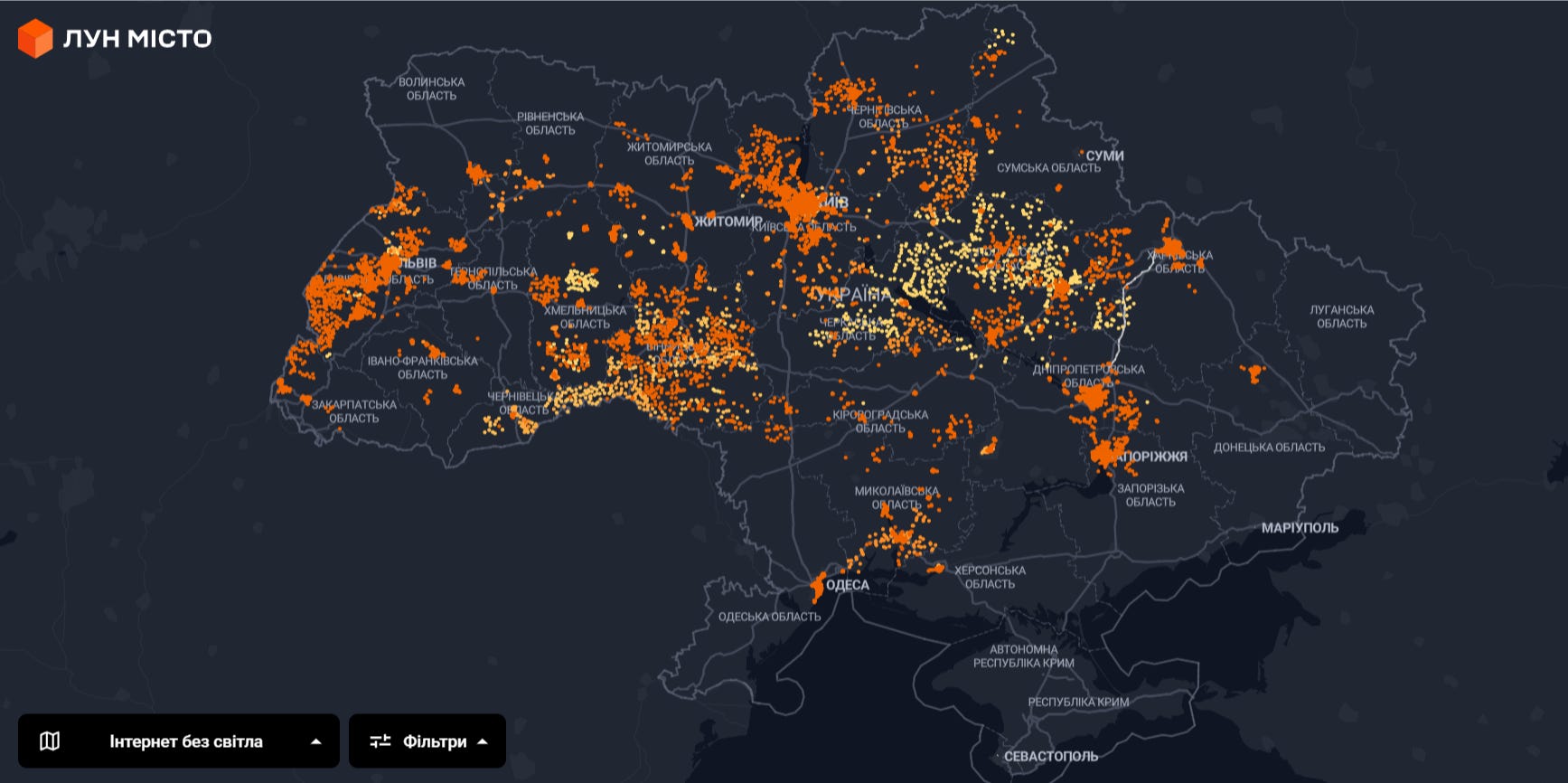
93 percent of Russian internet providers might be compelled to close under stricter licensing standards. Ukraine’s market is far more decentralized with a wide array of small local companies.
On October 11, Ukraine needed to target only Russia’s biggest cloud service provider Yandex, often dubbed ‘Russian Google,’ to disrupt over 80 online services, including several nationwide media channels, mobile network operator MegaFon, and the Russian Railways online platform.
Ukrainian online services are not completely immune to disruptions, either. Prime Minister Serhii Koretskyi stated that the war poses a direct threat to all informational infrastructure of Ukraine.
In mid-September, several TV channels halted broadcasting after Russia damaged a data center of the provider Cosmonova in Kyiv. Also, major disruptions were reported in one of the largest banks, PrivatBank, and on the ‘digital state’ platform Diya, though the latter were attributed to maintenance operations.
According to Artur, some internet and communications operators that sustained recent Russian attacks lost their signal for half a day due to slower network renovation and greater reliance on old copper cables. As a result, they remain dependent on a centralized electricity supply, and their clients lose signal during every power cut.
Expanding the optical networks proved to be a relatively easy but effective solution to keep users online, Artur believes.
“This requires our customers to power only their own router at home. When all clients are connected via optical cables, this allows us to be independent of the building’s electrical power supply,” Artur said.
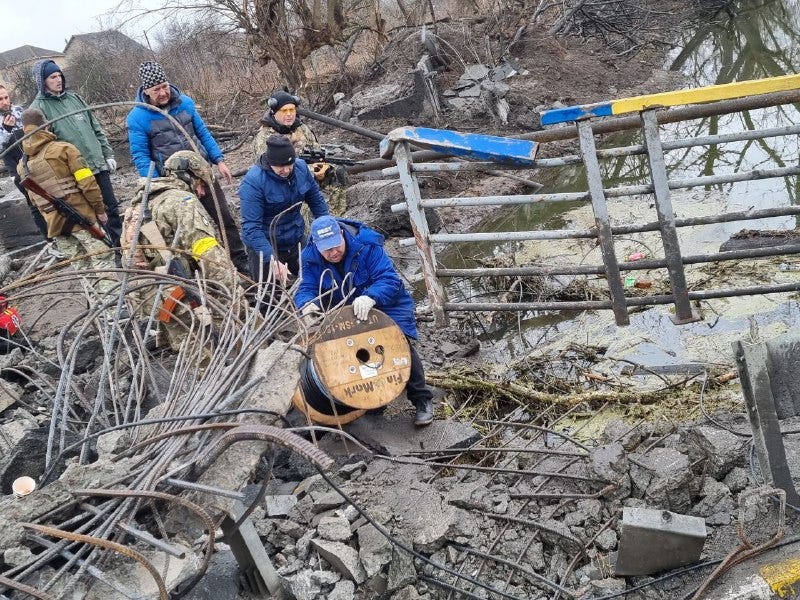
He uses this approach even at home. In autumn of 2023, when widespread blackouts first began, the wait for switching to optical cables dragged on for up to three months. Artur made sure that his building always stayed connected to the internet.
“[I] talked to my neighbors, and we put together a little crew of six people, six guys who got it all set up in literally one day. We connected about 30 apartments [to the internet with the optic fiber],” he recalled. “My neighbors even messaged me personally, saying, “Thanks — we don’t have electricity, but we do have internet.”
As an alternative, more and more Ukrainians are switching to Starlink services, even though recent signal restrictions showed this is not a panacea. In March, about 5 million users relied on satellites, and this number is expected to reach 12 million by 2027.
Even though a total internet blackout is less likely, attacks on data centers still might disrupt individual online services.
Besides ensuring internet connection, data centers also store information of businesses, state institutions, banks, or any other organizations that work with large volumes of data.
That’s why if a company or online platform itself doesn’t have a cloud backup and their data is damaged, it could lead to disruptions in certain services.
“When all data centers currently operating in Ukraine were built, no one expected… missile strikes. There could be problems with the providers,” Artur acknowledged. “But the provider only ensures connection between point A… and point B. Organizations like PrivatBank, Diya, and others have their own data centers, they have to take care of their own power supply, the security of their data, and their equipment.”
Between these adjustments, Artur believes Russia won’t be able to throw Ukraine’s diverse and flexible network back to the Stone Age, although Ukraine might face significant challenges and have local disruptions.
As someone who developed his skills from scratch to become a Microsoft Certified Engineer and switched to telecommunications, Artur sees constant growth as key to survival.
“You have to build up your capacity all the time. If you ever stop, you’ll get eaten by your competitors,” he said. This advice reaches far beyond his field.
A winter completely without internet doesn’t seem likely, but Ukraine is bracing for other hardships. To find out more, look to our earlier stories:
Why Ukraine’s heating is so vulnerable to Russian strikes by Mariana Lastovyria
U.S. poop parasite is familiar Ukraine nightmare by Oleksandra Poda
Blackout roulette in Ukraine’s elevators by Tania Novakivska
Editor’s Note:
Yesterday, we went live to talk about Trump’s Starlink restrictions and what they mean for Ukraine heading into winter. Thank you to everyone who joined us. If you missed it, you can watch the full recording below.
Trump’s Ukraine betrayal will get people killed
THE LATEST NEWS AT THIS HOUR:
By: Daria Shtonda
Good morning to readers; Kyiv remains in Ukrainian hands.
UKRAINE TO PURCHASE ARMS THROUGH NATO AGENCY: Ukraine is set to gain access to NATO’s centralized procurement agency to purchase arms, ammunition, and military equipment, the Financial Times reports.
Ukraine will join the NATO Support and Procurement Agency (NSPA), giving it an additional procurement channel beyond bilateral agreements. This could help speed up deliveries and reduce costs.
The move also creates new opportunities for Ukraine’s expanding defense sector to compete for NSPA contracts to supply military equipment.
PUTIN TO RESUME PEACE TALKS WITH UKRAINE AND THE U.S.: Following a meeting with U.S. special envoy Steve Witkoff, the Kremlin said the Russian President had agreed to resume U.S.-mediated peace talks with Ukraine next month.
The last round of U.S.-mediated peace talks took place in February this year.
Witkoff’s visit to Russia also resulted in the release of Stephen Hubbard, a retired U.S. schoolteacher who had been held in Russia. Trump personally asked Putin to release the American. Hubbard was captured in 2022 in Izyum, in Ukraine’s Kharkiv region, when Russian forces occupied the city during the early stages of the full-scale invasion.
BULGARIA REFUSES TO FUND ARMS FOR UKRAINE: Bulgaria’s Council of Ministers’ press office announced that the country will not fund lethal weapons for Ukraine through the European Peace Facility (EPF). The government of Bulgarian Prime Minister Rumen Radev said the decision reflects its support for Ukraine’s sovereignty and territorial integrity, while also opposing any prolonged military confrontation.
The Council of Ministers added that the country will continue to finance only non-lethal aid for Ukraine, with funding directed primarily toward Ukrainian regions with Bulgarian population.
Earlier this year, the country provided more than 6 million euros in assistance to Ukraine through the EPF, following a decision from the government of former Prime Minister Rosen Zhelyazkov.
CAT OF CONFLICT:
This kitten is tired of the blackouts.

Stay safe out there!
Best,
Oleksandra.

Thanks for an insightful look behind the telecommunications curtain. It was good to hear of Artur's specific work and help. It seems that almost every citizen is making some unique contribution to the defensive effort.
I hope that the US midterms bring a fundamental political and legislative realignment that can hopefully check and restrain the Trump administration over its final two years. The Ukrainian people deserve far more respect, loyalty, and support!