


At the bottom of this page: Latest news at this hour
Ukraine violated Starlink terms of use, Musk said; N Korea expands missile and drone production with Russian assistance; Black Sea security and the war in Ukraine take center stage in Bulgaria’s elections.
Editor’s note:
Germany is Ukraine’s biggest backer in Europe. Last year, it sent more military aid than any other European country, and it plans to send even more this year.
That may be exactly why Russia keeps targeting it with over 165 suspected sabotage cases this year. That’s why we’re keeping a close eye on Germany and Germany’s politics.
A full subscription lets you read this story to the end, along with everything else we publish from Kyiv. Or start with a free subscription and get our latest news straight to your inbox.
OUR LEAD STORY:
Today, 14 years after leaving far-right extremism behind, Axel Reitz is alarmed to see the radical ideas he once promoted finding a much larger audience in Germany’s political mainstream.
“I am just a normal guy with a not-so-normal past,” is how Reitz describes himself.
Once a neo-Nazi activist, Reitz now works with the German nonprofit Extremislos to warn young people away from the far-right movement he once belonged to. Speaking in schools and leading seminars about radicalization he’s open about his past, using his own experience to explain how people become drawn to extremism — and how they can find a way out.
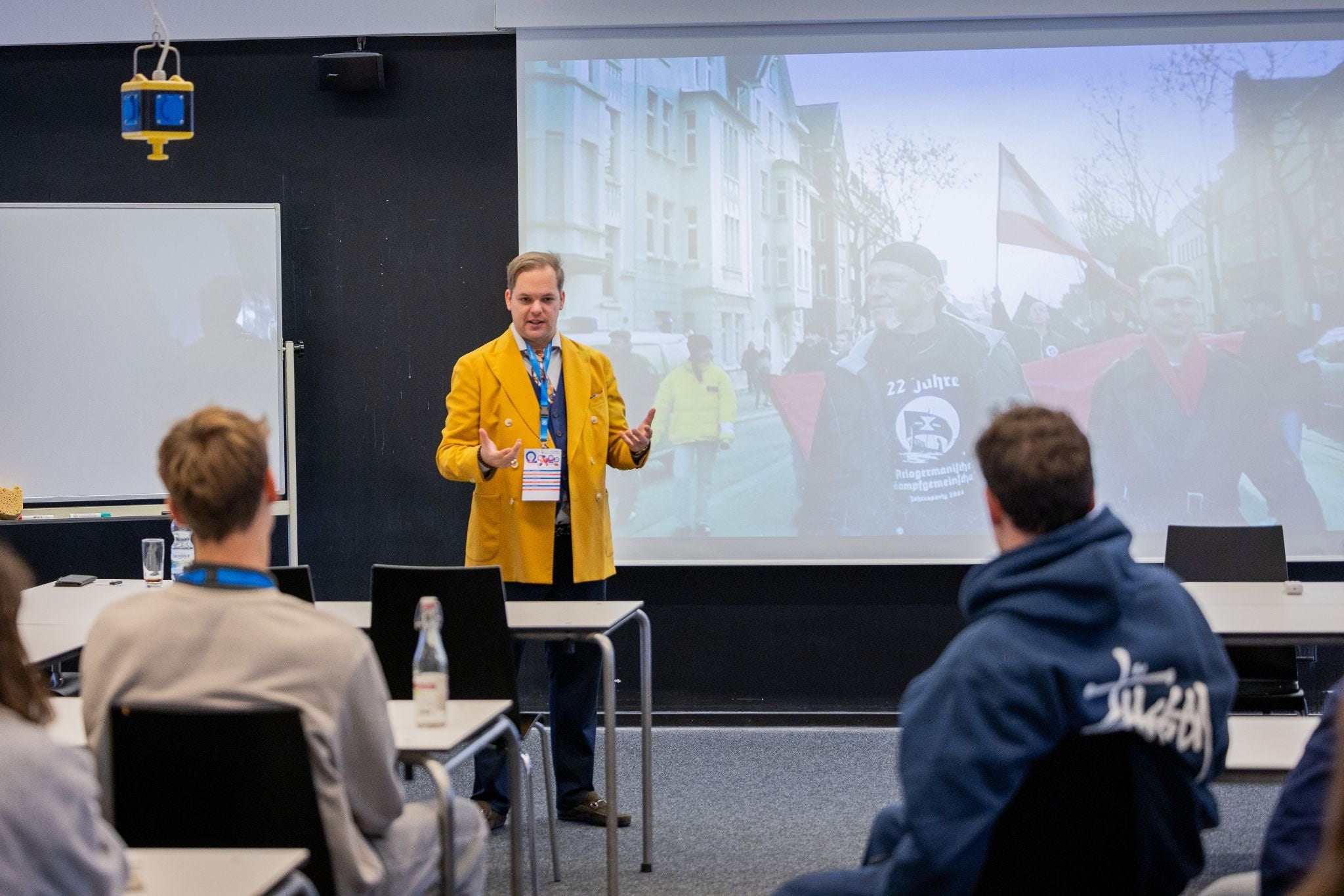
As the far-right Alternative for Germany party — or Alternative für Deutschland, AfD — gains support, Reitz feels a new urgency as he sees dangerous ideas gaining traction while public trust in the ruling party is eroding.
This September, the party won in two German state elections: in Saxony-Anhalt, situated in central Germany, by 25 percent more votes than its nearest opponent, and in Mecklenburg-Western Pomerania, in the north-east of Germany, by a narrow margin. AfD did not secure a majority vote and forming a government is still up in the air due its radical views. However, the party managed to secure speakership in Saxony-Anhalt parliament with the help of left populists. Its first victories are a worrying sign, especially as Chancellor Friedrich Merz’s Christian Democratic Union (CDU) loses ground.
AfD is notorious for its populism and a hard-line approach to immigration. It opposes Germany’s support for Ukraine and believes Germany should renew its ties with Russia. AfD’s victories also concern German security agencies: they fear the party may pass on sensitive information to Russians. Some members of AfD were accused of antisemitism, racism and even connections with neo-Nazis.
AfD’s rise in popularity highlights a broader issue: far-right, populist, and pro-Russian parties are gaining ground across Europe, making the future of the EU and further support for Ukraine uncertain. And the extremist ideologies that many Europeans believed were a thing of the past are making a comeback.
After the paywall:
What makes people join extremist organizations;
How Axel became entangled with neo-Nazis;
Why Axel decided to leave;
What Axel believes should be done to prevent AfD from gaining popularity.

