

Author’s note:
Telling stories of people with disabilities is always a challenge, but an exciting one for me! The characters of today’s issue showed me the true power of kindness and unwittingly helped me overcome a childhood fear.
If you enjoyed seeing the world through their eyes, too, support us with a subscription!
KYIV, Ukraine — I have never been to a place like this. A light drizzle and occasional gusts of wind get right to my bones in my thin jacket, but all I can think of is, “How do I approach people here?”
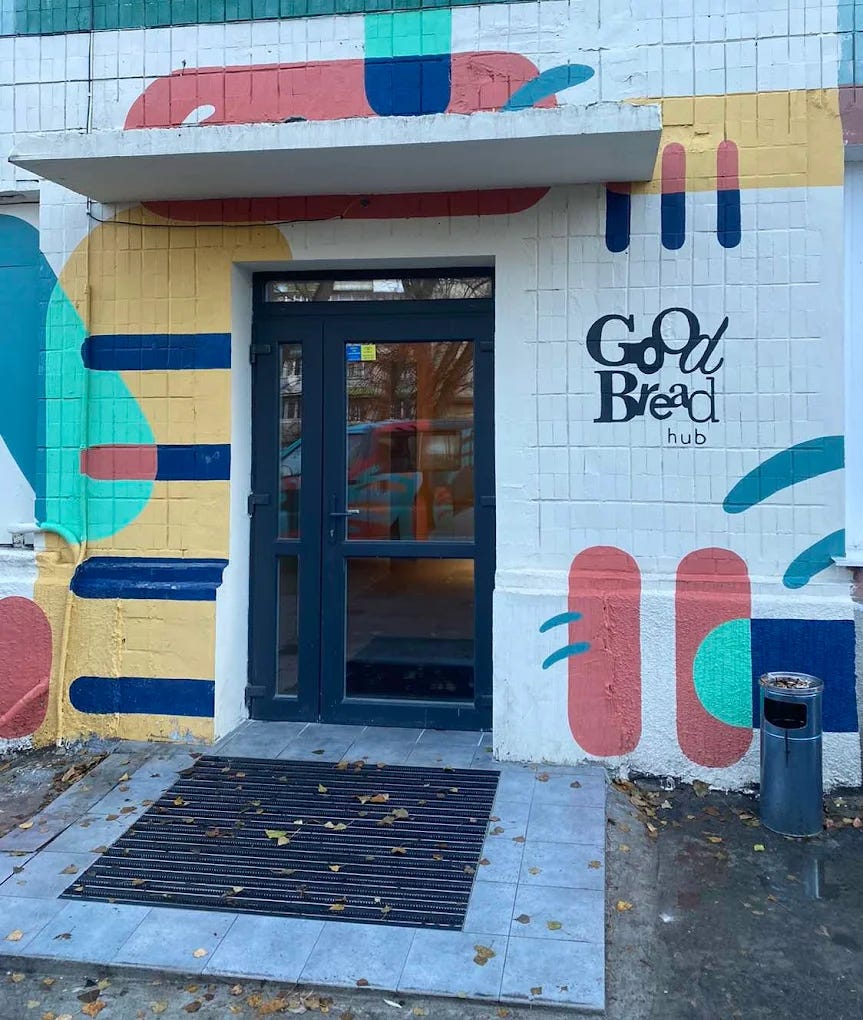
I take another minute to swallow a salty clot in my throat before pushing the door open — and my shoulders immediately relax. Warm air smells like freshly baked garlic bread and roast potatoes, while the faint clink of crockery and casual, friendly chit-chat in the next room make me feel like I came home for a family dinner.
“Good morning! My name is Mariia, and I’ll show you around today.”
A friendly woman, slightly older than me, hands me a set of workwear and waits patiently as I struggle with the Velcro fasteners on the robe.
When we step into the kitchen, the hustle overwhelms me, but in a minute or two, I notice a rhythm in the chaos. Some are shaping dumplings and others are frying potatoes to feed those in need, while Mariia explains operations as a man is walking past me with boxes of baked goods ready for delivery. With their sparse but fluid movements, everyone looks in their element, so it is impossible to tell that they have been diagnosed with mental disabilities.
After the paywall:
How bakers with mental disabilities live and work;
What challenges they face in employment;
What saved the bakery from closing;
How the visit changed Sasha’s view of people with mental disabilities.
