

At the bottom of this page: Latest news at this hour
Russian and Chinese hackers attempted to use Claude for cyberattack… House of Representatives to vote on new sanctions against Russia… Suspect in Leipzig airport sabotage linked to Russian GRU.
Editor’s note:
Our team follows elections, and tomorrow it’s Sweden’s turn. Whatever the outcome, Sweden’s support for Ukraine is expected to hold — every party in parliament backs it.
The best way to make this reporting possible is to subscribe!
OUR LEAD STORY:
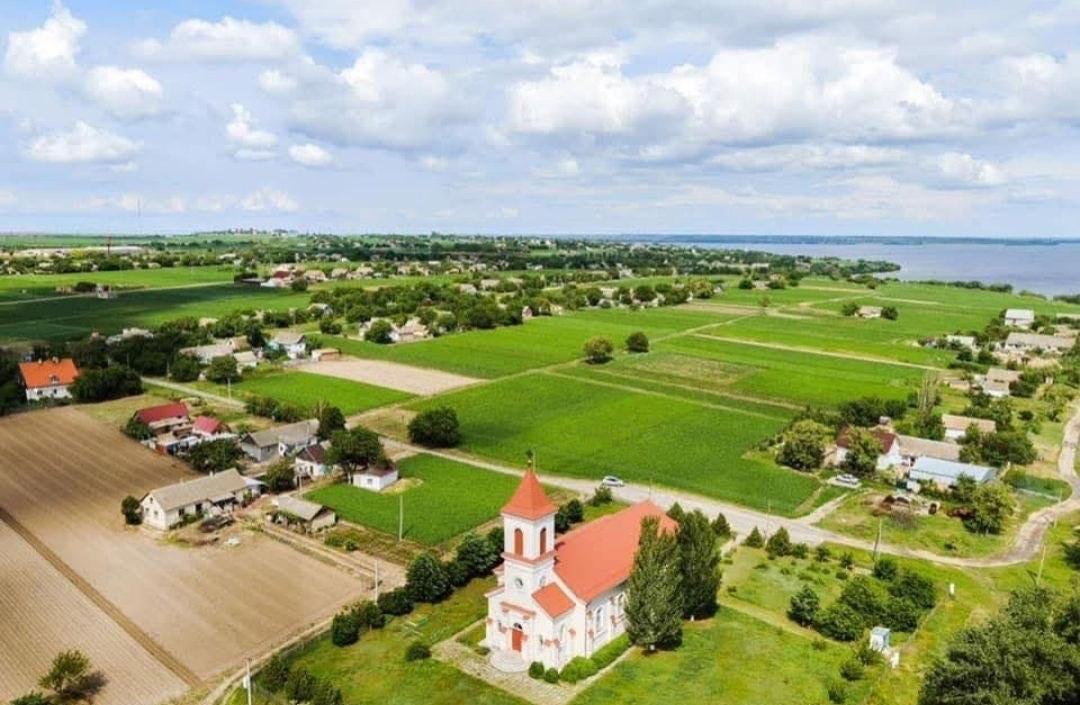
Roman Mykhaltsov remembers the peaceful days in his home village of Zmiivka in the Kherson region like it was yesterday. Every house was a feast for the eyes, with white walls, tidy yards, and blooming orchards. On the main street, three churches — one Greek Catholic, one Orthodox, one Protestant — welcomed parishioners whether they were locals including the Swedes, Germans, and Boykos from western Ukraine, or occasional foreigners from faraway lands who ended up in southern Ukraine.
His favorite place, though, was a green ravine on the outskirts. In the shade of a lush mulberry tree, the villagers came here together to celebrate Easter and Trinity Sunday, cooked fish soup for everyone to mark the Fishermen’s Day in mid-July, and played volleyball at a nearby court on summer evenings. Even in winter, it was buzzing with life.
Once warm, hospitable, and bathing in the smells of incense and roses, Zmiivka now lies in ruins as Russia goes out of its way to subdue the village its colonial wars helped to found.
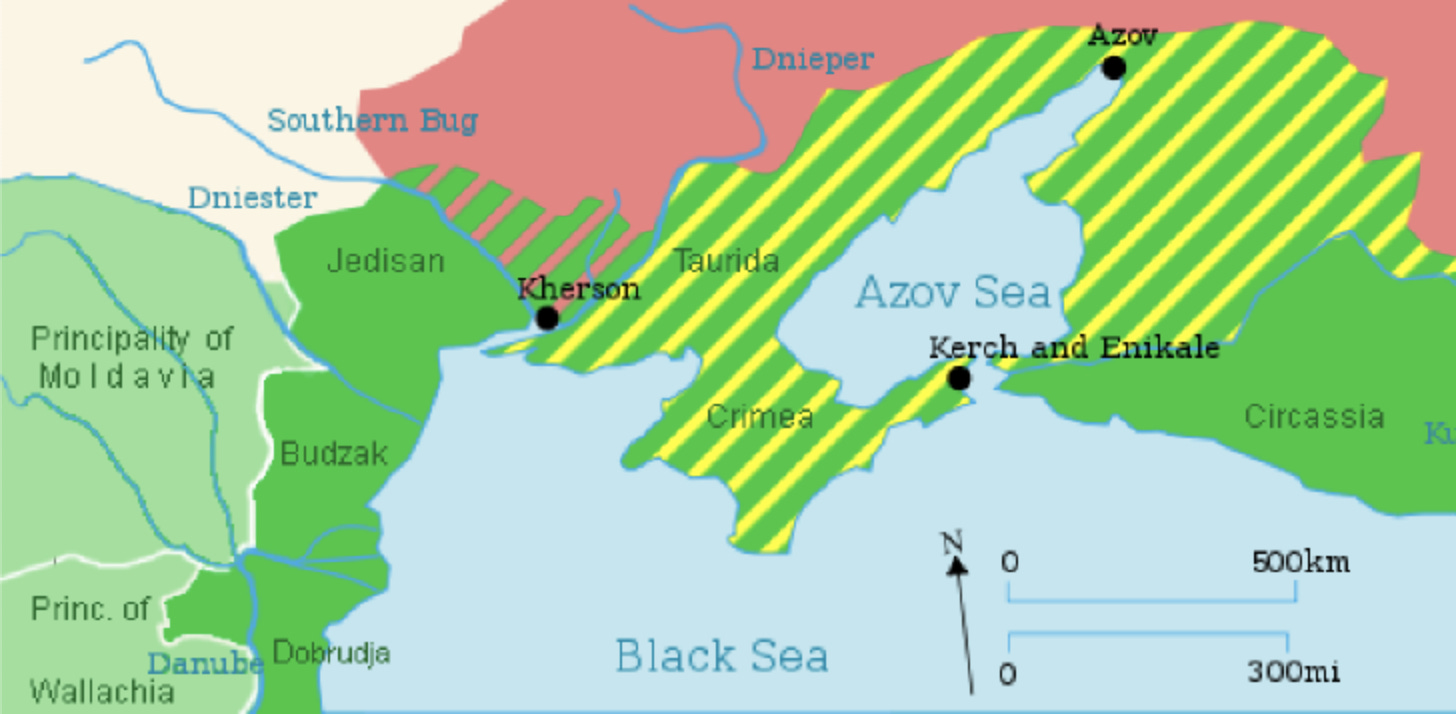
The village was established when Russia gained control over the southern Ukrainian lands between the rivers Dnipro and Southern Buh after the Second Russo-Turkish War against the Ottoman Empire. In 1781, the Empress Catherine II decided to forcibly relocate Swedish farmers there to develop the local economy. Promised furnished houses and fertile farms, about 900 settlers were marched on foot to the Ukrainian steppe from the Baltic island of Dagö (now Hiiumaa, Estonia), captured 60 years earlier in the aftermath of Russia’s Northern War against Sweden. They founded a prosperous settlement that survived over two centuries of Russian repression, maintained strong ties with mainland Sweden, and preserved the Old Swedish language, now forgotten anywhere else.
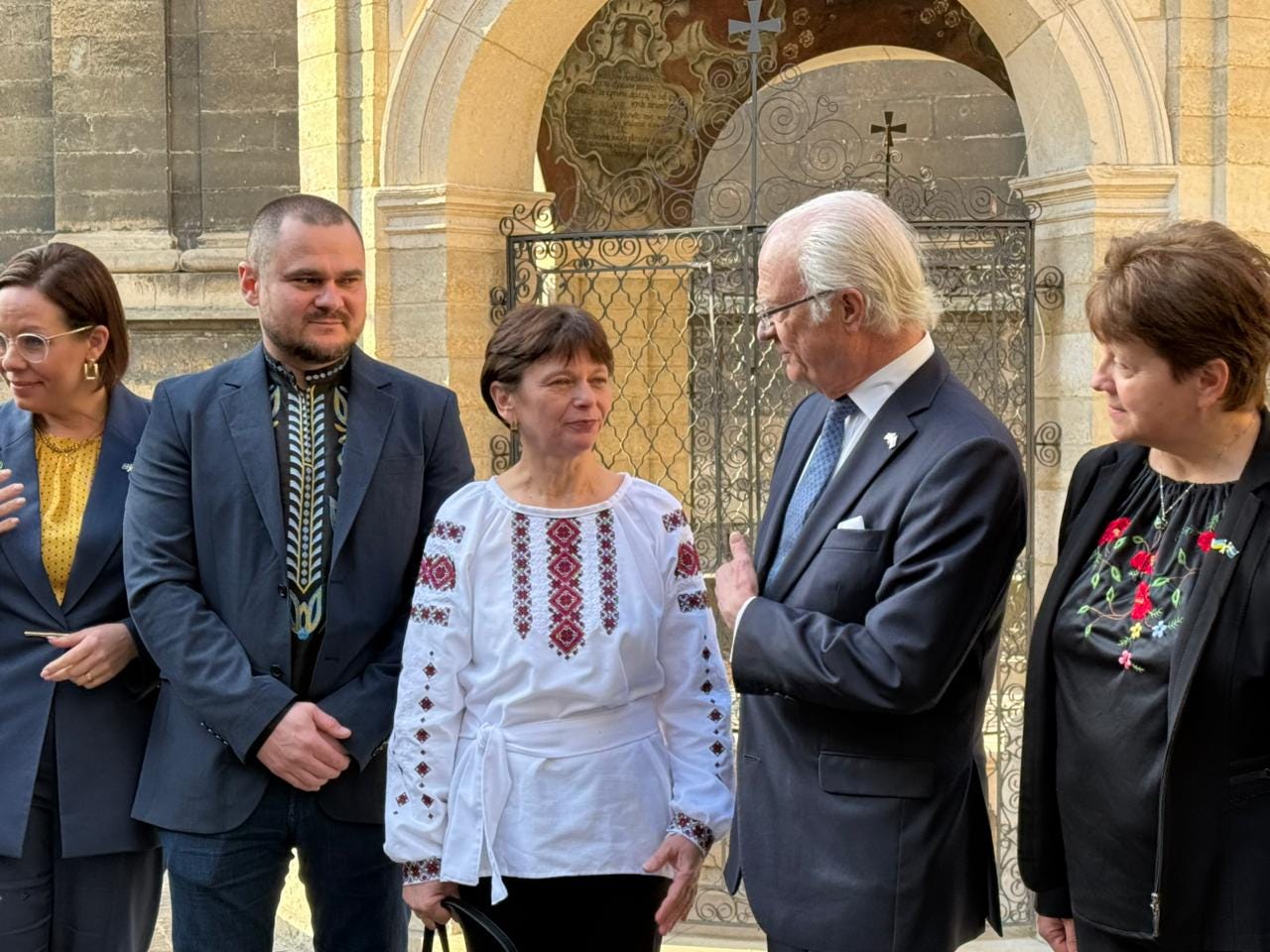
This brings the people and the cultural heritage of Sweden right into the middle of Russia’s war against Ukraine, prompting the country to respond decisively. In March 2024, Sweden became NATO’s newest member to protect itself from Russia’s increasingly bold geopolitical ambitions. Since the war began, it has also remained one of the sturdiest supporters of the Ukrainian cause.
In June, Sweden announced the biggest military aid package it has ever given to Ukraine. As a result, Ukraine agreed to buy 16 Gripen fighter jets from the Swedish defense company Saab. During the Ukraine Recovery Conference, Sweden also allocated 137 million euros (about $157 million) to repair and defend Ukraine’s electric grid, the second-largest energy aid package after the U.S. Overall, Sweden gave about 18 per cent of contributions to the international Ukraine Energy Support Fund, only outperformed by Germany. As for military aid, Swedish ASC 890 radar jets are already working on the battlefield, and the Armed Forces of Sweden have been tasked with sending about $28 million to different specialized funds in Ukraine.
Sweden aims to support Ukraine, no matter the results of the upcoming parliamentary elections on September 13. This year, it is unclear whether the ruling right-wing bloc of Prime Minister Ulf Kristersson or the center-left opposition led by Magdalena Andersson’s Social Democrats will win. Still, both sides stand with Ukraine to ensure Sweden’s own security and have sanctions on Russia, justice for the victims of its war crimes, and military and other aid to Ukraine on their agendas.
Zmiivka illustrates how even the most distant places might be interlinked through a common past, culture, values, and trade and technology; thus, international conflicts become an area of global responsibility. Its story shows how Russia, the U.S.S.R., and other empires forcibly change national borders, assimilate ethnic groups, and erase local cultures to survive and suppress potential opposition. Ironically, imperialist policies of coercion and division often backfire, unite the oppressed nations against the common enemy, and push the empires to destruction.
Roman spent years away from Zmiivka, working first on cargo ships that carried thousands of cars at a time to different parts of the world, and then at offshore oil and gas extraction facilities.
On February 24, 2022, he was in Namibia, in southwestern Africa. Roman immediately ended the contract and set off to Ukraine. The sky over Ukraine was already closed for commercial flights, so the way by bus through Poland took two weeks.
According to Roman, more than 50 out of approximately 2,000 Zmiivka residents are currently serving in the Armed Forces, and at least 18 have already died on the frontline. For the villagers, fighting for their freedom was never a question but rather a habit formed over the centuries of resistance to Russian and later Soviet imperialism.
“I, as well as most of my fellow villagers, have it ingrained in my genes,” Roman said proudly. “Zmiivka was always a village of dissenters. I grew up on the street where all of the neighbors, these elderly men and women, survived 20-25 years of deportation [to Soviet labor camps]. My grandfather, too, spent 13 years imprisoned in Siberia.”
The first Swedish settlers established Gammalsvenskby, “an Old Swedish village,” now known as Verbivka.
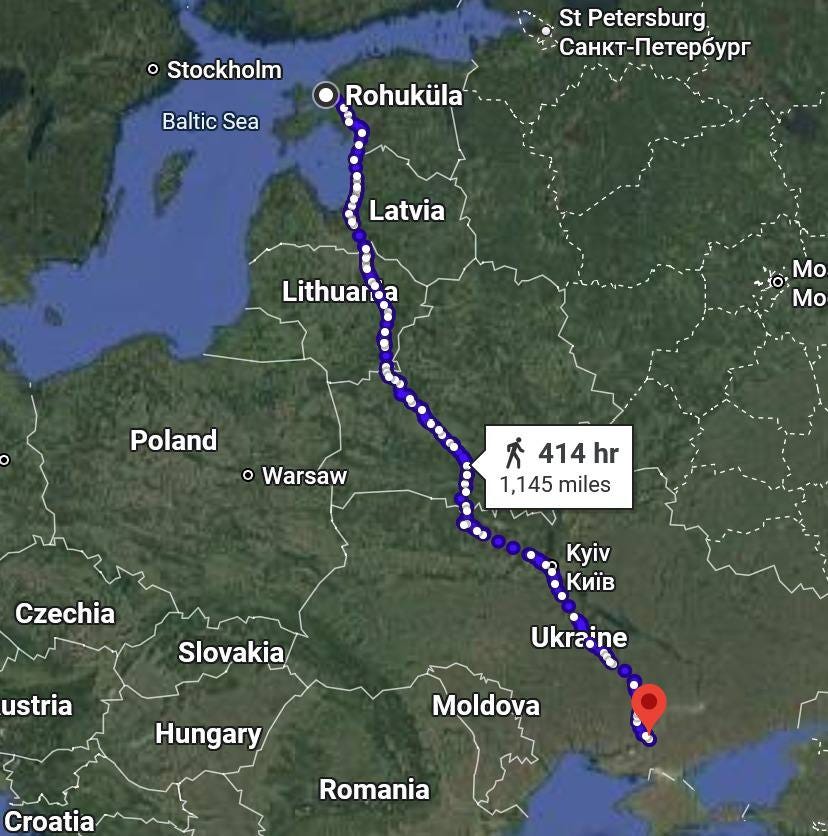
In the early 19th century, German farmers settled nearby and laid out three more villages. For the next hundred years, the four settlements developed separately and gravitated towards each other socially, economically, and physically until they became districts of 8 km-long modern-day Zmiivka.
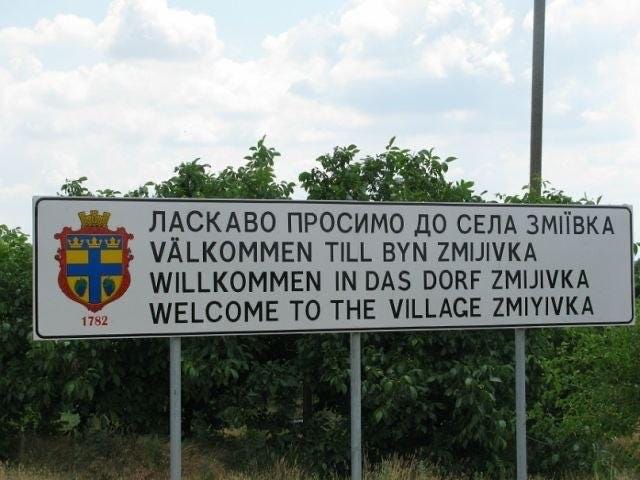
“When the Bolsheviks came, some villagers went to Sweden again. They were forcibly deported [by the USSR in 1929], mainly to Gotland,” Roman said. “Not all of them could adjust to living there, so in one, two, three years, some people returned [to southern Ukraine]. There, they were either deported to Siberia or shot.”
Forceful resettlements by the USSR up to the 1950s added new ethnic groups to the tapestry of local culture. One of them was the Boykos brought from former Polish territories ceded to the Soviet Union in 1951 in exchange for an oil-rich area in the modern-day Lviv region. They were “evacuated” on freight trains, carrying scarce belongings, with no prospect of proper housing and compensation. Over time, a multicultural community accepted them. To this day, Zmiivka has a Boykos choir, and the locals are used to them singing carols during the winter holidays.
In independent Ukraine, Zmiivka saw the peak of cultural diversity. According to Roman, during the 2001 Census, it was home to 16 ethnic groups, including Swedes, Germans, Ukrainians, Jews, Hungarians, Chechens, Afghans, Koreans, and many others. At his school, Roman even had a teacher from Zimbabwe.
“He was 2 meters tall and looked like Michael Jordan,” he said.
In March 2022, Russians returned to erase the culture of Zmiivka again, as they did 100 years ago. For almost 9 months, until mid-November, it was occupied. According to Roman, when the Russian soldiers entered the village, they were shocked by its tidiness and comfort.
“Some of them said [that Zmiivka looked like] Buckingham Palace, they have no such villages. First things first, they destroyed the monument for Freedom Fighters next to our church with an armored vehicle — and it was the first thing we put back in place when katsaps [a pejorative term for Russians] fled.”
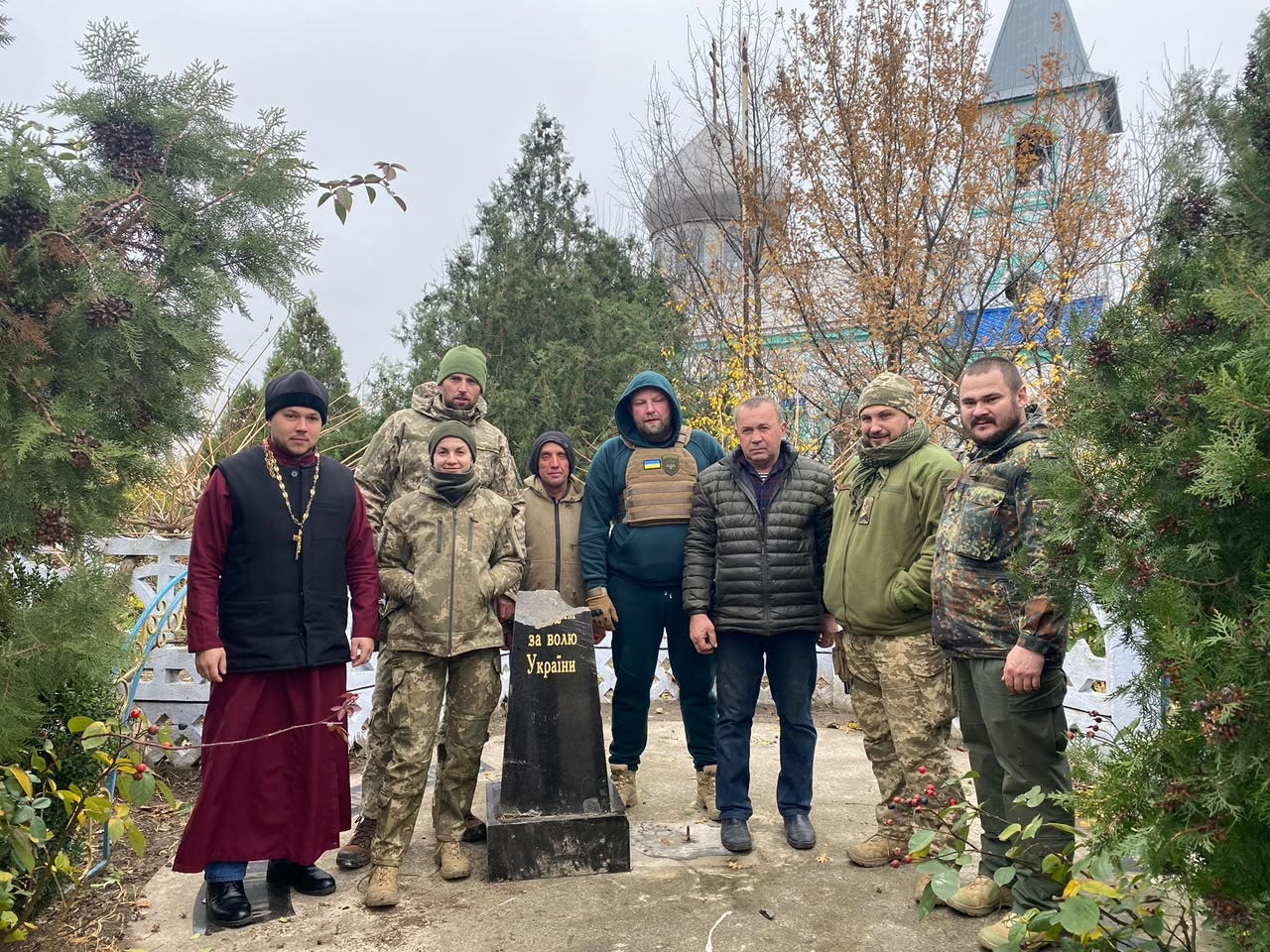
The invaders immediately began searching for “nationalists”. Certainly, the village where Russia has been dumping the dissenters for decades had plenty; even its head, Mykola Kurivchak, was kidnapped and allegedly tortured in captivity.
Russians went out of their way to destroy the Swedish heritage of Gammalsvenskby, including the flag of Sweden gifted personally by King Carl XVI Gustaf in 2008. For more than 8 months under Russian occupation, Mykola Kurivchak managed to hide the flag and keep it intact. Roman believes that the invaders were inherently wrong to think that destroyed buildings or stolen symbols would break Ukrainians.
During the “referendum” on joining Russia that occupiers held in the Kherson region in mid-September, Roman was on the other bank of Dnipro and couldn’t get in touch with his parents in Zmiivka. Later, one of the residents told him that the village fell silent, except for dogs released from their leashes barking in empty yards.
“Katsaps were walking from house to house with a list of villagers, and no one [came out]. Some hid in the maize field, others locked themselves inside their homes… People stayed [under occupation], but everyone refused to cooperate,” Roman quoted.
This kind of silent resistance scared and outraged Russians so much that they tried to demolish what they couldn’t subdue. According to Roman, Russians have allegedly launched about 300 guided aerial bombs on the Swedish village of Gammalsvenskby, which now lies in ruins. The Counteroffensive couldn’t independently verify this particular claim, as no statistics are gathered at a community level. However, Oleksandr Prokudin, the Head of the Kherson Regional Military Administration said that the Kherson region was attacked by a Russian drone or bomb once every two minutes as of August 2024.
“Today, it’s just a big landfill of unexploded munitions. Now, only two locals are staying there. It’s impossible to reach them, so no one knows if they are still alive. We can’t drive in there, because we’ll get shelled immediately,” Roman said.
To renovate Zmiivka, Roman headed a network of Ukrainian and Swedish volunteers and established the Heritage and Revival Fund of Gammalsvenskby, which provides humanitarian aid to the villagers mostly concentrated in Kryvyi Rih or scattered across nearby settlements. In the future, it looks to reunite the community of Zmiivka and build affordable modular housing for the locals to return to when the war ends.
Video: Thanks to Roman’s NGO and its Swedish partners, kids from Zmiivka enjoy their summer at a children’s camp in the Volyn region.
Still, what will revive Zmiivka’s vibrant community is its residents. Many of them have already expressed their willingness to return and work on rebuilding the village.
Zmiivka, even razed to the ground, is a place where Russia lost. Despite its efforts to alienate Swedish people and subdue Ukrainians, it gave two nations a common evil that brought them close enough to defeat it.
Want to read more stories about Ukrainians in other countries? Check these out:
The 280,000 Ukrainians at risk of U.S. deportation by Myroslava Tanska-Vikulova
How Ukrainians share Canadian soil with Indigenous by Oleksandra Khelemendyk
Editor’s Note:
Our team follows elections, and tomorrow it’s Sweden’s turn. Whatever the outcome, Sweden’s support for Ukraine is expected to hold — every party in parliament backs it.
The best way to make this reporting possible is to upgrade your subscription!
THE LATEST NEWS AT THIS HOUR:
By Myroslava Tanska-Vikulova
Good morning to readers; Kyiv remains in Ukrainian hands.
RUSSIAN AND CHINESE HACKERS ATTEMPTED TO USE CLAUDE FOR CYBERATTACK: Anthropic exposed and blocked hacking groups from Russia and China that were attempting to exploit Claude. The attackers used artificial intelligence to create biological weapons, munitions and weapons systems.
All accounts involved have already been blocked and Claude’s security tools have been updated to fend off similar threats.
HOUSE OF REPRESENTATIVES TO VOTE ON NEW SANCTIONS AGAINST RUSSIA: Next week, the U.S. House of Representatives will vote on a bill to impose more sanctions against Russia, particularly on the Russian financial sector and energy exports.
The bill, which would impose 100% tariffs on the 5 top consumers of Russian fuel, was blocked by Democrats last week. They argued the bill would amplify Trump’s misuse of tariffs and drive up oil prices. Democrats are calling for revisions to the bill because they fear it gives the White House excessive authority to unilaterally lift sanctions or impose tariffs on allies, rather than ensuring that pressure is applied exclusively to Russia.
SUSPECT IN LEIPZIG AIRPORT SABOTAGE LINKED TO RUSSIAN GRU: One of the individuals detained in connection with the case involving an explosive package at a logistics hub in Leipzig was found to have ties to Russian military intelligence. Law enforcement officials believe he was part of a network of Russian agents who were planning a series of sabotage attacks on transportation facilities in Europe.
In early August, a drone carrying explosives was discovered near a Ukrainian aircraft at Leipzig Airport in Germany. While it crashed into the plane, it did not detonate. Following the incident, controls on Russians entering the country were tightened.
DUCK OF WAR:
A duck Myroslava saw while on her summer vacation.

Stay safe out there.
Best,
Oleksandra

Holy clickbait title, Batman! But very good article otherwise.
(Original title was "Russia destroyed Swedish village. But there is a nuance", new title is much better)
I continue to be impressed and in awe of the resiliency of the people of Ukraine, and now Sweden. I hope Zmiivka is rebuilt and restored to its former glory.