

At the bottom of this page: Latest news at this hour
Trump considers easing sanctions on Russian shadow fleet… U.S. proposes unfreezing Russian assets… Ukraine to resume strikes on Russian oil refineries…

Editor’s note:
This newsletter comes to you from a newsroom running on power banks. Our team in Kyiv has been without electricity after Russia spent the past few days hammering Ukraine’s energy grid, all while Kyiv held off on strikes against Russian refineries in the name of a so-called ceasefire.

We felt the ballistic strikes hard, too. For two nights in a row, missiles flew in without the early warnings Ukraine usually gets from its partners.
Want stories like this from Kyiv in your inbox, blackout or not?
OUR LEAD STORY:
KYIV, Ukraine – Overnight on October 14, the Ukrainian army suddenly understood that it could not carry out some of its missions. Drones were losing communication and control, significantly limiting mid-range capabilities. Frontline logistics was also affected.
That day, an air defense serviceman with the call sign Kit, who serves in Kyiv, was driving the car on his shift when the equipment suddenly stopped working as he was accelerating the vehicle.
“Everything just went out on our way. It all stopped working, so we stopped and rebooted the system, but that didn’t help. We realized something was wrong,” Kit said.
According to him, rumors had already begun circulating that the military’s access to Starlink had been restricted. They were right.
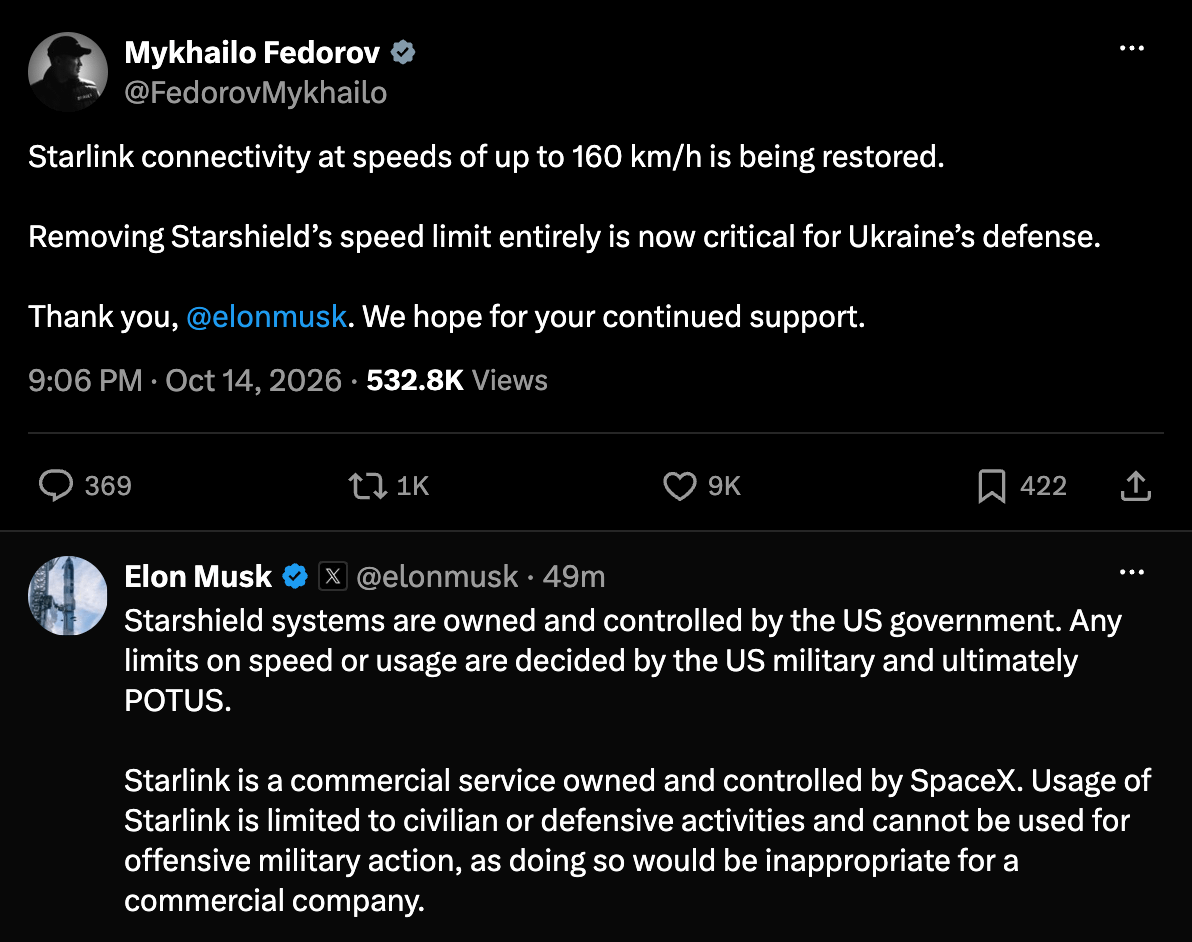
SpaceX, owned by Elon Musk, partially restricted Starshield connections, a military version of Starlink, without warning or explanation to Ukrainians. Widely used to operate drones live, especially in mid-range strikes, Starlink disconnected from the unmanned vehicle if its speed exceeded 100 miles per hour. Some media citing Ministry of Defense sources reported disruptions starting at 45 miles per hour during the day.
Unable to launch drones, some units needed to postpone their missions. Communication restrictions have also affected jet-drone interception. Yes, the very capability Ukraine struggled to maintain even before this event.
Zelenskyy’s advisor Serhii Beskrestnov believes the move is tied to the recent “political situation,” hinting at Trump’s pressure on Kyiv to halt deep strikes on oil refineries. Musk claimed that speed restrictions for military operations are imposed by the U.S. Army and Donald Trump personally. The White House says it has nothing to do with this.
This marks a new chapter in the tense relationship between Kyiv and Washington, unlike anything seen since the Oval Office meltdown. As in Groundhog Day, the U.S. pressures Ukraine to make concessions while Russia refuses to budge. But instead of bringing a made-up ceasefire closer, the Trump administration is once again putting Ukrainian lives at risk as the country braces for another brutal winter.
“This isn’t the first time something like this has happened. One person has so much power that they can decide the fate of an entire country… It’s just completely fucked up,” said Kit, reflecting on Musk’s potential involvement in Starlink restrictions.
Kit is deeply frustrated by the situation. The past two months have been grueling for someone tasked with shooting down Russian missiles and Shahed drones. Kit, an IT specialist, has been serving in Kyiv’s air defense since the start of 2024.
In late August, Russia began attacking Kyiv and other Ukrainian cities day and night, barely leaving him any time to catch his breath. “[The Russians] got help with the engine. That’s it — they started scaling up. Before that, [jet-powered Shaheds] were flying, but there were very few of them,” Kit said.
Over the past two months, Kit’s duty schedule has changed dramatically. Before, he would engage targets only when a threat emerged; now, Kit and his fellow service members stay on their feet almost nonstop.
As Ukraine developed ways to counter jet-powered Shaheds — from interceptor drones to F-16s and turrets — Kit faced another setback: new Starlink restrictions now interrupt his work, disrupting long-distance communications and slowing the movement of air defense assets, making them vulnerable to Russians.
Over the past 36 hours, Russia has tried to exploit Starlink issues, according to Volodymyr Zelenskyy. It launched 850 drones as satellite connectivity issues disrupted Ukraine’s interceptor drones — reportedly the most effective way to down jet-drones for now.
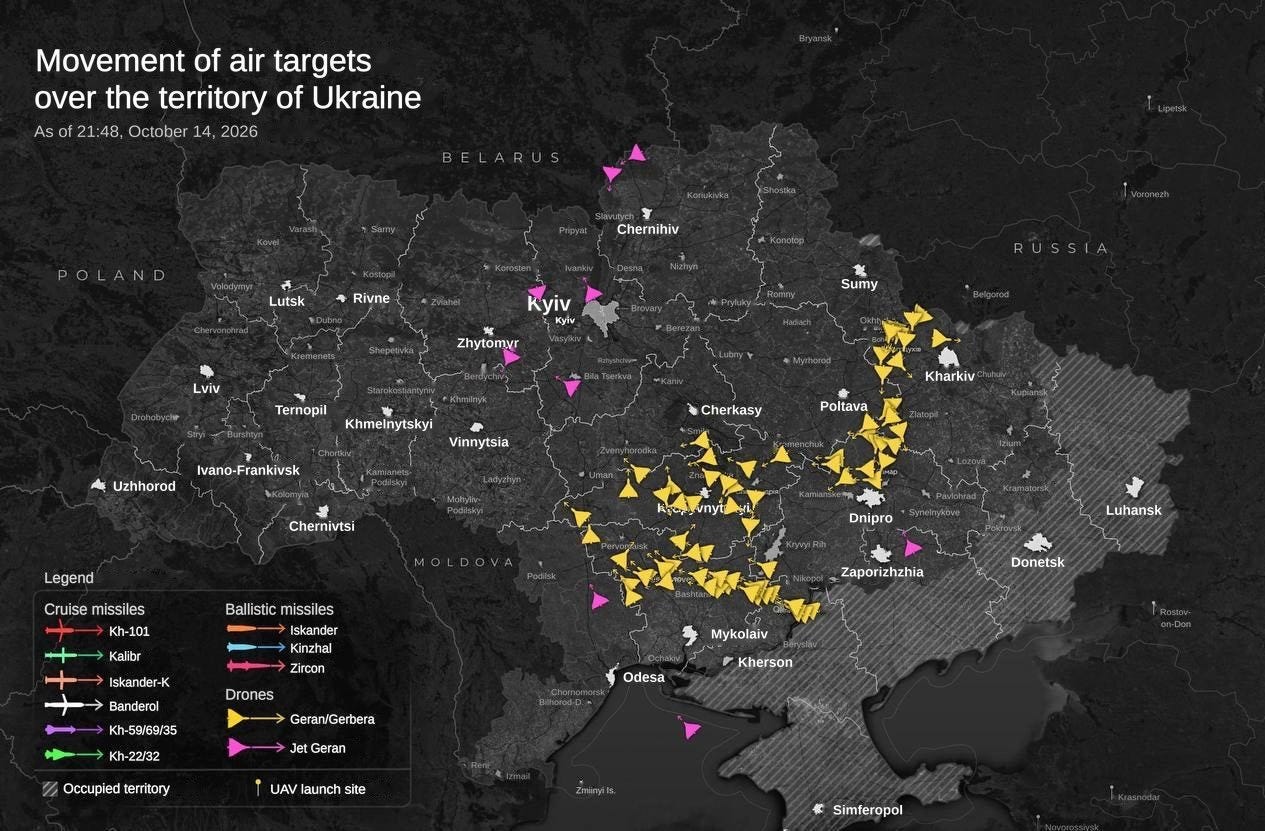
The Starlink decision is also being felt on the front line. Oleksii*, an operator in a brigade specializing in mid-range strikes, saw the news early that morning while traveling with his fellow service members to collect after testing drones that rely on Starlink. “We’re at a loss,” Oleksii said.
The restrictions have not directly affected Oleksii’s work yet, as he switched to slower drones this fall, typically flying below 75 mph and continuing to strike Russian forces in occupied territories. Before that, they used Shahed-like drones capable of reaching 125 mph — the type most affected by the restrictions and widely used to hit Russian logistics and military targets.
“When heavy drones launch, they accelerate very quickly because of their weight. They can exceed 100 mph right at takeoff. This can also put the crew at risk. You don’t know your speed is being restricted. Your drone gets catapult-launched, Starlink is down, and it immediately crashes to the ground,” Oleksii said.
In late July, Ukraine asked the U.S. to enable Starlink for drone strikes inside Russia, where the service is blocked. But that has yet to happen. If one is concerned about deep strikes, they remain unaffected, as they rely on a different type of communications link. However, mid-range strikes are vital because they target the distance where Russia concentrates much of its critical infrastructure: air defense systems, electronic warfare assets, and command and logistics hubs.
“When you have Starlink, you can take an absolute garbage, strap a terminal to it, and get a crystal-clear view of the target,” Oleksii said. “Everyone has become heavily reliant on Starlink because it’s cheap and easy to use.”
This is not the first time SpaceX has restricted Starlink access in ways that disrupted Ukrainian military operations. In 2023, connectivity was reportedly unavailable near Crimea for a period, reportedly preventing Ukraine from carrying out a potential strike on the Russian fleet. Musk previously restricted Starlink’s use on attack drones.
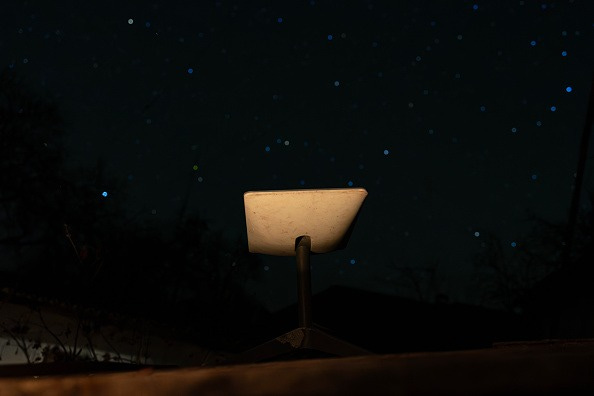
So, this incident once again exposes the vulnerability of Ukraine’s military, which heavily relies on Starlink. Changing this stance will take time: no satellite communication system of equal scale exists, and alternatives are far more complex and expensive to implement.
Meanwhile, political tensions between Ukraine and the U.S. are escalating. The White House again threatened Ukraine, warning it would cut intelligence sharing if Kyiv continues to strike Russian oil refineries. Against this backdrop, Ukraine went two consecutive nights, October 13 and 14, without timely warnings from its partners about Russian ballistic missile launches. At that time, Russia launched massive attacks on Ukraine’s energy infrastructure, triggering prolonged power outages for more than 600,000 people. Trump has officially denied suspending intelligence sharing with Ukraine.
On top of that, the U.S. has also threatened to halt weapons supplies to Kyiv under the PURL program.
Kyiv has indeed stopped strikes on Russian oil refineries over the past three days. But amid disruptions to intelligence sharing and Starlink connectivity, Ukraine is now lifting the ban on attacks, FT reported. “The block [on attacking refineries] is out. We’re done,” said Zelenskyy.
“I hope this will be the last winter of the war. But things never go smoothly. We’ve started hitting the Russians hard. And instead of helping us, they’re just throwing a wrench in the works,” Kit said.
*We don’t disclose servicemen’s names for security reasons.
Interested in reading more similar stories? Check these out:
Can Ukrainian soldiers survive without Musk’s Starlink by Artem Moskalenko
What Trump’s intel pause cost Ukraine by Mariana Lastovyria
How Elon’s satellites nearly led to Ukrainian disaster by Oleksandra Poda and Mariana Lastovyria
Editor’s Note:
Not long ago, we wrote about Why true crime brings comfort during war. Yesterday, our Jacqueline Cole went live with Jayson Blair of True Crime Times to dig deeper into what true crime looks like in a country at war.
THE LATEST NEWS AT THIS HOUR:
By: Daria Shtonda
Good morning to readers; Kyiv remains in Ukrainian hands.
TRUMP CONSIDERS EASING SANCTIONS ON RUSSIAN SHADOW FLEET: The U.S. is considering easing sanctions on Russian shadow fleet vessels that transport oil and petroleum products from countries including Russia, Iran, and Venezuela to lower record-high global freight rates, Reuters reported, citing a U.S. official.
The Department of Energy argued the proposal would allow previously sanctioned tankers to carry oil and petroleum products not subject to U.S. restrictions, rather than lifting sanctions on Russian or Iranian oil.
U.S. PROPOSES UNFREEZING RUSSIAN ASSETS: The U.S. proposed European countries to unfreeze some Russian assets in an effort to renew peace talks, the Financial Times reported.
The proposal includes transferring the assets to a new special-purpose financial vehicle overseen by Washington. It was raised at a meeting in Miami last week between Trump’s envoys Steve Witkoff and Jared Kushner and officials from Ukraine, France, Germany, the UK, the EU, and NATO.
European delegates rejected the proposal. Western allies immobilized about €260 billion in Russian sovereign assets. Previously, most European allies have opposed using the frozen assets to provide fund aid to Ukraine, citing legal concerns.
UKRAINE TO RESUME STRIKES ON RUSSIAN OIL REFINERIES: Volodymyr Zelenskyy told the Financial Times Ukraine would resume strikes on Russian oil refineries after Russia intensified its attacks despite the “energy ceasefire” announced by Trump. This comes after the U.S. weakened Starlink services and disrupted their intelligence sharing with Ukraine.
Zelenskyy said he had suspended strikes on energy facilities for three days at Washington’s request. Russia nevertheless continued to target Ukraine’s energy and civilian infrastructure. More than 100 people were killed over the past week, he said.
CATS OF CONFLICT:
These are Daria’s parents’ cats, Betty and Selena, back home in Pavlohrad, Dnipropetrovsk region. They’re sisters, but it’s rare to see them curled up peacefully together.

Stay safe out there!
Best,
Mariana.
Such an unconscionable move.
I am so fucking angry and the world tells us to do something about it. What??? He's surely gong to send ICE & the military to intimidate voters at our upcoming midterm elections. They're doing everything they can to disenfranchise huge blocks of voters. Some people have loved ones in ICE custody so they don't dare put them in more jeopardy by speaking up against the administration. It's truly becoming a police state. It's infuriating and frightening at the same time. They can disappear anyone. Sound like any country we know? It's maddening. Trump hates Zelensky and he got a chance to get revenge and make possibly billions. He could care less about dead civilians and kidnapped children. He's a war criminal. Punishing Zelensky and making money? It's a no-brainer.