

At the bottom of this page: Latest news at this hour
Starshield slowdown in Ukraine… Over 11,000 foreigners recruited by Russia killed… U.S. asks Russia to propose security agreement with Europe…

Editor’s note:
This story first appeared in BuildBack Ukraine, our sister publication. While The Counteroffensive tells the human side of the war, BuildBack digs into what it takes to rebuild Ukraine’s infrastructure, investment, and economy under fire.
Ukraine’s railways are a perfect example. They carry about half of the country’s exports, and Russia is now destroying them.
To understand how Ukraine keeps moving and what its recovery will really cost, follow us on BuildBack Ukraine and support our team!
OUR LEAD STORY:
KYIV, Ukraine – Traveling by train in Ukraine isn’t simple; it involves many challenges.
First, find tickets because fewer trains are in service.
Next comes boarding the train. If you’re lucky, there won’t be an air raid alert and the train station won’t be hit by an enemy drone.
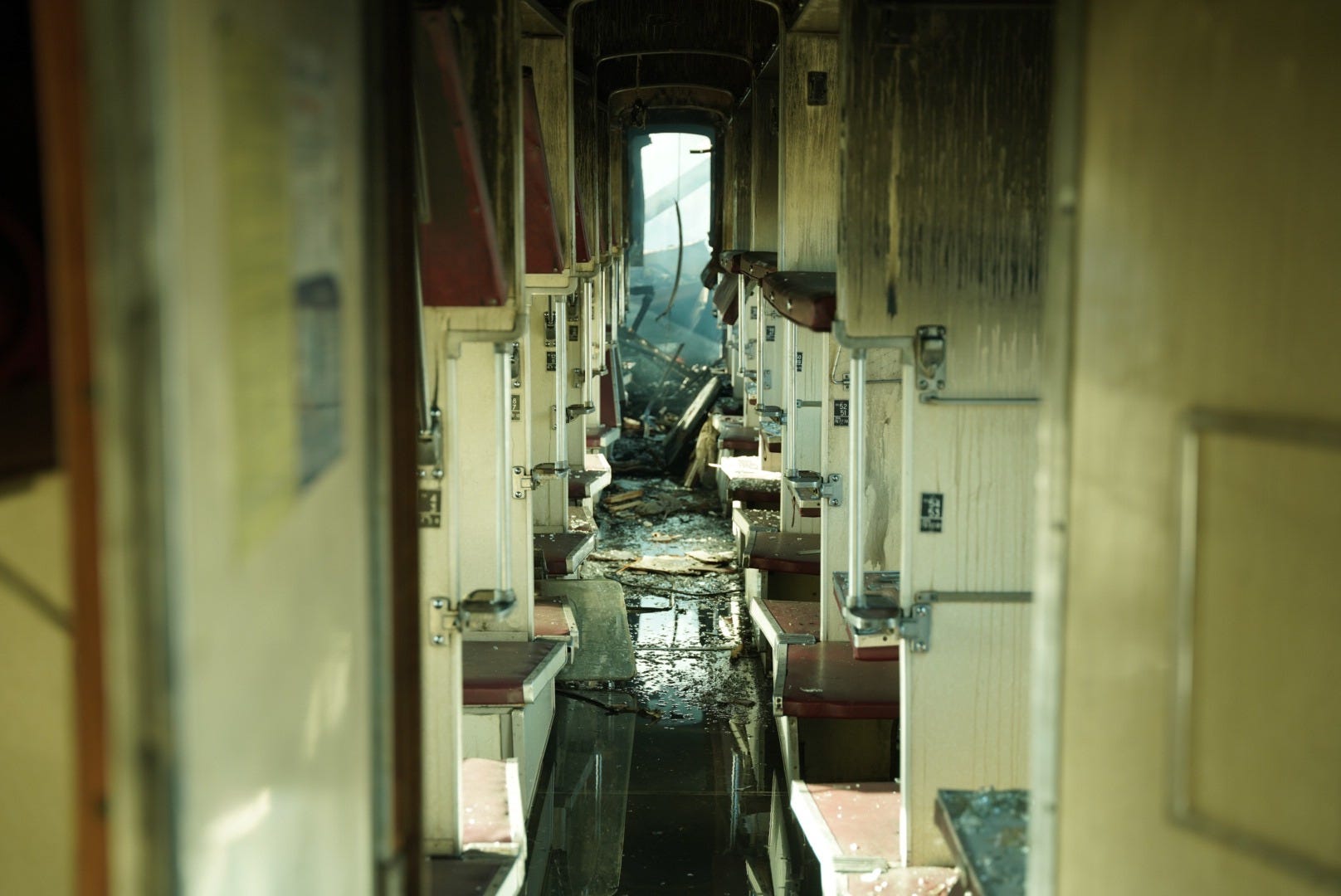
While traveling, be prepared to evacuate the train in case of a threat, and this could happen anywhere. This will likely be in the middle of nowhere: a field or forest with no facilities for safely boarding or disembarking passengers, since the train carriages are positioned very high off the ground and evacuation can be difficult, even for a healthy adult.
Mariana, The Counteroffensive’s Creative Editor, recorded a video in the middle of nowhere during an evacuation.
Also, pack comfortable, warm clothing, as an evacuation could leave you in very inhospitable terrain, from forests, swamps, or thickets, which isn’t the best place to spend hours, often at night.
Remember that the railroad is used for more than just passengers. It also transports export shipments, military cargo and transport.
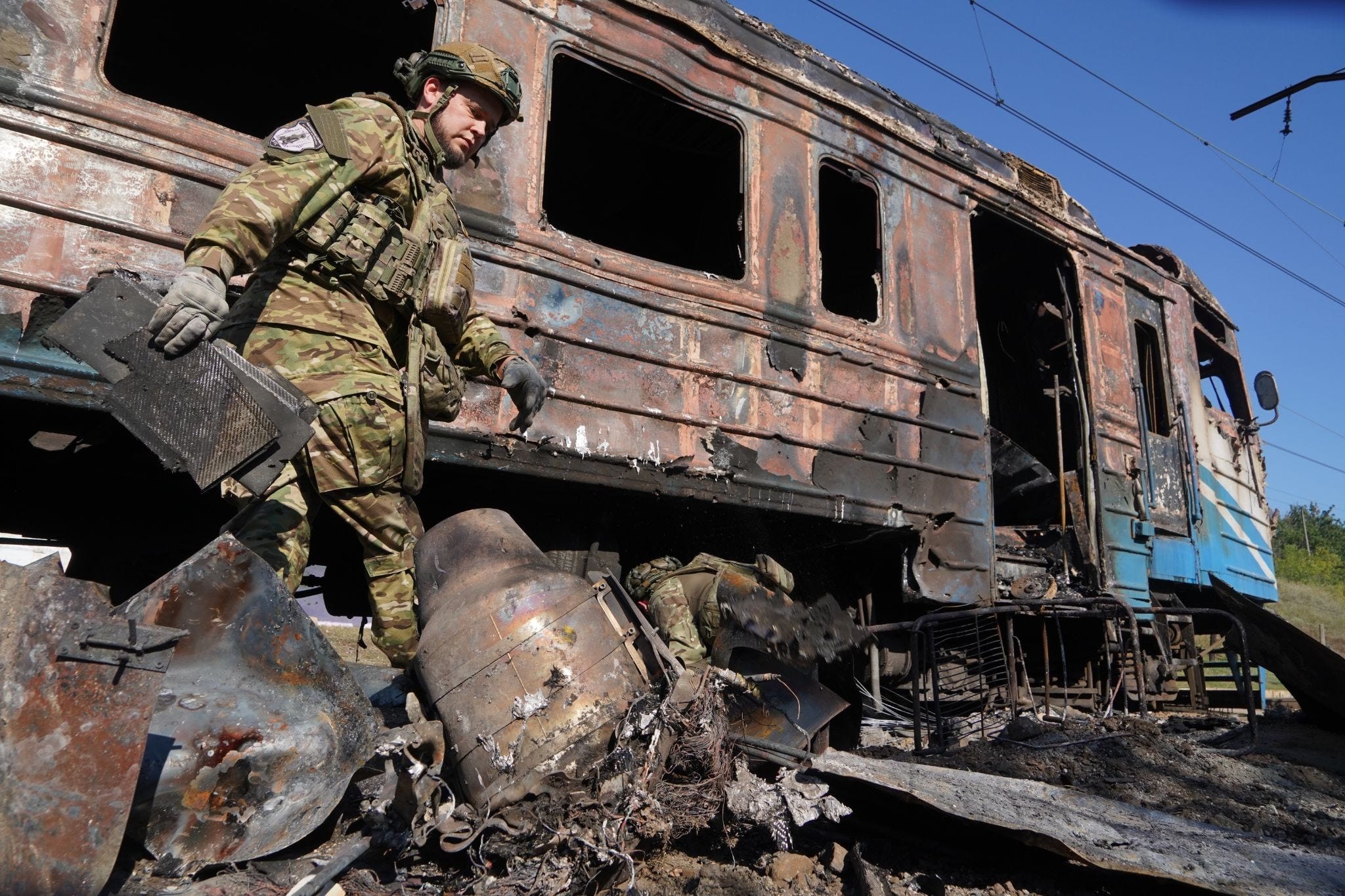
Since the start of the full-scale invasion, Russia has damaged 550 Ukrainian locomotives, with more than 335 damaged in 2026 alone. In early October, Minister of Agrarian Policy Taras Vysotskyi said Ukraine’s locomotive reserves were nearly depleted.
A locomotive is the first car in a train, pulling the entire train. Without the locomotive, none of the other cars will move.
Ukrzaliznytsia is Ukraine’s sole rail carrier, with no private carriers operating on the country’s main lines. The country’s railways carry approximately 60 percent of its freight and about half of all exports, according to Serhii Vovk, the director of the Center for Transport Strategies. In most European countries, rail transport accounts for only 10-20 percent of freight.
How UZ survives without locomotives
Railcars are relatively easy to replace, so Russia has prioritized targeting locomotives, the vehicles that power the train.
“Locomotives are the items most in demand because they are the most expensive,” explained Shevchenko.
Replacing lost locomotives is also difficult because most European models can’t run on Ukrainian tracks. Ukraine uses a wider rail gauge than most EU countries, so a locomotive built for most European railways can’t simply be brought in and put to work.
To save locomotives, Ukrzaliznytsia now couples long-distance passenger trains in twos or threes so that a single locomotive can pull them all.
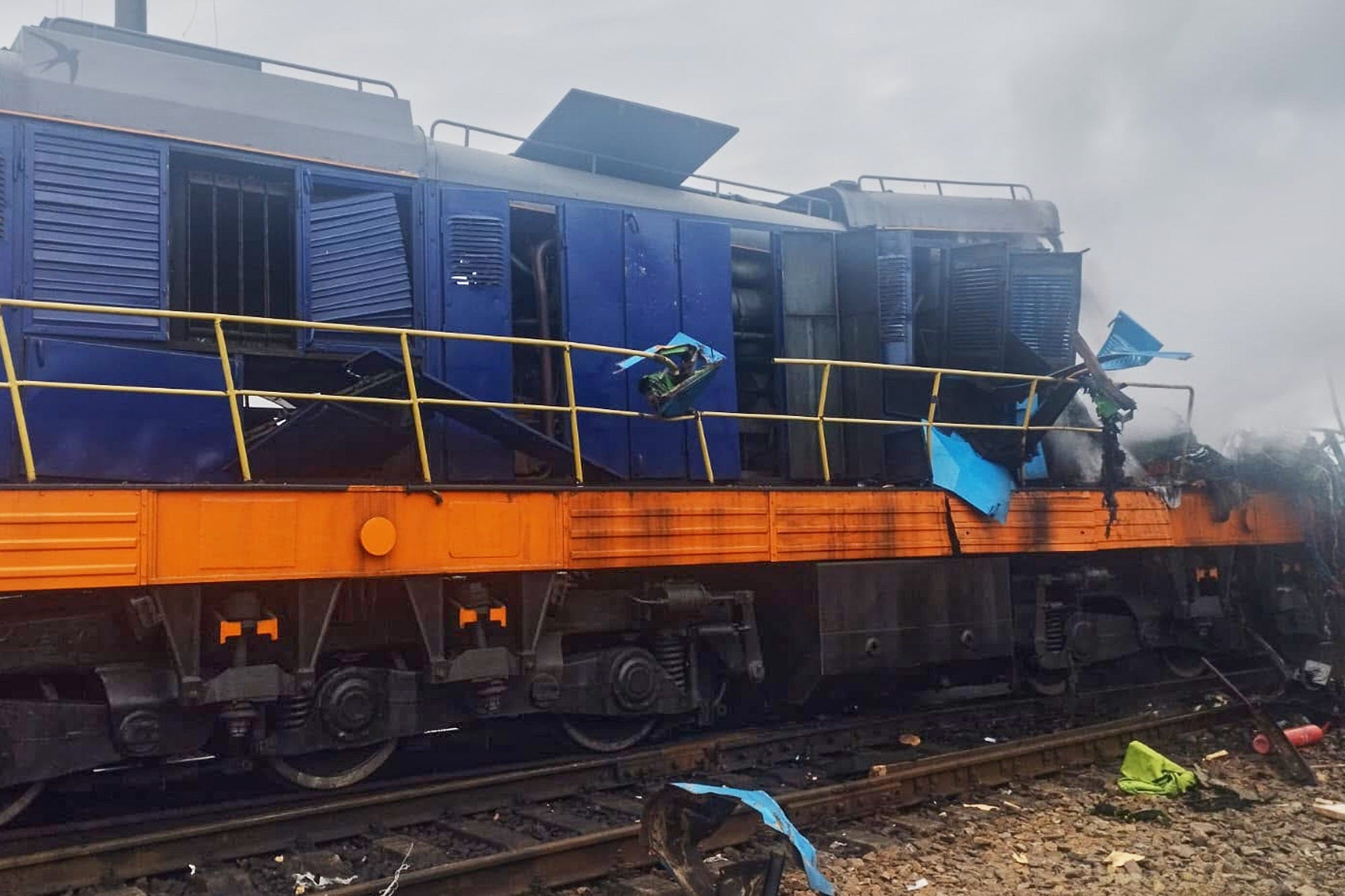
The government has begun forming a ‘railway coalition’ with Europe to purchase used locomotives. Slovakia agreed to transfer three electric locomotives, and Lithuania agreed to transfer three more.
How is train service handled during air raid alerts?
Ukrainian Railways has introduced new traffic rules to keep operations going as smoothly as possible during air raid alerts. When isolated drones are in the air, trains continue to run and boarding proceeds as usual. If the threat level increases, such as during a missile or large-scale attack, boarding will be halted, and passengers will be directed to shelters.
But even such safety measures are controversial and can cause other problems. “Such measures cause passengers to scatter during and after an evacuation,” said Shevchenko. “The enemy uses jet-powered drones and various guidance systems. They also have satellite communications and LTE mobile modems.”
So any stop, evacuation, or crowd on the platform becomes an easy target, forcing the railway to disperse passengers and trains.
Ukrzaliznytsia is considering using electronic warfare (EW) equipment on trains to jam the signal used to control drones. “We need to install these devices on trains,” said Kostiantyn Kryvolap, an aviation expert and former test engineer at the Antonov Design Bureau. “In addition, I think we need to install automatic guidance and detection systems. If we can alert gas station employees to a drone’s location and direction, then installing this on a locomotive or railcar is no problem. However, this requires organizational efforts that we currently lack.”
Financing
The year 2026 was the most difficult for the railway company since the war began. In just six months, the company lost over 10 billion hryvnia ($222 million) — more than it lost in all of 2025.
The decline accelerated in the fall. “Just two months ago, we were handling about 400,000 metric tons per day [a unit of measurement for large quantities of cargo, raw materials, or other materials]. Now, we’re down to 250,000,” said Valerii Tkachov, Ukrainian Railways’ deputy director of the Department of Transportation Technology and Commercial Operations.
Some cargo is already being transported via road instead of rail. “This [shift to road transport] has become a widespread trend; in fact, according to some reports, there aren’t even enough trucks to handle these shipments,” said Volodymyr Naumov, chairman of the Association of Ukrainian Railway Freight Shippers.
The company is addressing this problem by raising rates by 30 percent for the first time in more than four years to secure funds for fuel, electricity, and repairs ahead of winter.
The сompany is growing despite the crisis
On September 20, the company electrified the first new European-gauge track on the Chop-Uzhhorod section. In the Lviv region, construction is underway on an additional 80 kilometers of track.
The company is also considering opening the market to private carriers. One possible first step is a pilot project in which private locomotives, such as those owned by cement plants, would operate on specific sections of track.
“The cement producers themselves raised this issue. These companies have their own mainline locomotives,” Tkachov said. “Ivano-Frankivsk Cement had its own transportation operations until the 1960s. Given Ukrzaliznytsia’s current shortage of locomotives, they are asking to return to this arrangement.”
Interested in reading more stories about the reconstruction of Ukraine? Check these out:
How Ukraine is boosting power generation by Oleksandra Poda
How Ukraine modular building standards are evolving by Oleksandra Poda
Ukraine’s solar gamble: auctions for decentralized energy by Oleksandra Poda
Editor’s Note:
This story first appeared in BuildBack Ukraine, our sister publication. While The Counteroffensive tells the human side of the war, BuildBack digs into what it takes to rebuild Ukraine’s infrastructure, investment, and economy under fire.
Ukraine’s railways are a perfect example. They carry about half of the country’s exports, and Russia is now destroying them.
To understand how Ukraine keeps moving and what its recovery will really cost, follow us on BuildBack Ukraine and support our team!
THE LATEST NEWS AT THIS HOUR:
By: Daria Shtonda
Good morning to readers; Kyiv remains in Ukrainian hands.
STARSHIELD SLOWDOWN IN UKRAINE: President Zelenskyy says Ukrainian forces have been experiencing speed restrictions on Starshield over Ukrainian territory for several days.
The Ukrainian military has investigated the circumstances and determined that these are not random errors but systematic speed restrictions.
The slowdown poses a significant challenge for intercepting Russian drones. Zelenskyy says there have already been cases in which Russian drones struck their targets because Ukrainian interceptor drones could not reach the required speed to intercept them in time.
Ukraine is seeking explanations from the U.S.
OVER 11,000 FOREIGNERS RECRUITED BY RUSSIA KILLED: A Russian statistics agency has recorded the deaths of 11,335 foreign citizens who served in the Russian military during its war against Ukraine.
The data was obtained by the Belarusian pro-opposition group Cyber Partisans and the Ukrainian hacker group Silent Crow. The deaths were recorded between February 2022 and August 2026. The figures for 2026 may be incomplete, as it takes time for combat deaths to be officially recorded.
Dmytro Usov, secretary of Ukraine’s Coordination Headquarters for the Treatment of Prisoners of War, previously stated that Russia had recruited 45,959 foreign nationals from 151 countries into its armed forces as of October 2026.
Ukrainian forces captured citizens from 59 countries over the course of the war. Surveys show that nearly half of those captured knew they were going to be fighting against Ukraine. Meanwhile, 28% said they did not know this information, 14.8% were not sure, and 13.8% stated they had been lied to.
Several countries have previously raised concerns about Russia’s deceptive methods of recruiting military personnel abroad.
U.S. ASKS RUSSIA TO PROPOSE SECURITY AGREEMENT WITH EUROPE: Axios reports that the U.S. has asked Russia to submit a proposal for a potential security agreement with Europe aimed at easing tensions with the continent.
In the past, Russia has demanded an agreement with Europe to limit NATO’s expansion and its military presence in Eastern Europe.
Today, U.S. envoys Jared Kushner and Steve Witkoff will meet with Putin in Moscow, and then travel to Dublin to speak with President Zelenskyy.
CAT OF CONFLICT:
A cat in Kyiv looking as bewildered as all Kyivans nowadays.

Stay safe out there!
Best,
Ally.
The resilience of Ukraine, from its people to its businesses and everything in between, is truly remarkable. Something that the rest of the world should appreciate.
I’m a huge fan of Ukrzaliznitsya and their determination to keep services running as best they can. I take a lot of night trains, to Kharkiv, Dnipro, Odesa and Przemysl - numerous evacuations - and the staff are the epitome of professionalism and calm.