

At the bottom of this page: Latest news at this hour
Kushner says Putin is not interested in a ceasefire… U.S.-backed group signs deal to buy Lukoil's global assets… Ukraine says it hit five Russian warplanes at air base…

Editor’s note:
Happy Thanksgiving from our team!
We planned to celebrate together around a turkey this year. But with no power, heat, or sometimes water in Kyiv, many of us have scattered to family homes across Ukraine.
Not everyone can leave, though. For people like Viktoriia, whose treatment depends on running water, there’s nowhere else to go. That’s why we’re telling her story today.
If someone shared this with you, welcome, and happy Thanksgiving! To read Viktoriia’s full story, subscribe for free!
OUR LEAD STORY:
KYIV, Ukraine – The sharp sting comes when a thick needle pierces her skin.
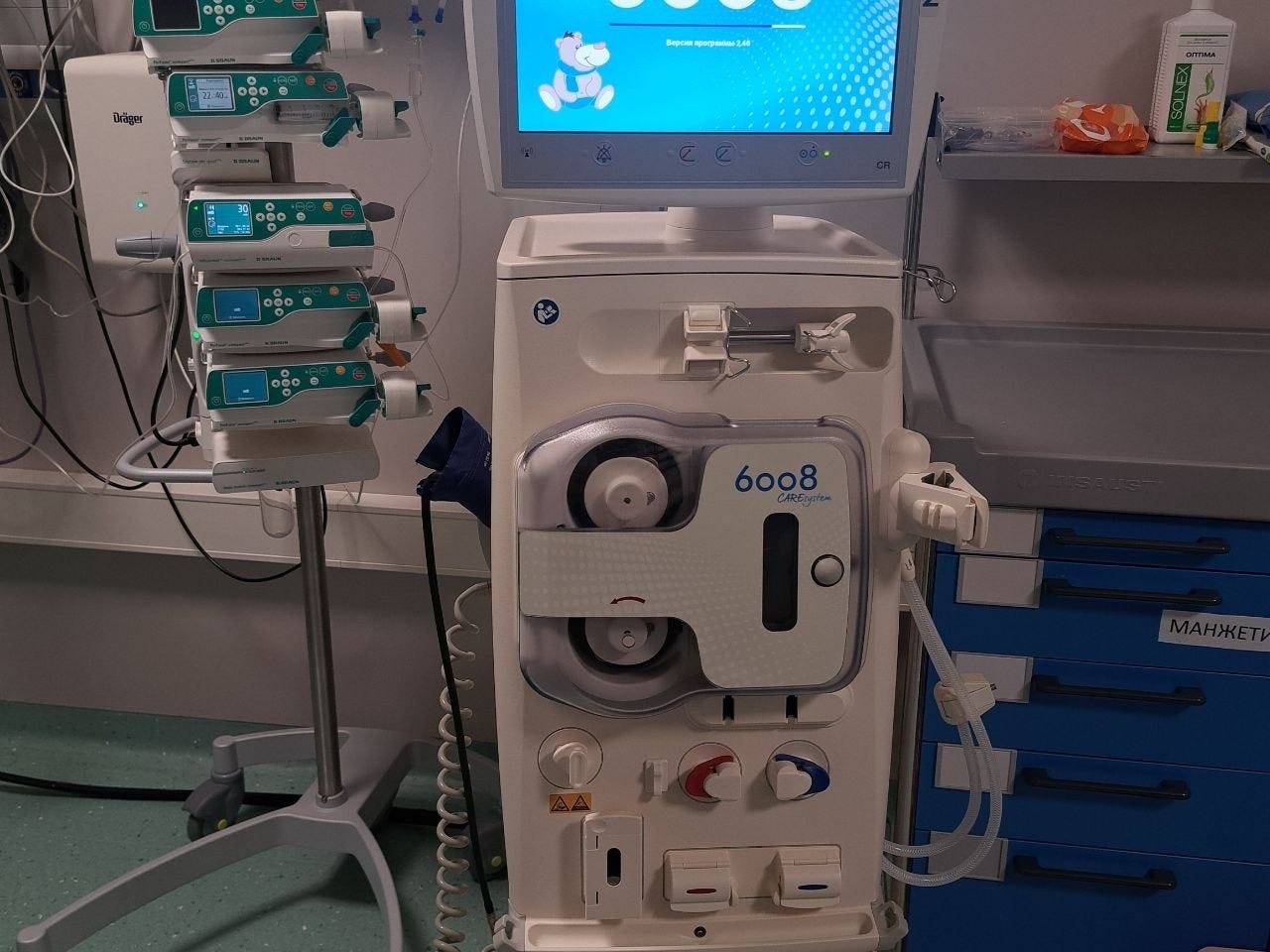
Connected to a dialysis machine, Viktoriia watches her blood take a roller-coaster ride through a maze of tubes, as the device carries away toxins and excess fluid her kidneys can no longer filter out.
“Simply put, hemodialysis is a way to survive, but not to live,” Viktoriia says.
To pass the time, she scrolls through TikTok or watches a TV series, careful not to wake the patients sleeping nearby.
Four hours — that’s how long each session typically lasts, unless Russian attacks disrupt the water and electricity supply and cut it short. This is happening more and more as Russia tries to force Ukraine into submission by targeting the necessities civilians need in their everyday lives: water, heating, electricity.

Dialysis patients like Viktoriia are especially vulnerable. Hemodialysis is most commonly required by patients with chronic kidney disease whose kidneys have reached the point where they can no longer function adequately on their own. At this stage, patients need dialysis to stay alive.
Water is essential to the procedure: purified water is used to prepare a special solution that helps remove waste products, excess fluid, and salts from the blood.
Ahead of winter, Russia has made Ukraine’s critical infrastructure and water supply a priority target as it ramps up attacks intended to make cities uninhabitable and wear down Ukrainians’ will to resist.
Ukrainian cities often lose access to running water when Russia attacks the power grid. Pumping stations rely on electricity to maintain water pressure, while treatment plants need it to purify water and process wastewater.
Earlier this month, the Ukrainian capital experienced water supply disruptions for nearly a week following a devastating Russian attack on Nov. 3.
More recently, Russia has directly attacked water infrastructure. On Nov. 20, Russia hit facilities operated by Kyivvodokanal, Kyiv’s municipal water utility, disrupting water supplies for two days across several districts of the capital.
In the worst-case scenario, prolonged water outages could leave medical facilities struggling to provide life-saving care, endangering slightly more than 12,000 people in Ukraine who receive hemodialysis.
