

At the bottom of this page: Latest news at this hour
U.S. must use $100 mil of Ukraine military aid before it expires on Sept 30… Fire at Starlink facility in Poland being investigated as sabotage… Poland will pay U.S. soldiers $15k a year to put on its territory.

Editor’s note:
Another winter is on its way to Kyiv, and our newsroom isn’t going anywhere. We’ll be reporting from inside the same outage schedules as the people we write about.
If you want to see this winter from the ground, subscribe for free. Our stories from Kyiv will land straight in your inbox!
OUR LEAD STORY:
KYIV, Ukraine – “I hope God is merciful. If I die, let it be instant; if I am wounded, let the injury be minor,” Kyiv resident Valentyna Shabranska recalls repeating to herself last winter.
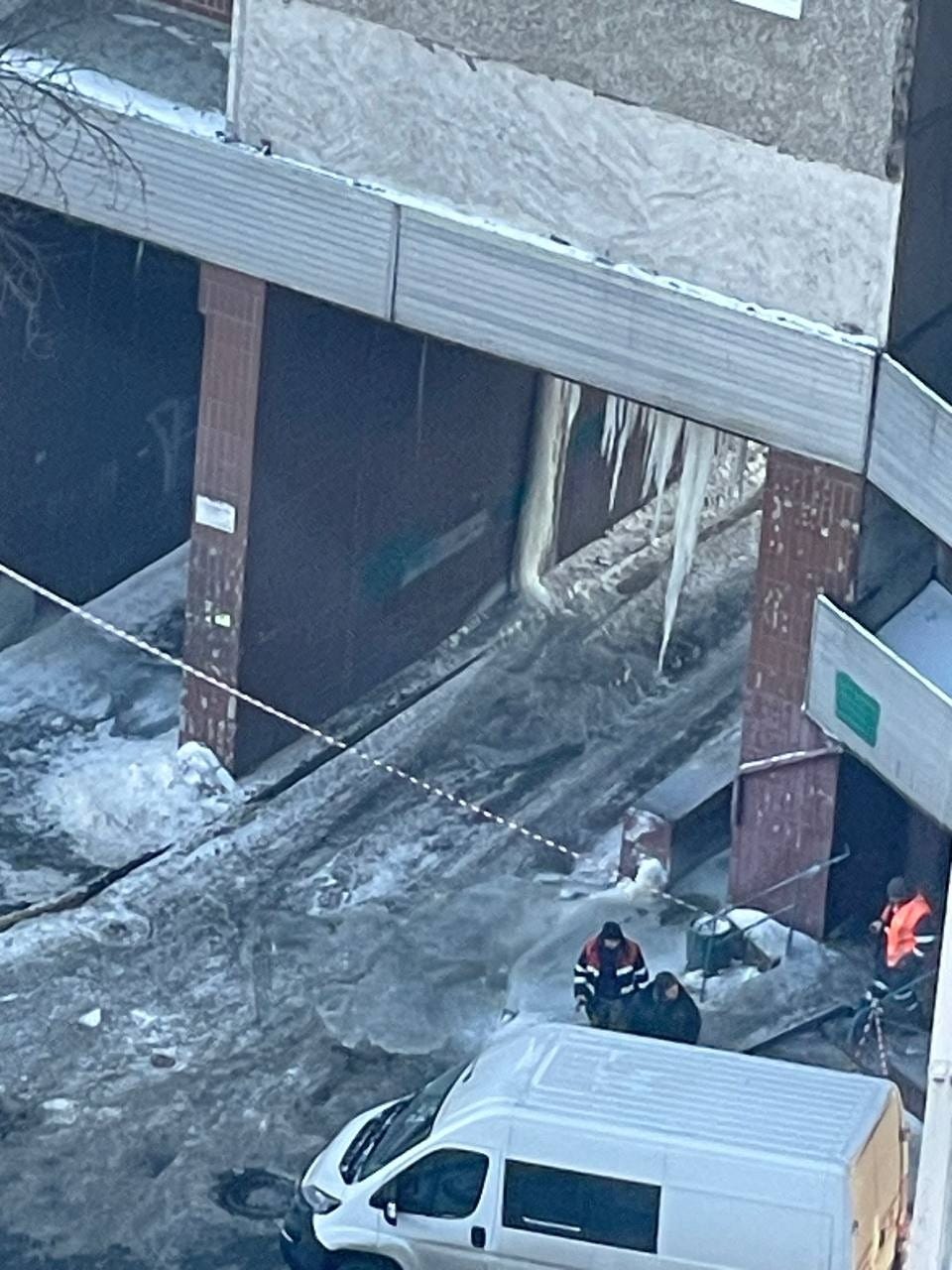
Her apartment building was dripping with water. It ran down the stairs, through the entrance hall, and out of the pipes. A nauseating stench came from some of the apartments. Huge icicles hung from the building’s archway like stalactites in a cave, threatening to come crashing down on someone’s head at any moment.
In the middle of the yard was a portable toilet, tilted at an angle. Just one toilet for more than one hundred people living in the eighteen-story building. It was installed so crookedly that Valentyna worried it might topple over at any moment. “It’s humiliating,” she said, letting out a dry chuckle.
She survived the humanitarian catastrophe that unfolded in her building after Russian attacks first knocked out the electricity and heating, causing pipes to burst, leaving the building without running water or functioning sewage.
Now, it looks like the same nightmare is due to play out in other districts of Kyiv this year.
Ukrainian officials have warned of an extremely difficult winter since early this summer, and there are mounting signs of their predictions coming true.
Despite Trump’s earlier claims about a bilateral energy ceasefire between Ukraine and Russia, the Kremlin shows almost no signs of being interested. Instead, Russia may have started stockpiling ballistic missiles over the past few weeks, concentrating their efforts on jet drones. There is no doubt Putin is preparing for new deadly energy attacks.
However, this time it might escalate far beyond energy and heating. On Thursday, Energy Minister Denys Shmyhal said Ukrainian security forces had obtained Russian documents, disclosing Russian plans to attack heat and water supply facilities, wastewater treatment systems, and power plants. They are also planning to target interconnectors, which help deliver electricity from Europe. This creates new challenges for Ukrainians. During blackouts, people can at least rely on backup power supplies. But what do you do when you’re trapped in a freezing apartment with no water or a functioning sewage system?
On the sixth floor of an apartment building in Teremky, a large residential neighborhood on the outskirts of Kyiv where Valentyna lives, things were not initially so catastrophic. In the panel building, the heating and electricity went out concurrently, as high-rise apartment buildings are usually not connected to gas.
“There are no generators, no equipment for that. The elevators didn’t work, so people had to walk. That’s still half the trouble. We’re on the sixth floor, so it’s a little easier for us. Then the water started to disappear,” Valentyna recalled.
It helped that before the full-scale invasion, the family had insulated one of the rooms in their apartment that had been constantly drafty. During prolonged power outages, Valentyna went to her daughter’s place in another district of the city, which was on a different power outage schedule (implemented to keep the damaged power system from collapsing).

Memories of what her family experienced in early January 2026 still send shivers down Valentyna’s spine. Russia had launched its largest strikes on Kyiv’s thermal power plants, effectively knocking them out and leaving thousands of people without heating. Temperatures outside dropped as low as minus 20 degrees Celsius. It wasn’t only the people who were freezing — the water in the pipes was too.

This winter, Ukraine, and Kyiv in particular, is facing a situation where, on the one hand, it has learned to restore the power system quicker after attacks, but on the other, it has less resilience than previous years, as it has not recovered from systematic attacks, said Mykhailo Babiichuk, General Manager for Security and Resilience at the think tank DiXi Group, which focuses on the energy sector. While the approaching winter will not necessarily be worse, the risk of severe scenarios remains very high.
“Russia’s strategy is shifting from attempts to create a blackout — a systemic cascading failure — to attempts to disrupt the entire network of systems that keep a city functioning… For an average resident of a big city, this is no longer just a few hours without electricity, but simultaneous problems with electricity, heating, and water,” Babiichuk said.
Outage schedules may be introduced not only for electricity but also for water. Valentyna does not need to imagine living under such conditions, as she already knows how it feels to live without water for weeks.
In some apartments in her building, pipes burst. Sewage backed up through sinks and bathtubs. Some residents were not home — they had left Kyiv.
Valentyna’s neighbors tried to thaw sewage pipes in the apartments on January 25, 2026. Video provided by Valentyna.
“We were already getting ready to simply break down the doors to get inside, because we couldn’t deal with the problem across all 18 floors on our own. The sewage had leaked everywhere. There was a crust of frozen feces on the floor, mixed with water that was about ten centimeters deep. All the furniture, all their belongings, everything in the apartment was covered in it. The neighbors were scooping it out,” Valentyna recalls what happened to some people’s homes in her apartment building.
Valentyna stayed at the clinic where she worked on Kyiv’s Left Bank, laying out a couch to sleep on, or spend the night at her daughter’s small apartment. Staying home was unbearable.
“My husband would text me: ‘Don’t come. The apartment is filthy; you can’t wash anything. There was no water.’ We have water pumps near us, but they weren’t working because they run on electricity,’” Valentyna said.
She said the pumps were turned on only once during the freezing weather. They rushed to collect water as soon as they heard, gathering as many bottles and containers as they could.
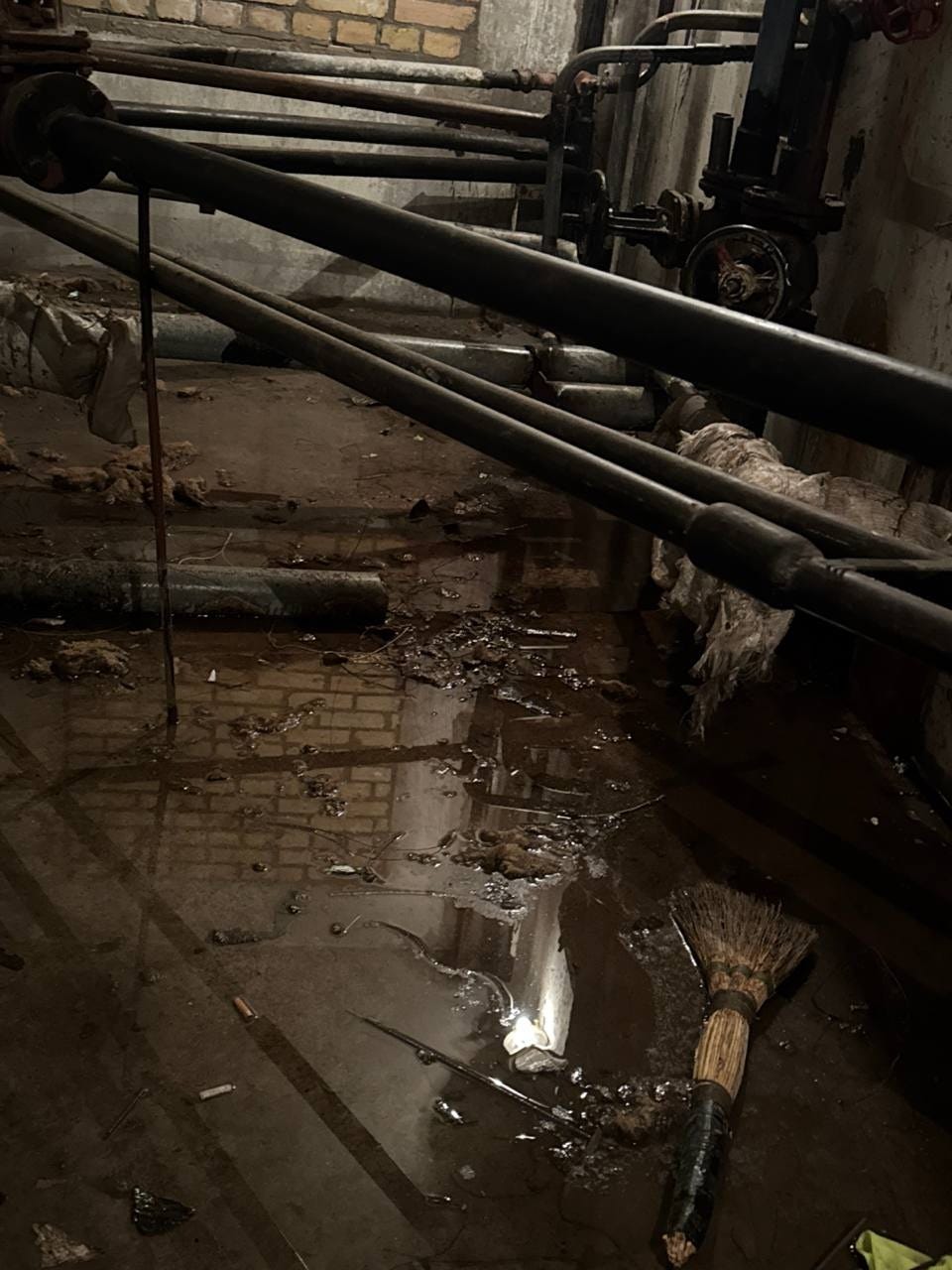
According to Babiichuk, a water supply loss poses a more dangerous scenario than power outages.
“It’s not just about having no water coming from the tap. It means problems with toilets, hospitals, food preparation, firefighting, and sanitation — and a very rapid increase in the risk of disease outbreaks,” he said.
Water utilities in major cities, particularly in Kyiv, depend on a centralized power supply, and backup power sources can only run for a few hours, energy expert Hennadii Ryabtsev explained.
“And this, understandably, caused major problems whenever Russia struck those very power supply facilities,” Ryabtsev said. “The priority of the measures currently being taken by the authorities is to install autonomous power sources for water utilities.”
Beyond water supply facilities, Russia could also target wastewater facilities. Kyiv’s single aeration station, which treats wastewater for Kyiv and surrounding cities, is seen as an especially vulnerable site. As Babiichuk notes, serious damage to it could risk not only a sewage crisis but also pollution of the Dnipro — Ukraine’s largest river — which would pose risks to other cities as well.
Some residents who suffered sewage issues in Teremky, according to Valentyna, bought portable toilets for their homes, but her family could not afford one. Instead, local authorities placed a single portable toilet in the courtyard for their building.
She stayed home for only a night or two a week, bringing her husband food and supporting him as he opted to look after the place. She sent him encouraging messages with “nice emojis,” she said, and they prayed together every morning and evening. “My husband was shivering, freezing, simply guarding the apartment because a pipe could burst somewhere and start leaking at any moment. He tried little by little to thaw the pipes, but it didn’t work. So he just guarded the home,” Valentyna recalled.
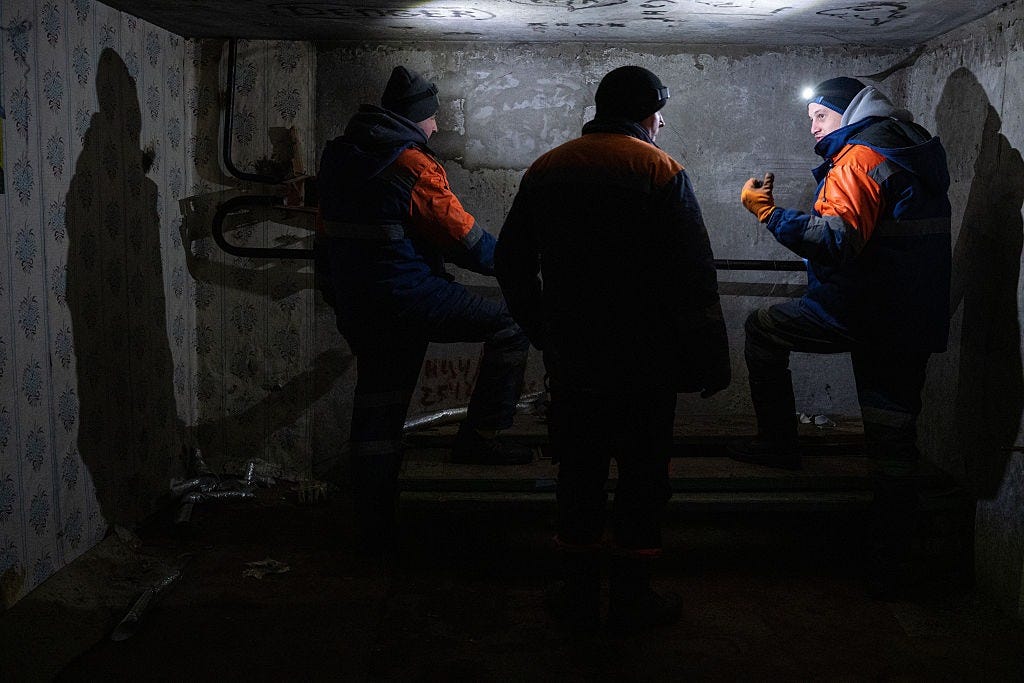
Now Valentyna dreads what awaits her this winter.
“I don’t know what will happen. We don’t see any sign that they’re preparing for winter in any way [in her apartment building]. And most likely, we won’t prepare at all,” she said.
Babiichuk says the scale of planned work for Ukrainian regions seems too big to be done before winter. As of now, Kyiv has carried out only half the measures approved by the government to make the energy system more resilient. About 65 percent of damaged energy facilities were repaired as of early August, and around 66 percent of facilities had physical protection, he said. There are also plans to boost energy capacity and to expand the backup water supply, along with mobile boiler units. Although Babiichuk says the city will be more prepared this winter than last winter, this doesn’t eliminate the main vulnerability — the shortage of ballistic interceptors.
Valentyna is already planning to ask to spend nights at work if the situation from last year repeats itself or gets worse. But after her colleagues saw her staying overnight in the doctors’ office last time, they’re now planning to do the same.
The office may find itself packed if the Russians prepare even more cynical strikes and render entire districts, or even whole cities, unable to sustain life.
“You feel like a piece of meat, simply not a human being, when you can’t drink, can’t wash, can’t even go to the bathroom, nothing,” Valentyna said. “You can’t — you’re freezing, you can’t think, you can’t work. On top of that, you could be killed. It’s a horrific situation.”
Want to see how Ukraine made it through past winters under Russian attack? Check these stories out:
Why Ukraine’s heating is so vulnerable to Russian strikes by Mariana Lastovyria
U.S. poop parasite is familiar Ukraine nightmare by Oleksandra Poda
I once craved the polar cold. Now I fear it at home. by Mariana Lastovyria
How Ukraine’s homeless are faring in freezing conditions by Tania Novakivska and Oksana Stepura
Editor’s Note:
Drones have changed this war so completely that it’s getting hard to imagine any battle without them. That includes battles fought more than thirty years ago.
That’s the thought experiment behind our latest live conversation with Alexander Lord: what would Black Hawk Down have looked like if the militias in Mogadishu had drones? The replay is below.
If you appreciate our human-centered journalism, please support us.
What if Somali militias had drones in ‘Black Hawk Down’?
Thank you Zelda Zulu, Susan, RichinPhoenix, Susan Mariano, Julie Huffaker, and many others for tuning into my live video with Alexander Lord! Join me for my next live video in the app.
THE LATEST NEWS AT THIS HOUR:
By Myroslava Tanska-Vikulova
Good morning to readers; Kyiv remains in Ukrainian hands.
U.S. MUST USE $100 MIL OF UKRAINE MILITARY AID BEFORE IT EXPIRES ON SEPT 30: The Trump administration has legally committed to allocating the remaining $93 million of the $400 million military aid package approved in 2025, before the aid expires on September 30, Reuters reports, citing sources, that missiles for the Patriot systems will not be included.
The funds do not need to be spent by the end of the year, but they must be contracted to avoid expiring. The first deliveries began earlier this month, and the remainder will be delivered by October 2029, after Trump’s presidential term has ended.
FIRE AT STARLINK FACILITY IN POLAND BEING INVESTIGATED AS SABOTAGE: The Polish Prosecutor’s Office has launched an investigation into a fire at a Starlink station in the village of Wola Krobowska, in the central-eastern part of the country, according to the National Prosecutor’s Office. The case is being investigated as an act of sabotage, arson and an act of terrorism committed by foreign intelligence services. Investigators also have evidence that the perpetrators may have acted on behalf of Russian intelligence services but no suspects have been identified yet.
The prosecutor’s office believes the attack may have been intended to disrupt regional internet connectivity.
POLAND WILL PAY U.S. SOLDIERS $15K A YEAR TO PUT ON ITS TERRITORY: Poland is offering to pay $15,000 a year for each U.S. service member stationed in Poland, in addition to covering infrastructure costs, said Polish Deputy Defense Minister Paweł Zalewski in an interview with Radio Free Europe/Radio Liberty.
Discussions are currently underway regarding the establishment of a permanent U.S. base on Polish territory. Warsaw and Washington are discussing how to implement the plan, including how to deploy troops, their capabilities, and where exactly to station them. Funds for the maintenance of U.S. soldiers will be allocated from Polish tax revenues.
This decision underscores Warsaw’s determination to ensure a permanent U.S. military presence amid the Pentagon’s review of the deployment of U.S. troops in Europe.
CAT OF CONFLICT:
This is Myroslava’s Sherri, today’s Cat of Conflict, who delights everyone with her charm.

Stay safe out there.
Best,
Mariana.