

At the bottom of this page: Latest news at this hour
Due to attacks in the Black Sea, Russia will export metal through the Arctic; Russia turns to own Starlink alternative in Ukraine; Micron suspends $ 4.5 B Taiwan chip plant amid labor dispute.
Editor’s note:
Welcome to our monthly Taiwan issue.
Two democracies, thousands of miles apart, are learning the same lesson. When a bigger neighbor claims you as its own, you can’t wait for someone else to keep you safe.
Subscribe for free to follow stories from the front lines of democracy.
OUR LEAD STORY:
TAIPEI, Taiwan — Li Meng-Hsuan remembers dreaming about becoming a submarine captain when he was a teenager. He remembers his favorite book at the time, Attack of the Seawolf, in which the Chinese Communists captured an American submarine and took its commander hostage. The Captain of the U.S. ship Seawolf, Michael Pacino, had to play mind games with the Chinese to set him free.
Meng-Hsuan almost achieved that dream. In 2004, at age 23, he joined the Taiwanese Navy. 20 years later, he became a submarine chief engineering officer. He has watched as tension in the Taiwan Strait increased over the course of his career.
On October 14, China announced live-fire drills in 5 sea regions and sent its first aircraft carrier, Liaoning, to the western Pacific. It is believed the action is aimed at the U.S.–Japan alliance and at strengthening China’s ability to operate in the Western Pacific.
Ocean strategy has never been so crucial to Taiwan as the Chinese warships try to take control of the Taiwan Strait and take on more aggressive positions.
As a country surrounded by water, Taiwan needs at least 3 submarines on duty at all times to counter the Chinese warship fleet, says the Institute of National Defense and Security. It’s believed that they can effectively deter Chinese fleets from reconnaissance in Taiwanese waters.
For years, Taiwan’s defense ministry planned to replace its old submarines, some of which were built as early as WWII. But the Chinese government sabotaged Taiwan’s procurement of new submarines, pressuring its economic partner countries not to sell weapons or accessories that can strengthen Taiwan’s defense capability.
Ultimately, China’s plan only pushed Taiwan into a self-sufficient mode. Taiwan launched the prototype of its first domestically manufactured submarine, Narwhal, in September 2023, marking a milestone in its history. Narwhal is planned to complete operational testing by the end of this year and serve in 2027 at the earliest, marking a major step towards relying less on foreign arms supplies and strengthening its ability to defend itself, securing an “anti-China” supply chain for the world.
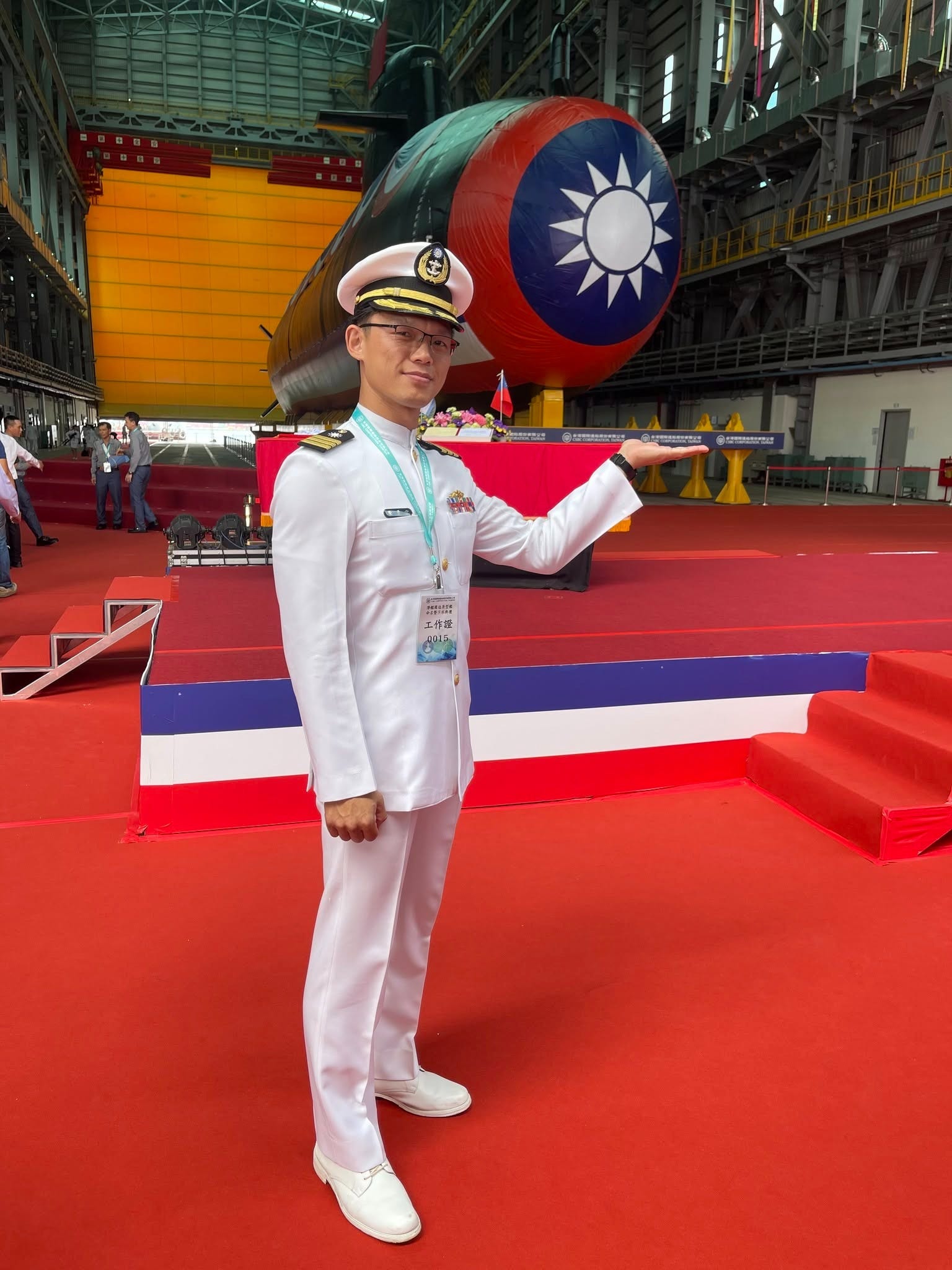
On Sep 23, 2026, Narwhal ran its 22nd operation test, escorted by the Endeavor Manta USV. Video by Elaine Lin.
A real narwhal, written as 海鯤 (pronounced ‘Hai-Kun’) in Mandarin, is a giant divine mammal, uniquely good at hiding, which perfectly describes what a submarine needs to be: hard to track. “The existence of the submarine is a threat to the Chinese,” Meng-Hsuan explained. “They couldn’t figure out where the threat is coming from to know how they can defend themselves.”
In 2007, Meng-Hsuan joined the 256th Submarine Squadron, the only submarine brigade in the Taiwanese Navy to this day. He remembers working inside a submarine vividly, and the not-so-dreamy conditions he endured. “It’s boring living in the submarine for a month, and it could make people claustrophobic,” he said.
His adaptability made him perfect for the job. “Our sleeping area is smaller than a coffin,” he recalled. “We had to keep our voices down most of the time, not allowing running, to prevent causing panic among the crew.”
Before Meng-Hsuan retired in 2024, he was one step away from becoming the submarine’s top commander at the peak of his career, but it turned out this position didn’t fit his personality. As a child, he imagined, from the books he grew up reading, that the captain had the power to sway the submarine. But the bureaucratic systems in the military meant the job looked different.
“I thought being a submarine captain was about finding the best strategy for different missions. But a responsible captain shouldn’t be like the captain in the book, doing as he pleases. Instead, he should always follow orders from the navy or the Commander-in-Chief,” Meng-Hsuan said.
Meng-Hsuan served on all four of Taiwan’s submarines over the course of 8 years. Two of them were from the U.S. and were built in the 40s. Overall, they have served for over 80 years and are planned to retire in 10 years. The other two are from the Netherlands, which have served for almost 50 years. Despite their age, Taiwan can’t risk having fewer submarines guarding the country amid a potential Chinese threat.
Meanwhile, the Chinese have been modernizing their navy extensively since the early 1990s. Last September, China’s latest built aircraft carrier, Fujian, passed the Taiwan Strait for the first time before it was officially commissioned.
To counter the Chinese force, the Taiwanese government planned to build 7 submarines from 2025 to 2038, estimating a 9 billion dollar spend. In 2017, Taiwan officially launched the Indigenous Defense Submarine Project (IDS) to build its first indigenous submarine, Narwhal. Its construction started in 2020 and passed its first floating test in 2025.
To guard Taiwan’s waters, Narwhal is built with advanced systems for motion acceleration and weaponry to deter its enemy. It is the first Taiwanese submarine equipped with Mark-48 torpedoes, heavyweight torpedoes that rip through enemy ships and subs. With certain modifications, the submarine could be capable of firing anti-ship missiles or launching Tomahawk missiles via the torpedo tube, threatening the Chinese Navy directly with a stronger force.
That’s a warning to China. On March 3, 2026, the U.S. sank Iranian IRIS Dena off Sri Lanka’s southern coast with Mark-48 torpedoes amidst its war with Iran, marking the first American submarine kill with a torpedo since World War II. Narwhal has the same powerful capabilities and weapons. “A torpedo can sink a destroyer that’s bigger than 8,000 tonnes of water displacement. It shows enough deterrence to the Chinese [warships],” Meng-Hsuan said.
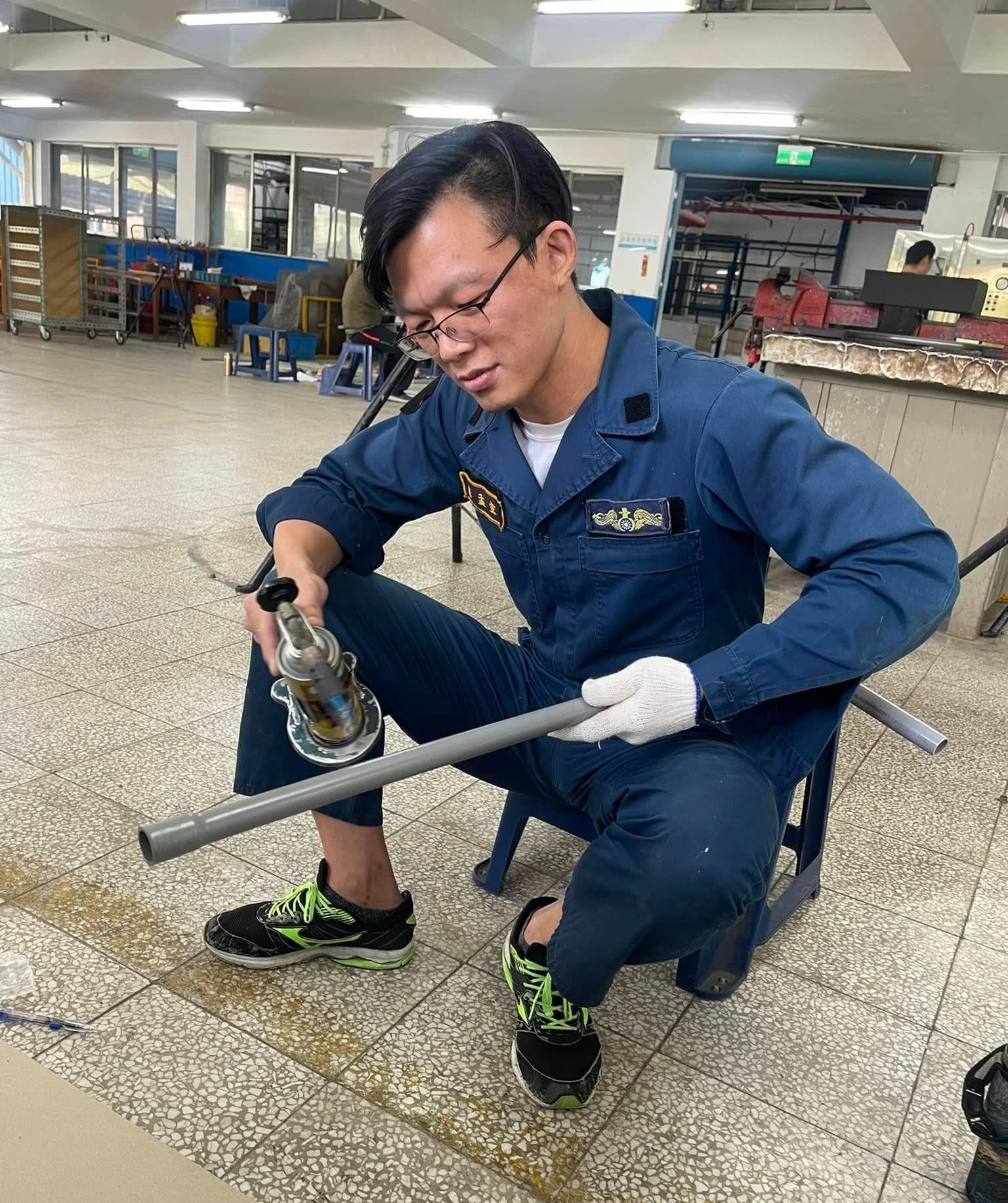
Meng-Hsuan witnessed Narwhal’s completion and knew the submarine had symbolic value. He was assigned to join the Planning Division of Naval Command, which was involved with the Narwhal project, after Submarine Squadron service. His job was to cooperate with the domestic manufacturer and make sure the submarine was delivered on schedule.
Meng-Hsuan believes Narwhal has boosted soldiers’ morale and strengthened their will to counter the enemy. “There are only a few countries that can build submarines, and Narwhal makes me proud of protecting the country,” Meng-Hsuan said.
However, some disagree with Meng-Hsuan. Skeptics argue that Narwhal should not count as a domestic manufacture, because the manufacturer of the submarine claimed that 40 percent of Narwhal is made in Taiwan.
Meng-Hsuan says it’s silly to question the domestic nature of these watercraft. “Even an iPhone can’t be 100 percent made in the USA. If we can make just one bullet, it is still helpful [to protect our country].”
Narwhal faces physical challenges on top of public doubt. The manufacturer of the submarine, CSBC Corporation Taiwan, was supposed to deliver Narwhal to the Taiwan Navy last November, and there are plenty of reasons for delaying the delivery by over a year. One of the main reasons is China.
Taiwanese media Mirror Daily reported that a Turkish manufacturer agreed to provide technicians for the submarine decoy, but the agreement was withdrawn at the last moment. The announcement came abruptly without giving an explanation, suspected to be due to China’s diplomatic intervention.
Then-Defense Minister Chiu Kuo-cheng claimed that “someone tried everything because they might not want to see Taiwan build the submarine.” He didn’t say the name of the country out loud, but it’s believed that China coerced its allies into not assisting Taiwan in obtaining critical components. Meng-Hsuan pointed out the challenge: “Taiwan is not part of the United Nations, unlike other countries that can access all resources they want.”
Developing its own capabilities seemed to be the only way to ensure security. Taiwan invented ways to produce some of the most critical parts, including the submarine decoy. At the same time, Narwhal incorporated both Taiwanese and foreign operational systems.
Assembling parts from other countries, such as the U.S. and South Korea, was one of the biggest challenges of the technical build process. Because of Chinese aggression, Taiwan was pushed to filter out which countries are truly allies who can help, and built out an anti-red supply chain.
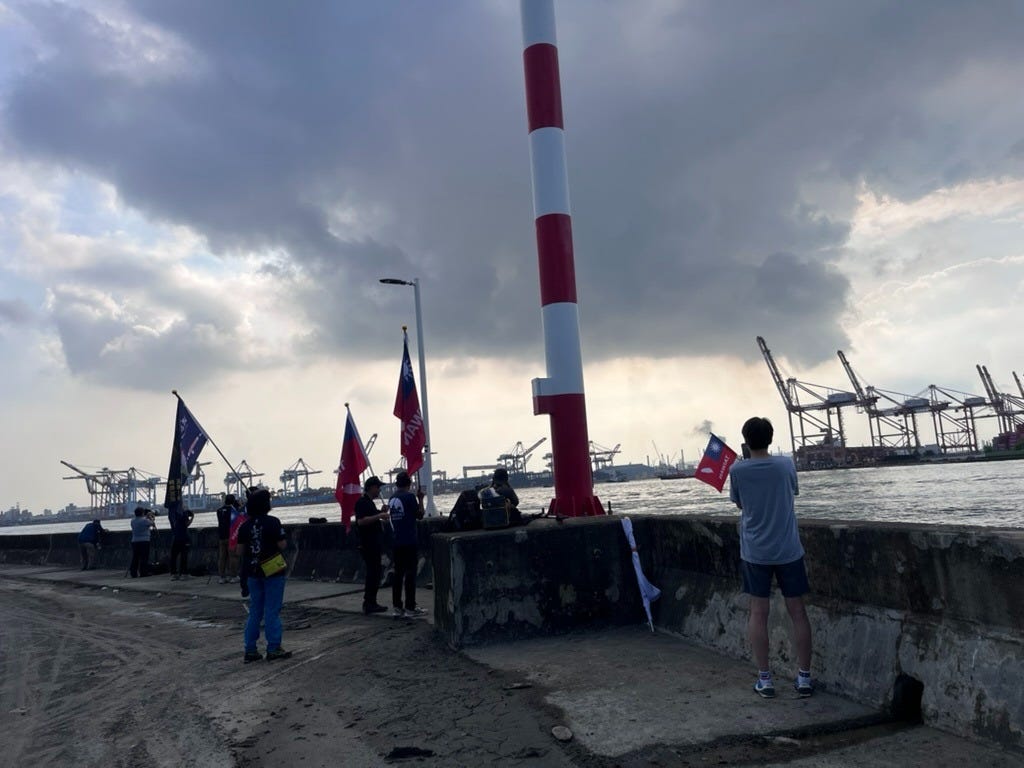
Meng-Hsuan devoted his entire life to the ocean, but ultimately he decided it was time to shift his career. He retired from the Navy, but his passion for the ocean has not changed. He decided to run a company that offers all kinds of water activities, such as diving and yacht-driving lessons. “I want to make more people love the ocean and connect to the ocean,” he said.
“We are an island country, but we never spend enough time there to learn how to live with it,” Meng-Hsuan said. “Once more people use the ocean, more would care about guarding it.”
Interested in topics about Taiwan? Take a deep dive into some of our related coverage.
Xi’s Trump visit puts Taiwan’s AI boom in crossfire by Elaine Lin
Taiwan’s shrinking population is a national security threat by Elaine Lin
Taiwan imagines: What happens the day China invades? by Elaine Lin
Editor’s Note:
Welcome to our monthly Taiwan issue.
Two democracies, thousands of miles apart, are learning the same lesson. When a bigger neighbor claims you as its own, you can’t wait for someone else to keep you safe.
Thank you for helping us tell these stories, from Kyiv to Taipei.
Support us!
THE LATEST NEWS AT THIS HOUR:
By Myroslava Tanska-Vikulova
Good morning to readers; Kyiv remains in Ukrainian hands.
DUE TO ATTACKS IN THE BLACK SEA, RUSSIA WILL EXPORT METAL THROUGH THE ARCTIC: For the first time since 1996, Russia is forced to ship pig iron through the Arctic port of Murmansk instead of Black Sea ports. Due to attacks on ships in the Black Sea, exporters are seeking new routes; although shipping via the Arctic takes 10 days longer and is significantly more expensive, producers are paying $100 more per metric ton.
According to the Financial Times, as part of a trial shipment, more than 180 railcars carrying 65,000 metric tons of metal were delivered from the Urals; the metal is likely destined for Turkey. If the trial proves successful, such shipments could become regular.
RUSSIA TURNS TO OWN STARLINK ALTERNATIVE IN UKRAINE: Russia is already deploying the ‘Rassvet’ satellite network over Ukrainian territory, which is being developed as its own version of Starlink. According to Ukrainian intelligence, 32 satellites have been launched by Russia this year and are used for military communications and drone control. This allows Russia to increase the accuracy of its strikes and reduce its vulnerability to Ukrainian electronic warfare systems.
The network is still operating intermittently. However, Ukraine is already calling for tougher international sanctions against the companies developing the project.
MICRON SUSPENDS $4.5B TAIWAN CHIP PLANT AMID LABOR DISPUTE: Micron Technology has halted the construction of a new chip manufacturing facility in Taiwan due to a labour dispute, Bloomberg writes. Disputes over working conditions and legal risks are jeopardizing the company’s plans to increase chip production for artificial intelligence.
The project freeze poses serious risks to the global market, as Taiwan accounts for 60% of global DRAM or dynamic random access chips. It is also Micron’s largest facility, home to a quarter of the company’s total workforce. Micron has already notified Taiwanese government officials and equipment suppliers of the suspension.
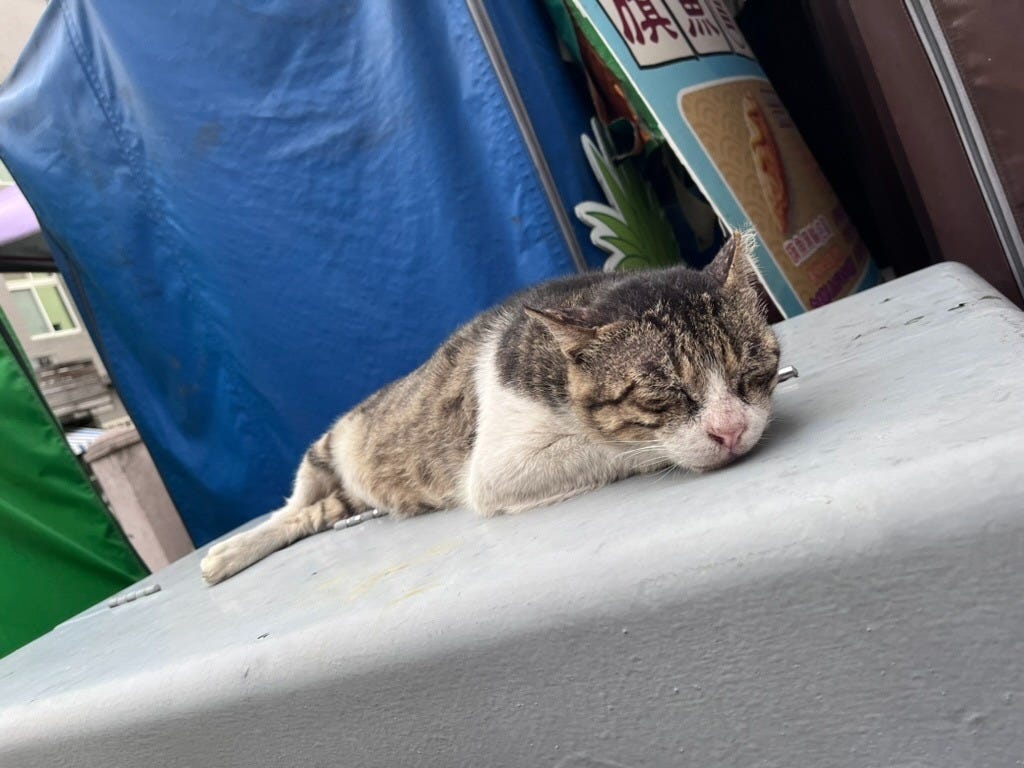
CAT OF CONFLICT:
I saw this cutie pie napping on my way to witness Narwhal’s 22nd operation test. I hope the island remains peaceful so this cat can always nap in its favorite spot safely!
Stay safe out there!
Best,
Elaine
