

At the bottom of this page: POP QUIZ! Are you keeping up with Ukraine?

Editor’s note:
Our team got lucky as almost all of us live on Kyiv’s right bank, except the managing editor, and these days her trip to work comes with a side of bridge anxiety.
Hundreds of thousands of Kyivans cross the Dnipro to get to work, school, or the doctor, over bridges Russia keeps trying to bring down.
So we asked an engineer what the future of our bridges is.
Subscribe for free to follow how Ukraine keeps moving under fire, straight to your inbox.
OUR LEAD STORY:
Kyiv, UKRAINE – If Oleksandr Davydenko could design any bridge he wanted, he’d ensure it truly connects people. He pictures it as the place where everyone comes to chat over a drink or watch the sunset on serene summer evenings that smell like rain and lime blossom.
“I would build a suspension or cable-stayed bridge – a truly beautiful one. I would definitely ask… to include some viewing platforms so that people could gather there, as well as wide pavements where they could drink coffee and look out over the Dnipro [River],” he said.
As much as Ukrainians crave such beauty, this project remains a distant fantasy for now. In the country at war, bridges have to stand strong — even stronger than those who use them.

Since early October, Russia has been actively targeting bridges over the Dnipro River to disrupt Ukrainian civilian and military logistics and spread fear among Ukrainians that the country might be split in two. In Kyiv, the strikes have already led to a transport collapse, strained public transport, and disrupted the daily lives of thousands of citizens. If the strikes continue, other large cities, such as Dnipro, Zaporizhzhia, Kamianske, and Kremenchuk, frequently attacked by Russia, may face the same problems.
This scenario is especially concerning against the backdrop of Ukraine’s military success and approaching winter — a high time for Russian commanders to demolish, among other targets, Ukrainian bridges and scare civilians into pushing the government towards capitulation on a special order by Putin.
On October 17, Russia again launched several ballistic missiles at the Northern and Southern bridges in Kyiv, causing major traffic jams during the morning rush hour. Previously, both of them sustained a sequence of drone attacks. On November 20, two new targets caught Russia’s attention. Two other bridges were also damaged, and partial traffic restrictions were introduced there.
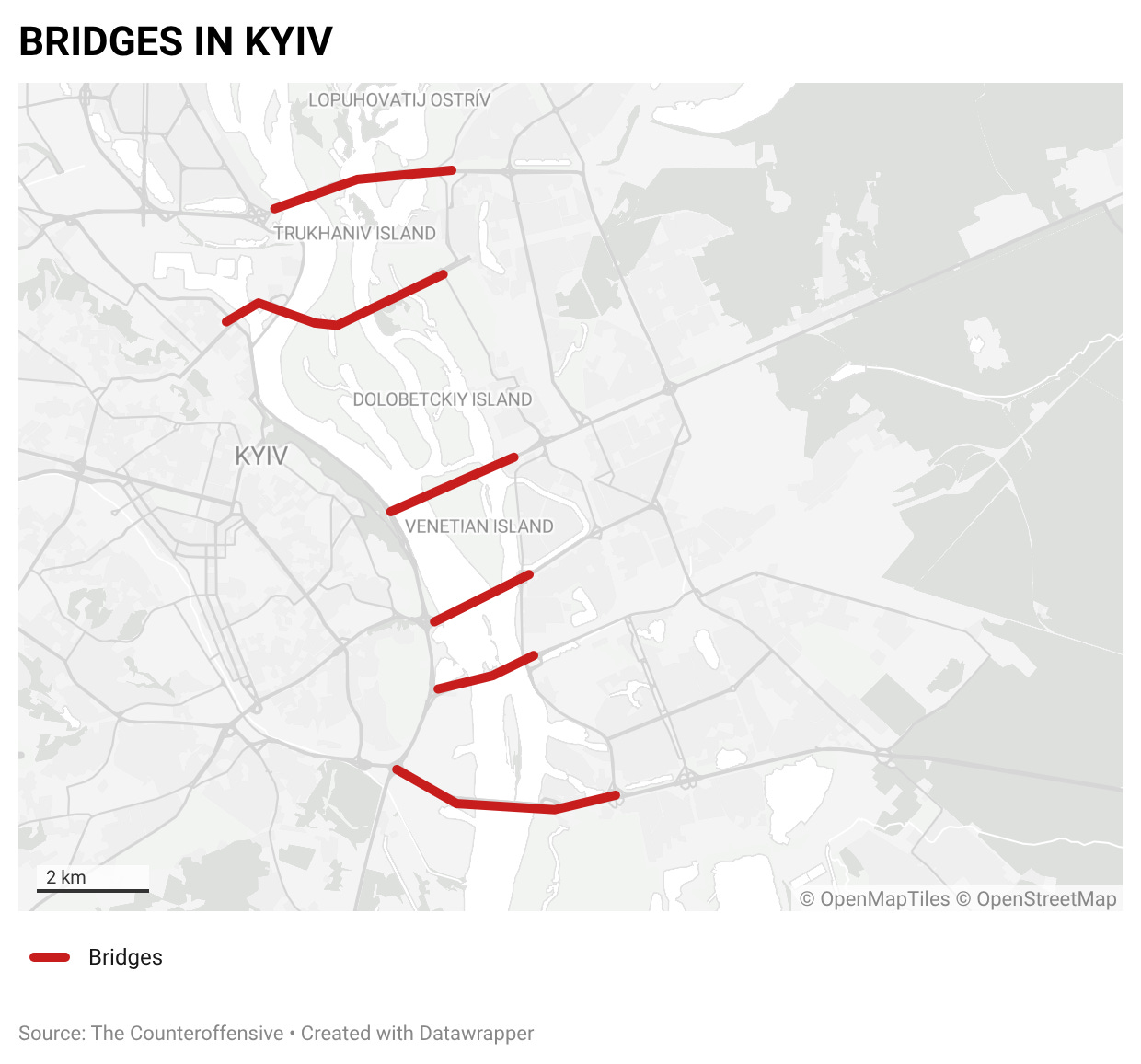
Even in peacetime, many countries have bridges they know, cherish, and take pride in. During the war, however, these top landmarks may become priority targets. As the threat of provocations and terrorist attacks looms large, proper construction, protection, and quick repair of bridges are crucial for public safety.
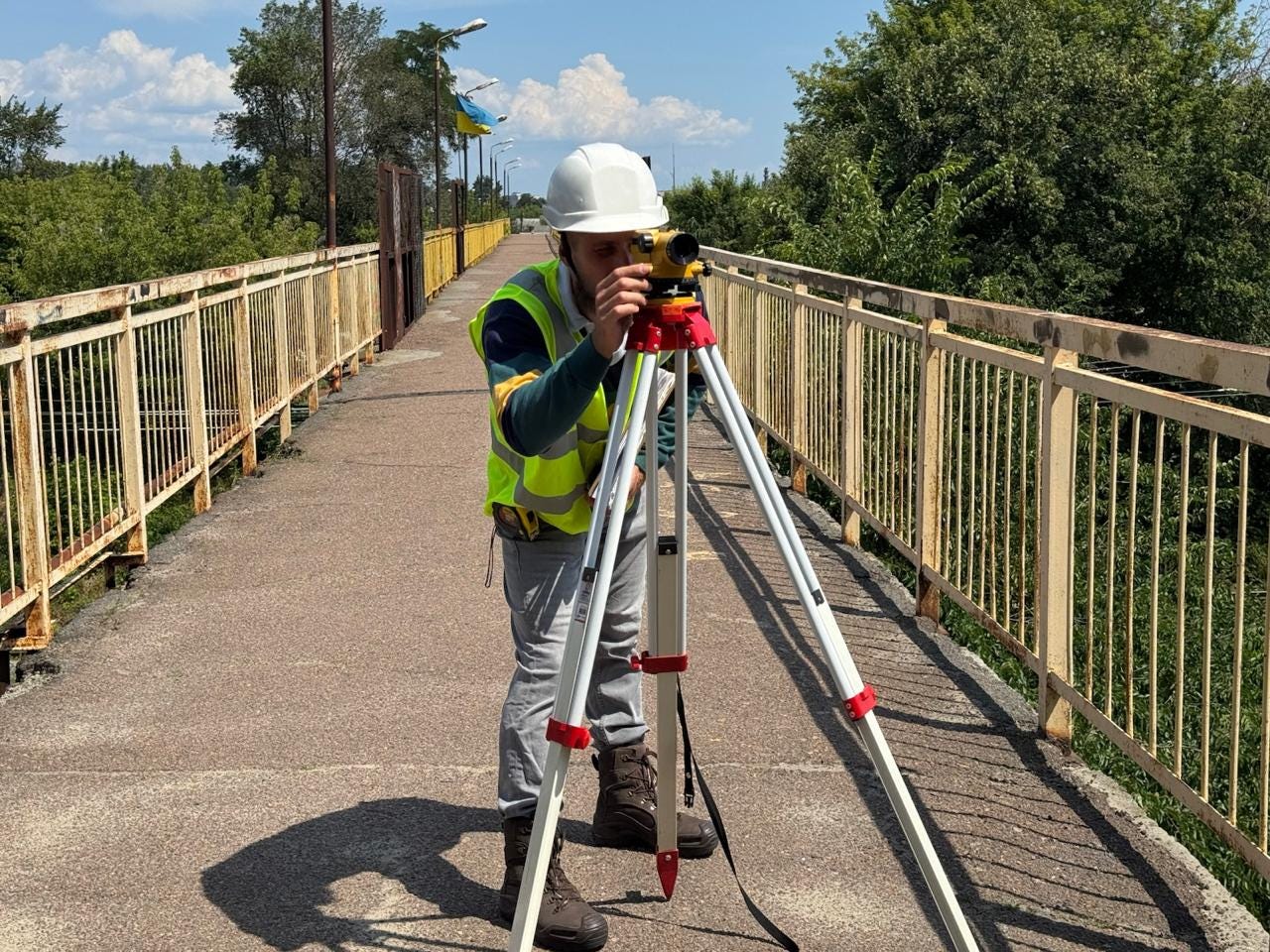
As an engineer specializing in bridges, Oleksandr fully understands their strategic importance. From his early years, he learned a lot about road and bridge construction from his grandparents, who worked in the field, and decided to follow in their footsteps.
“I’ve always liked bridges. There’s something philosophical about them. My favorite one is the Golden Gate Bridge in San Francisco — I love seeing it in the photos. I’ve never been there, but I think I’ll definitely go see it someday,” Oleksandr shared.
Currently, he is pursuing a scientific career and looking for ways to protect bridges against constant Russian strikes. The task is far from easy because Ukrainian bridges were not prepared for the challenges of modern warfare.
“Nowhere in the world are there specific explosive load standards for bridges in case of a military threat. In other words, no document specifies that a bridge must be able to withstand an explosion equivalent to a certain amount of TNT,” the engineer said.
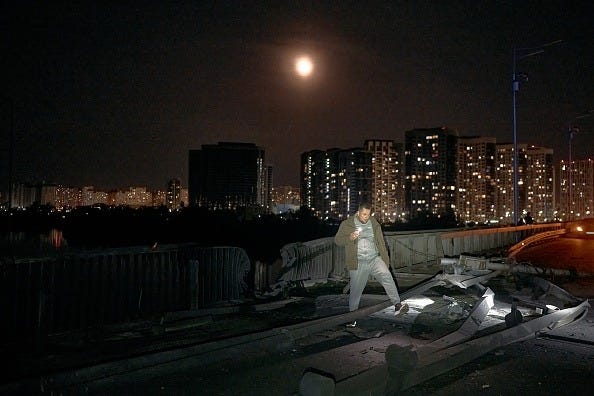
That is why Ukrainian engineers have to consider a wide array of alternatives to protect the bridges, from covering them with relatively cheap anti-drone nets to strengthening their piers and spans, which is much more expensive and time-consuming.
The majority of large Ukrainian bridges over the Dnipro River were built during the Cold War, when the Soviet government was unnerved about a potential attack from the U.S. or its allies, all the way up to a nuclear strike. However, the perceived threat had surprisingly little effect on their construction.
“Design loads [on Ukrainian bridges] have no real-world equivalents, but there is a term “NK-100,” which stands for “wheel load.” The number 100 represents the total design load [in tons], very similar to the weight of a Soviet missile carrier. This standard is historically associated with military vehicles and dates back to the Soviet bridge design regulations of 1984,” Oleksandr explained.
He highlighted that the outdated construction standards made some crossings more vulnerable than others. For example, their road surfaces needed frequent repairs even in peacetime, partly due to shortcomings in the original design.
At war, the Soviet bridge safety regulations became a double-edged sword. They might deserve a “thank you” from the Ukrainian army, which managed to destroy the Kerch Bridge and cut off the occupied Crimea from a vital supply line. On November 17, one of its two arches fell to the bottom of the Black Sea. The next day, the Ukrainian Ministry of Defense reported that Neptune missiles damaged railroad tracks running across the bridge and halted train services. On this occasion, the General Staff hailed the Vasco da Gama Bridge in Lisbon, being about 2 km shorter, as the longest bridge in Europe again.
Hypothetically, the strongest bridge, most likely to withstand the military threats Ukraine is facing, should be properly reinforced and have as few separate structural elements as possible. In practice, about half the country’s bridges were built over 60 years ago, so their reinforcements have likely begun to wear out.
“Monolithic structures that have fewer joints and connections, as well as dense concrete reinforcement, are…more blast-resistant than, for example, certain pre-assembled structures,” Oleksandr said.
In frontline areas, however, the picture is different. Some bridges, like the Kakhovka dam and the Antonivskyi Bridge in the Kherson Region, are already damaged with no foreseeable possibility of reconstruction and are extremely dangerous to inspect. Even if engineers reach these crossings after the war ends and choose to rebuild them with the abundant rubble from other destroyed buildings — a spreading wartime upcycling trend — reconstruction might take years.
To prevent such a scenario in other places, Ukrainian authorities restrict traffic across bridges that have not yet sustained critical damage. Although this causes massive traffic jams, it is a justified way to prolong a bridge’s life and reduce potential casualties in case of the next aerial attack.
“If we need to reduce the load on the bridges, [...] we remove the lanes that vehicles can use. Similarly, we could reroute freight trains while continuing to use the bridges for passenger vehicles.”
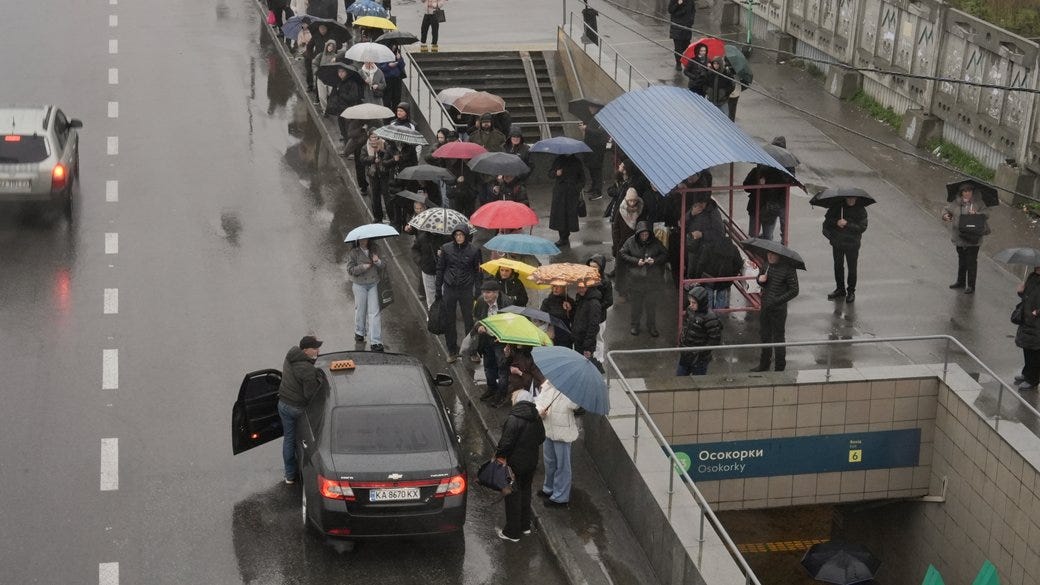
One alternative to concrete bridges is pontoon crossings. Two of them are already being constructed in Kyiv. In total, the capital city plans to build 8 of them, able to carry up to 130 cars each per day. Oleksandr sees them as a temporary solution, more suitable for military equipment than for larger passenger transport, which could easily lose its balance on a windy day. According to different estimates, one bridge over the Dnipro River handles about 100,000 vehicles or 500-700 thousand people per day.
As an alternative, ferry crossings can be considered, but mostly for freight transport. Using a ferry as a passenger might require an hour-long wait until it unloads, reloads, and crosses the Dnipro River, Oleksandr said.
Under a constant threat of new drone and missile strikes, the Ukrainian government is also getting ready to build an underwater tunnel in Kyiv. Oleksandr would be interested in contributing his engineering and management expertise to such a project. He noted that its implementation could take several years, including procurement, feasibility studies, design, and construction. Still, the tunnel won’t be immune to certain vulnerabilities any underground passage has.
“A tunnel has the portals, that is, the entrances, which are indeed vulnerable and need to be protected. I believe a tunnel would be a very interesting alternative solution, as it would diversify risks,” Oleksandr explained.

Despite all the challenges he faces as an engineer, Oleksandr remains optimistic as a university professor teaching young professionals. When asked about the bridge they would like to design for Kyiv, one of his students replied that she’d like to give the city a new tourist attraction that would be featured on souvenir postcards.
“And I want us here in Ukraine to build bridges just as beautiful as those around the world, like in North America and Japan,” he agreed. We have everything we need for this: wonderful engineers, an engineering school, and the resources. We have everything ahead of us. All the best is yet to come.”
To find out about other critical civilian infrastructure under fire, take a look at these stories:
They’re attacking the railways by Anastasiia Kryvoruchenko
Can Russia cut off Ukraine’s internet? by Oleksandra Khelemendyk
NEWSFLASH: Critical dam on Dnipro River breached, thousands in danger by Tim Makand Ross Pelekh
Editor’s Note:
Our team got lucky as almost all of us live on Kyiv’s right bank, except the managing editor, and these days her trip to work comes with a side of bridge anxiety.
Hundreds of thousands of Kyivans cross the Dnipro to get to work, school, or the doctor, over bridges Russia keeps trying to bring down.
So we asked an engineer what the future of our bridges is. Support our reporting!
POP QUIZ! Test how well you're keeping up with Ukraine.
Answer - C.
THE LATEST NEWS AT THIS HOUR:
By Myroslava Tanska-Vikulova
Good morning to readers; Kyiv remains in Ukrainian hands.
DRONES ATTACKED A RUSSIAN SHIP IN THE GULF OF FINLAND: The Russian cargo ship Sparta II, which was en route to Kaliningrad, was struck by drones in international waters in the Gulf of Finland. It subsequently caught fire and drifted into Finnish territorial waters. Finland stated that this was likely an attack by Ukraine. It imposed temporary restrictions on air and maritime traffic in the eastern part of the Gulf and informed its NATO allies.
The ship’s crew was evacuated and is currently heading to Russia. The ship itself is still on fire. The Sparta II is subject to U.S. and Ukrainian sanctions and has previously been linked to the transport of military cargo for the Russian army; Finnish Prime Minister Petteri Orpo stated that Ukraine has the right to respond to the aggressor.
RUSSIA OUTBIDS UKRAINE FOR CHINESE DRONE FIBER-OPTIC CABLES: Russia is buying up Chinese fiber-optic cable for drones resistant to electronic warfare, leveraging its greater financial resources and large-scale centralized procurement. As a result, the price of high-quality fiber-optic cable has risen from approximately $4 per kilometer in the spring to $30, with demand further fueled by data centers.
According to the Financial Times, Ukrainian manufacturers and intermediaries are purchasing cable piecemeal and are losing out to large-scale Russian purchases. Fiber-optic cable that does not reach Ukraine is effectively going to Russia, and since August, some shipments have arrived without manufacturer markings, creating additional delivery risks.
UKRAINIAN DRONES TO BE MANUFACTURED IN THE UNITED KINGDOM: Ukraine and the United Kingdom have signed agreements on the joint production of Ukrainian long-range and medium-range strike drones on British territory, which will be funded by London, with the finished drones to be transferred to the Ukrainian Armed Forces. The agreements were signed by Ukrainian Defense Minister Yevhen Khmara and British Defense Secretary Wes Streeting in Kyiv during talks that were also attended by President Volodymyr Zelenskyy.
Moving production to the partners’ secured areas allows for increased production of battle-tested drones without the risk of missile strikes on Ukrainian factories. This also strengthens strikes against Russian military and logistical targets. During the meeting, the parties also discussed accelerating the delivery of LMM air defense missiles from British stockpiles and modernizing Ukraine’s long-range missiles ahead of winter.
CAT OF CONFLICT:
This cat of conflict was sent in by Zoriana’s friends. Named after the American HIMARS rocket artillery system, he’s catching up on sleep in a warm little bed after a night of Russian strikes on Kyiv.

Stay safe out there!
Best,
Oleksandra.

I live in the ancient market town of Bedford, which is divided by the River Great Ouse. The river is not particularly wide, but there are a number of bridges across it, of which only three are road bridges. It is very beautiful in the summer and attracts quite a lot of tourists. To lose one of the road bridges would be most inconvenient!