

At the bottom of this page: Latest news at this hour
Russian convoy turns back after warship sunk in Libya; Russia offers Brazil spy swap for beach soccer star; China is practicing a marine landing on Taiwan using civilian vessels.


A year of The Counteroffensive, 30% off: $56 instead of $80
Includes every dispatch in full, behind-the-scenes notes, investigations, military updates, video chats with Tim and a place in the comments with readers who know this war inside out.
BLACK FRIDAY ENDS TUESDAY, DECEMBER 1 · MIDNIGHT ET
OUR LEAD STORY:
TAIPEI, Taiwan — Huang Yi-Hao performs at a comedy club in Taipei every few months, where sensitive jokes about politicians often bring him the loudest applause. He is one of very few people in Taiwan who perform a unique form of entertainment called Xiangsheng — a traditional Chinese comedy style built around wordplay in which tempo and rhyme mix to become a tongue-twister that entertains people who enjoy literature.
Last year, one of his performances received tremendous attention online because he called Chinese President Xi Jinping “the world’s number one fucking idiot.”
About nine months later, a car slammed into Yi-hao on his way to lunch in a planned accident — allegedly staged by Chinese agents.
Video: Yi-hao using Xiangsheng to mock Chinese President Xi Jinping, calling him “the world’s number one fucking idiot.” Source: Huang Yi-hao’s Facebook.
Yi-hao’s case is one of several in Taiwan in which authorities say civilians have been targeted by Chinese agents. As the midterm election in Taiwan on November 28 closes in, cases involving Chinese-paid political actions have surged, according to the Mainland Affairs Council. Taiwanese officials warned that China is expanding cross-border repression to Taiwanese politicians and civilians, including surveillance, intimidation, and sometimes physical attacks.
The scary part is how they get the work done. Prosecutors say Chinese-linked clients are hiring ordinary Taiwanese private investigators to infiltrate Taiwanese people. These investigators are paid to find out targets who are linked to anti-China voices and their vulnerabilities, hunting for personal information such as car license plates and home addresses. Some investigators went further to dig into personal routines, including what time subjects pick up their kids from school.
Besides Huang Yi-hao, recent victims include Puma Shen, who is the candidate for Taipei city mayor this year, and the Taiwanese President Lai Ching-te’s son, who is working in the U.S., raising concerns that Beijing’s intimidation efforts are expanding beyond Taiwan to target families abroad.
Yi-hao grew up in a family with various political opinions. His father is a hardcore Taiwan-independence supporter, while his mother leans toward the pro-China party, comfortable with the idea of being friendly and compromising with the country’s biggest enemy. He found a unique way to combine the two and became an anti-China comedian, inspired by Chinese art performances.
“Politics aren’t the only thing our family disagrees on,” he said. “There are many more topics that we can argue about.” Freedom of speech, which he stands adamantly for, is a big one. His family all agree that he should not bow down to China’s pressure to stop performing, and they support him in keeping his career. “My sister worries about me a little bit, so she bought insurance for me,” Yi-hao joked. “She will be the biggest beneficiary of the Chinese repression [if something happens to me].”
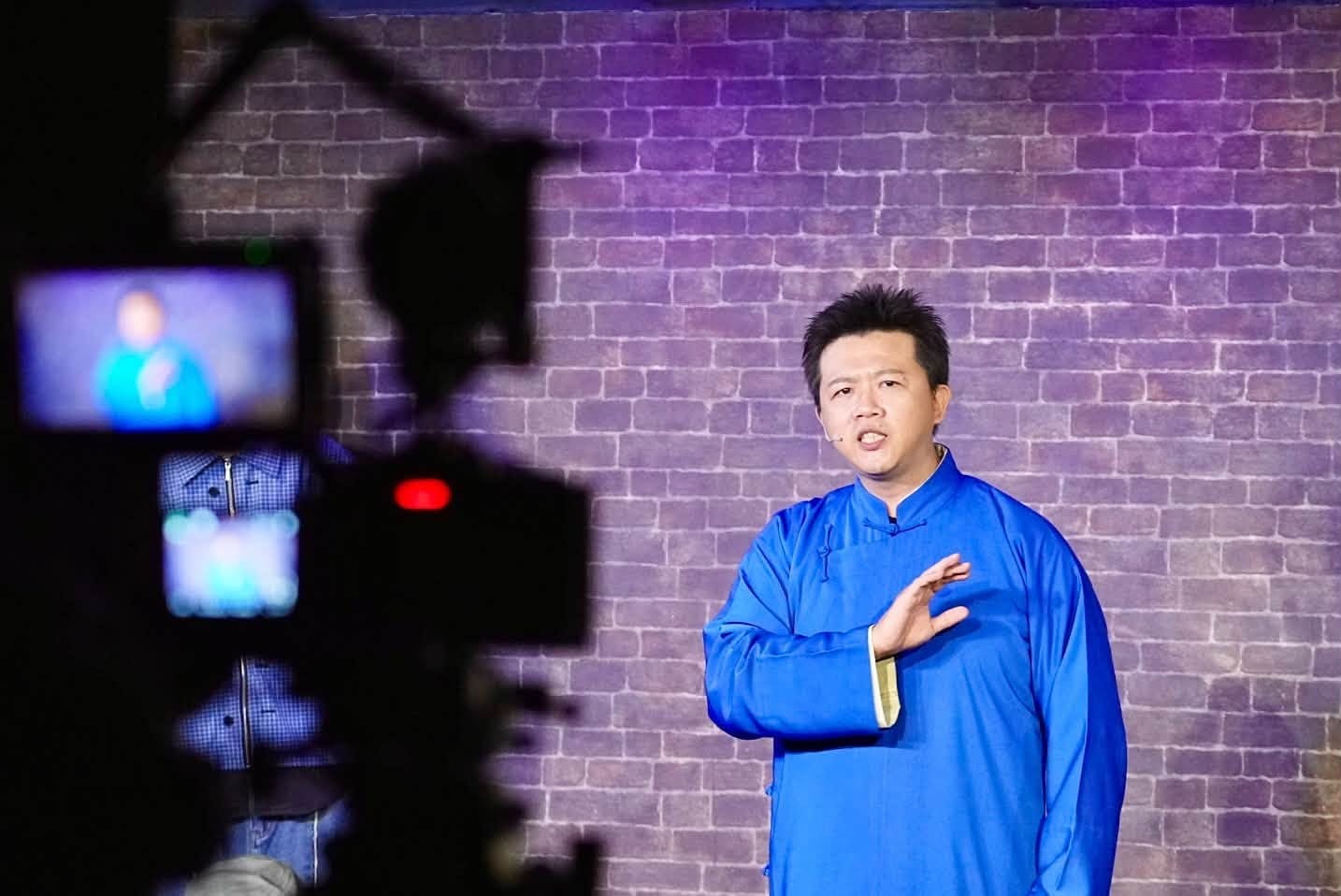
Before calling Xi “the world’s number one fucking idiot,” Yi-hao had quite a few jokes that could make a Chinese nationalist feel uncomfortable. For example, in a 2020 show, he made fun of Xi Jinping and his autocratic rule by comparing Xi to a pet dog.
In Yi-hao’s defense, he mocks not only the Chinese leader. He has also joked about former Taiwanese president Chen Shui-bian and the current speaker of the Congress, Han Kuo-yu. He enjoys political satire. “We are supposed to make fun of politicians,” Yi-hao said.
His comedy is rooted in a deep appreciation for traditional Chinese culture. He studied history at university in Taipei, and his passion for Chinese history shaped his creativity in writing and performing Xiangsheng. He also joined a Chinese martial arts club and practiced for years.
When asked if he’s liked by the pro-China population in Taiwan, he doesn’t deny it but notes an important distinction: “We are the Republic of China,” Yi-hao said, referring to Taiwan’s official name. It dates back to the government that ruled mainland China before retreating to Taiwan in 1949 after losing the civil war to the Communists. His words reflect the irony that Yi-hao, who is proud of his rooted Chinese culture, is now an anti-China icon of sorts.
Yi-hao made fun of Chinese autocratic rule and compared the Chinese leader Xi Jinping to a pet dog in another show in 2020. Source: Huang Yi-hao’s YouTube.
On September 11, 2026, around lunchtime, Yi-hao got his favorite fried chicken and was ready to head home, he recalled. While parking his scooter near home, a car abruptly hit him from behind, forcing his scooter to crash into his legs. He remembered screaming, “What the F,” and two men immediately came down to check his injury.
What Yi-hao didn’t notice was that one person was watching them from afar, reporting everything to the boss who ordered the attack. The two guys apologized and asked if Yi-hao wanted to rest inside their car. “It was that moment I knew something was wrong,” Yi-hao said.
Prosecutors revealed further investigation of Yi-hao’s case in late October — there were five people involved in the attack, incited by a Chinese agent, code “K,” who spent around $13,700 USD to “break Yi-hao’s hands and legs” to stop him from performing on September 20, according to the New Taipei District Prosecutors Office. Besides K, who has already left Taiwan, the five suspects have been indicted.
Before the attack took place, the prosecutor’s office said that the suspect, whose last name is Cheng, is being accused of installing GPS on Yi-hao’s scooter and secretly following him for over a month. He was trying to map out his routine life, down to what time he goes out for lunch.
Video: CCTV footage showed the suspects drove the car to hit Yi-hao when he was parking. Source: ETtoday.
Yi-hao’s attack happened two months before the local election in Taiwan. The prosecutor said the intimidation was meant to target people who intend to speak unpopular opinions about China and create a chilling effect that undermines Taiwan’s democracy.
Puma Shen, who is currently a congressman for the ruling party and is running for Taipei City mayor has been one of China’s main targets for years because of his hard stance on strengthening Taiwan’s defense capabilities. Prosecutors indicted four private investigators in Taiwan for surveilling him and allegedly passing detailed information about his family to two suspects from Hong Kong who have since left Taiwan. The surveillance action dated back to 2024.
Back in February 2024, Puma told The Counteroffensive that his house and car had been intruded upon. One time he found a fake dagger in his home, he said. His daughter was only three years old at the time. “We discussed that one option is to bring her into the public eye so that people around her can understand the risk she could be facing [and protect her],” Puma told The Counteroffensive. But after serious consideration, he decided to wait for her to grow older, when she can take a bus by herself.
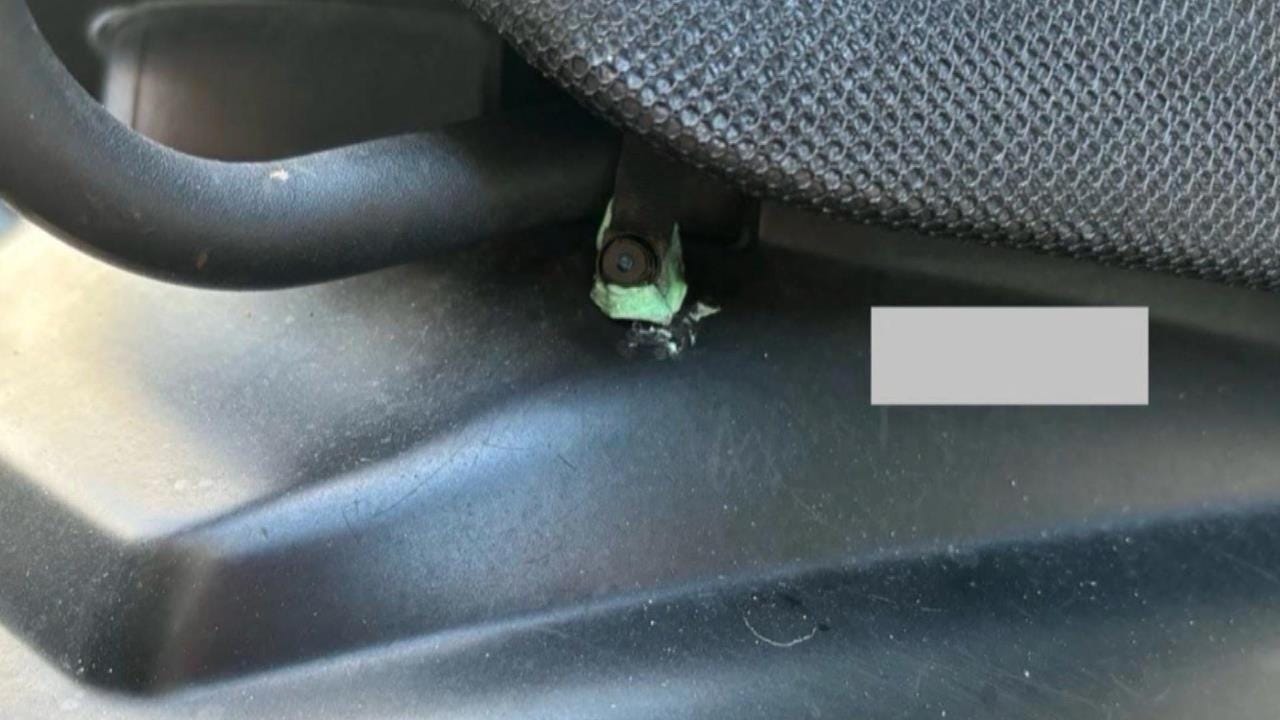
Puma has actively promoted self-defense in Taiwan by learning from Ukraine, which he publicly supports, and visited in September of 2023. He later made a stop in Lithuania, where his hotel was invaded, and he found a warning sticker threatening his life and an unfinished meal box. Puma reported it to the local police but never had a chance to find out who was behind it.
Even though the suspects who were involved in Puma and Yi-hao’s cases are being charged, victims can’t get complete justice under Taiwan’s current law. A reform bill aimed at Chinese agents and the people who back them has stalled in the Taiwanese legislature, where the opposition parties, which favor easing tensions with Beijing, hold the majority.
The current law, the Anti-Infiltration Act, is one of the legal tools available to counter China’s cross-border repression. But it has critical gaps.
The people who attacked Yi-hao can only be prosecuted under other laws for offenses such as attempted assault and illegal collection of personal data, but the law doesn’t carry additional penalties for acting on instructions from hostile foreign forces. The lack of legal tools leaves victims in a precarious situation.
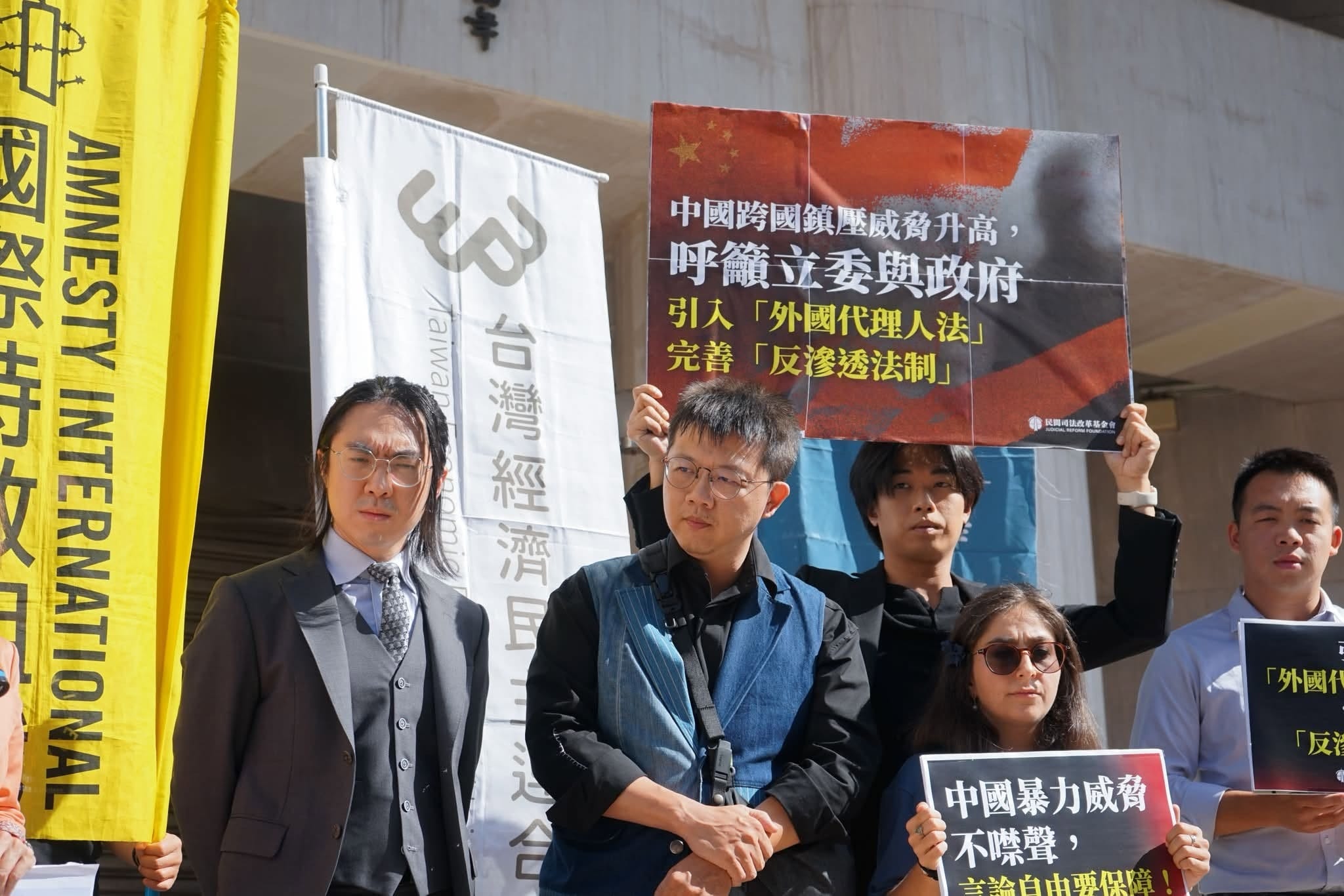
Taiwan’s congress hosted a panel discussion about Chinese cross-border repression on November 5, 2026. “The panel has stalled for over six months,” Yi-hao said with frustration. “Yet this time, no one proposed when the reform act could be ready.” He feels pessimistic that the reform bill will pass, as the opposition parties still dominate the congress.
Yi-hao’s case marks one of the most violent Chinese-funded attacks in recent years, and the first citizen born in Taiwan to be physically attacked and harmed inside Taiwan, according to the Mainland Affairs Council. Chinese agents have records of attacking anti-China public figures physically, but often the attack is focused on shaming the target rather than causing physical harm.
Even before the attack, Yi-hao has been excluded by some Xiangsheng-performed organizations due to his anti-China shows, causing him to lose chances to make money. Still, he refuses to self-censor for a paycheck. “Why should I sacrifice my freedom?”
Interested in topics about Taiwan? Take a deep dive into some of our related coverage.
Why Taiwan had to build its first submarine by Elaine Lin
Xi’s Trump visit puts Taiwan’s AI boom in crossfire by Elaine Lin
Taiwan’s shrinking population is a national security threat by Elaine Lin
Editor’s Note:
Welcome to our monthly Taiwan issue.
Two democracies, thousands of miles apart, are learning the same lesson. When a bigger neighbor claims you as its own, you can’t wait for someone else to keep you safe.
Thank you for helping us tell these stories, from Kyiv to Taipei.
Support us!
POP QUIZ! Test how well you’re keeping up with Ukraine.
Answer: B.
THE LATEST NEWS AT THIS HOUR:
By Myroslava Tanska-Vikulova
Good morning to readers; Kyiv remains in Ukrainian hands.
RUSSIAN CONVOY TURNS BACK AFTER WARSHIP SUNK IN LIBYA: A convoy of Russian ships carrying military equipment, which was heading to Libya under the escort of the frigate ‘Admiral Golovko,’ changed course near the Strait of Sicily. This occurred on November 22, when Ukrainian maritime drones sank the Russian corvette ‘Merkury’ in the Libyan port of Benghazi, 1,240 miles from Ukraine.
The convoy, consisting of the sanctioned cargo ships Maia 1, Lady R, and Lady D, which had departed from Kaliningrad, was likely carrying equipment for Russia’s ‘African Corps’ or the Libyan forces of Khalifa Haftar. The ships have currently halted their voyage in the Mediterranean Sea near Algeria, as Russia attempts to protect its fleet from further attacks.
RUSSIA OFFERS BRAZIL SPY SWAP FOR BEACH SOCCER STAR: Russian authorities have offered Brazil a prisoner exchange. Specifically, they have proposed releasing Brazilian national beach soccer player Letícia ‘Lele’ Villar in exchange for Sergei Cherkasov. The U.S. and Brazil consider him a Russian intelligence agent. According to Bloomberg, Villar has been held in a Russian prison since July 2025 on suspicion of smuggling hashish. She has already appealed to President Luiz Inácio Lula da Silva for her release.
Cherkasov is serving a five-year sentence in Brazil for using forged documents. He is awaiting a decision on his extradition, which both Washington and Moscow are seeking. Brazil previously rejected the U.S. request for his extradition, but the country’s Supreme Court has authorized the Russian national’s transfer to Moscow once local court proceedings conclude.
CHINA IS PRACTICING A MARINE LANDING ON TAIWAN USING CIVILIAN VESSELS: The Chinese military is conducting weeks-long amphibious landing exercises in Fujian Province, 280 km from Taiwan. According to satellite imagery and a report by ingeniSPACE, the Chinese military is testing new tactics. They linked eight civilian vessels (barges and semi-submersible platforms) into a makeshift floating bridge about 800 meters long to transport heavy equipment from deep water to the coast.
The maneuvers have been underway in Dachen Bay since November 1. Security sources estimate that Beijing is using this method to prepare for the rapid seizure of small islands in the first island chain with the help of the civilian fleet. At the same time, experts note that in real combat conditions, such barges would become vulnerable targets.
REMEMBRANCE DAY FOR THE HOLODOMOR VICTIMS:
Today we are not posting our usual ‘Dog of War’ photo, as Ukraine is honoring the victims of the Holodomor, a man-made mass famine. To honor the memory of those who perished, Ukrainians are lighting candles on their windowsills, just as Myroslava did.

Best,
Elaine.
