

At the bottom of this page: Latest news at this hour
Humanitarian ceasefire begins in Oleshky… Ukrainian drone interception rate drops minimally during Starshield slowdown… Russian attacks on energy facilities are war crimes… Ukraine celebrates the day of Ukrainian literature and language…

Editor’s note:
Here in Kyiv, danger has a routine. The siren goes off, we check the monitoring channels to see what’s coming and where, and then we decide: go back to sleep, head to the shelter, or quickly charge our phones and wash our hair while there’s still time.
That routine depends on intelligence from Ukraine’s partners. This month, on several nights, it broke, and the first to pay were the people who ran toward the explosions.
If someone shared this with you, welcome. Subscribe for free to hear from Kyiv what this war looks like up close.
OUR LEAD STORY:
KYIV, Ukraine – For several days in a row, Ruslan Alexeyenko and his wife were wrenched from their sleep by the roar of explosions. Their phones were silent, with no warning that the ballistic missiles were coming.
“They weren’t hitting us, but they were very loud,” Ruslan recalled, how his family immediately rushed to the underground parking, listening to the missiles tearing through energy infrastructure, critical facilities, and ordinary people’s homes, as he pushed his child’s stroller.
He left them there until morning. Ruslan, meanwhile, raced across Kyiv toward the strike site, where his fellow emergency responders were already heading. They had no way of knowing when the next Russian ballistic missile might hit, as fewer drones were being intercepted, which also posed a threat to them.
“During that week, there was one 24-hour period when six people were killed and nine wounded,” Ruslan recalls, describing the toll of Russian ballistic missile and drone attacks he personally witnessed amid unexpected U.S. restrictions on Starlink and ballistic warnings.
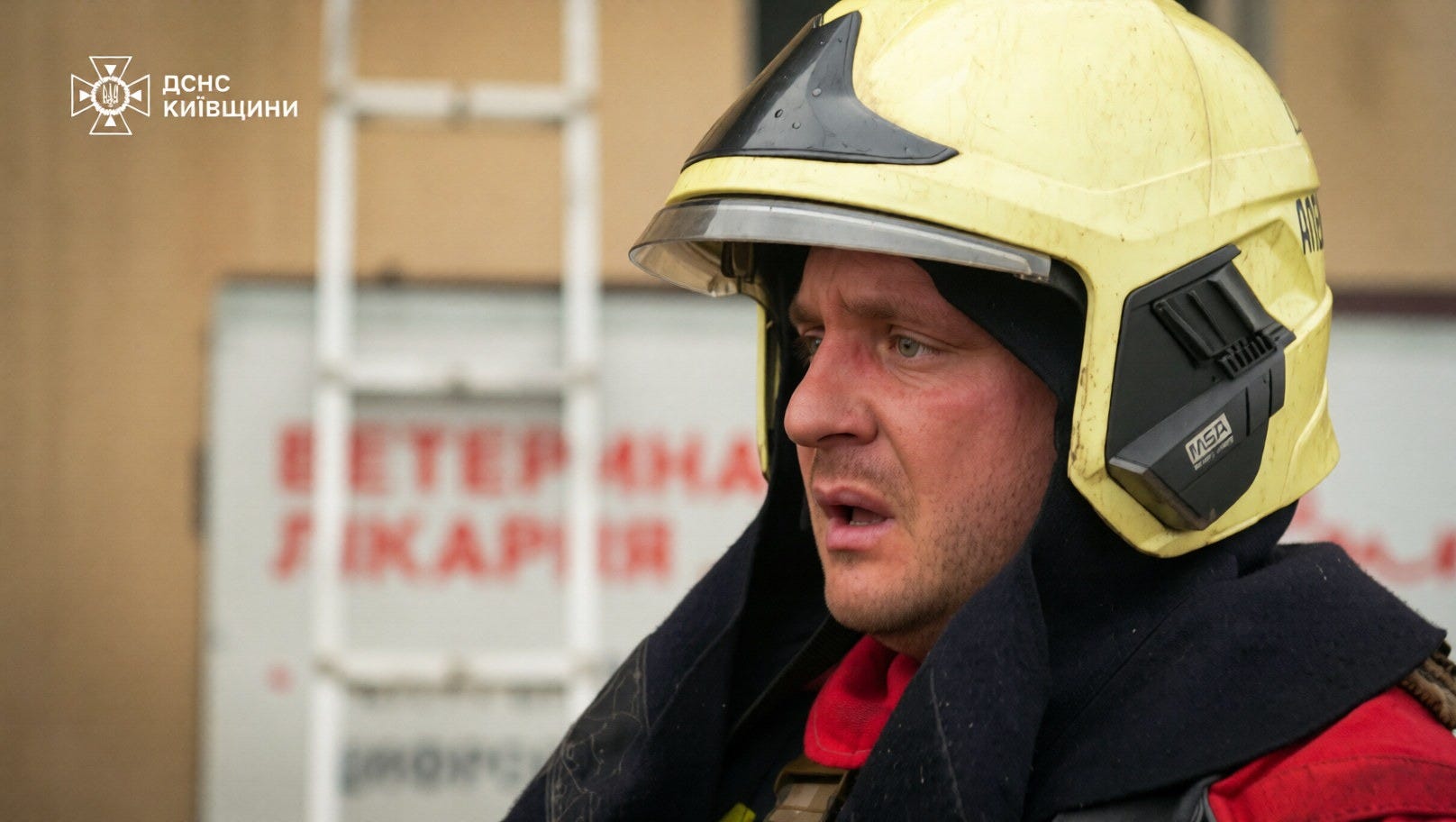
The last two weeks have been chaotic. The U.S. simultaneously restricted military use of Starlink and failed to warn of ballistic threats in time.
In Kyiv, it felt like Groundhog Day because something similar happened last year. Trump already suspended intelligence sharing with Kyiv in March 2025 to force Ukraine to the negotiating table. A year and a half later, the difference is that in March 2025 the U.S. openly confirmed a pause in intelligence sharing, while this time any restrictions may have been imposed quietly, partially, and behind closed doors. Washington still denies them.
For a few days in a row, on October 13–14 and on October 19, Ukraine received no early warnings of ballistic missiles, which are extremely vital for air defense. Civilians were among the first to feel the consequences this time, jolting awake to explosions before the air raid sirens even wailed. Some never woke up.
Along with the temporary Starlink restrictions and nearly month-long delays in approving Patriot missile deliveries, Ukraine and Europe face an uncomfortable question for the second time: what happens if Trump decides to cut off intelligence sharing altogether?
The temporary intel pause became especially dangerous for first responders: without timely warnings, they could end up working in an area targeted for a second strike. For them, knowing whether something is coming their way is a question of life and death.
“We lose our bearings in the airspace. We don’t know what to expect. When we receive a warning, we move to a safe distance. Without one, we’re working at a site that could be hit again,” Ruslan said.
In the last two weeks, Ruslan and his colleagues were fortunate: none of the sites where they worked were struck again while they were there. But over the course of the war, he recalled witnessing at least four or five repeat strikes. It is a well-established Russian tactic to strike a location, then hit it again once first responders arrive.
That makes keeping his team safe one of Ruslan’s top priorities, and the lack of timely warnings makes that responsibility harder. His wife often texts him as he heads to a strike site: “Did you get there safely?”
But Ruslan can never be sure what he’ll find when he arrives. Ballistic missile strikes, he said, tend to leave more vast destruction and more people dead or injured than drone attacks.
“We can sometimes tell by the smell alone that there may be dead people at the scene. It has a sweet note, a smell you can recognize,” he said. “The smell at a fire is different — it’s just burning. Set a tire on fire, walk into a room, and it’ll smell the same … like a chicken someone burned when they were a kid.”
It is still difficult to understand how much the U.S. truly and willingly undermined the Ukrainian war effort. While Kyiv blamed the U.S. three times this month for suspending intelligence sharing after Ukraine refused to halt strikes on Russian oil refineries, Washington claimed that it did not do so. The U.S. officials cited weather and technical problems that allegedly affected missile detection. However, Ukrainian military experts and high officials trust this explanation little.
“Several systems failed at once: the missile warning system, ballistic missile detection capabilities, and Starlink,” believes aviation expert Bohdan Dolintse. “In highly reliable military systems, the probability of failure is one in a million, or even one in tens of millions.”
The truth is the U.S. remains unmatched when it comes to detecting ballistic missile launches and warning Ukraine in time; Washington has invested in these capabilities since the Cold War. Its early-warning system relies on satellites orbiting about 36,000 kilometers above Earth. Because they travel at the same rate as the planet rotates, they ‘hang’ above the same area, monitoring vast swaths of territory around the clock.
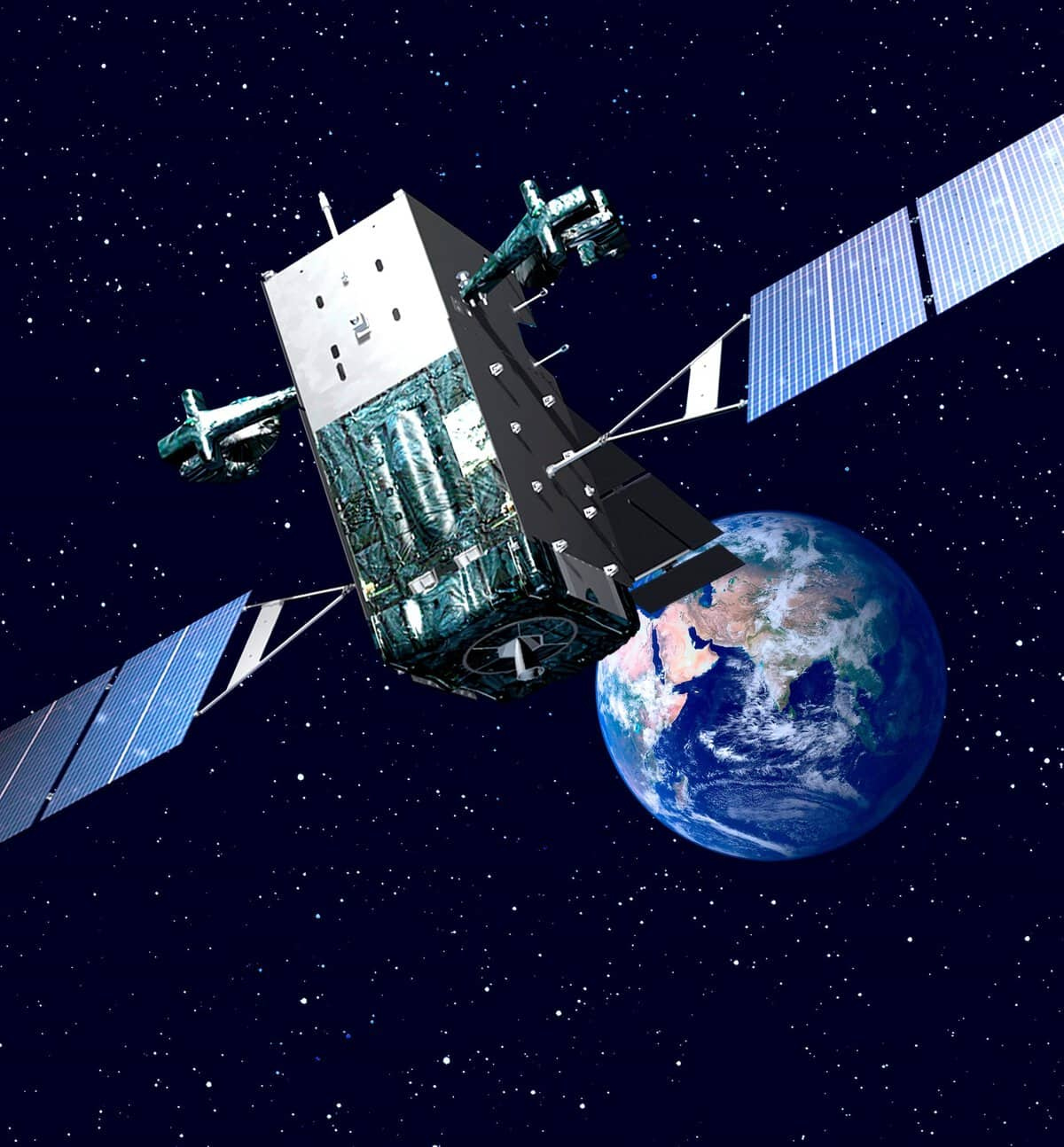
“They can detect any flashes on the ground, any unusual sources of heat. A missile engine produces an intense burst of heat at launch. They immediately warn us when a Russian ballistic missile is launched,” said Valerii Romanenko, an air defense expert.
Europe here can only provide warning data when one of its satellites passes over the launch site, Romanenko said. That is what makes Ukraine still so reliant on U.S. support: Russia can easily calculate when European satellites will be out of range and time its ballistic missile launches to coincide with those gaps. It doesn’t take much — the ballistic missiles can reach Ukraine within minutes.
Without early warnings, Ukraine’s air defenses must waste many more interceptor missiles, treasured more than gold by Kyiv. The U.S. has recently been supplying Ukraine with just 12 Patriot interceptor missiles a month. Russia, meanwhile, can launch 30 to 40 ballistic missiles at Ukraine in a single night.
Even for someone who has led teams of emergency responders in western areas of the Kyiv region throughout the war, this can be hard. When Ruslan held his breath as a 10th grader in the small town of Bobryn, watching the red fire engines, he couldn’t prepare himself for dealing with non-stop drones and missiles more than household fires or burning grass.
“The past four months have been endless work. I’m not ashamed to admit it — my body is exhausted. I asked for two weeks off, went to stay with my parents, got some rest, came back, and got back to work,” he said.
The Counteroffensive noticed exhaustion in all three first responders it spoke with, hidden beneath their smiles.
“Sometimes, all you need is a good night’s sleep. You just want to sleep. I spend my free time just with my wife and cats,” said Oleksandr Tkach, a Kyiv firefighter and rescue worker, who recently dealt with a drone double-tap hit on a cable spool warehouse.
He explained that when there is a threat, they drop everything and run for shelter whenever they can: “By the time we get back, two or three times as much will have burned.”
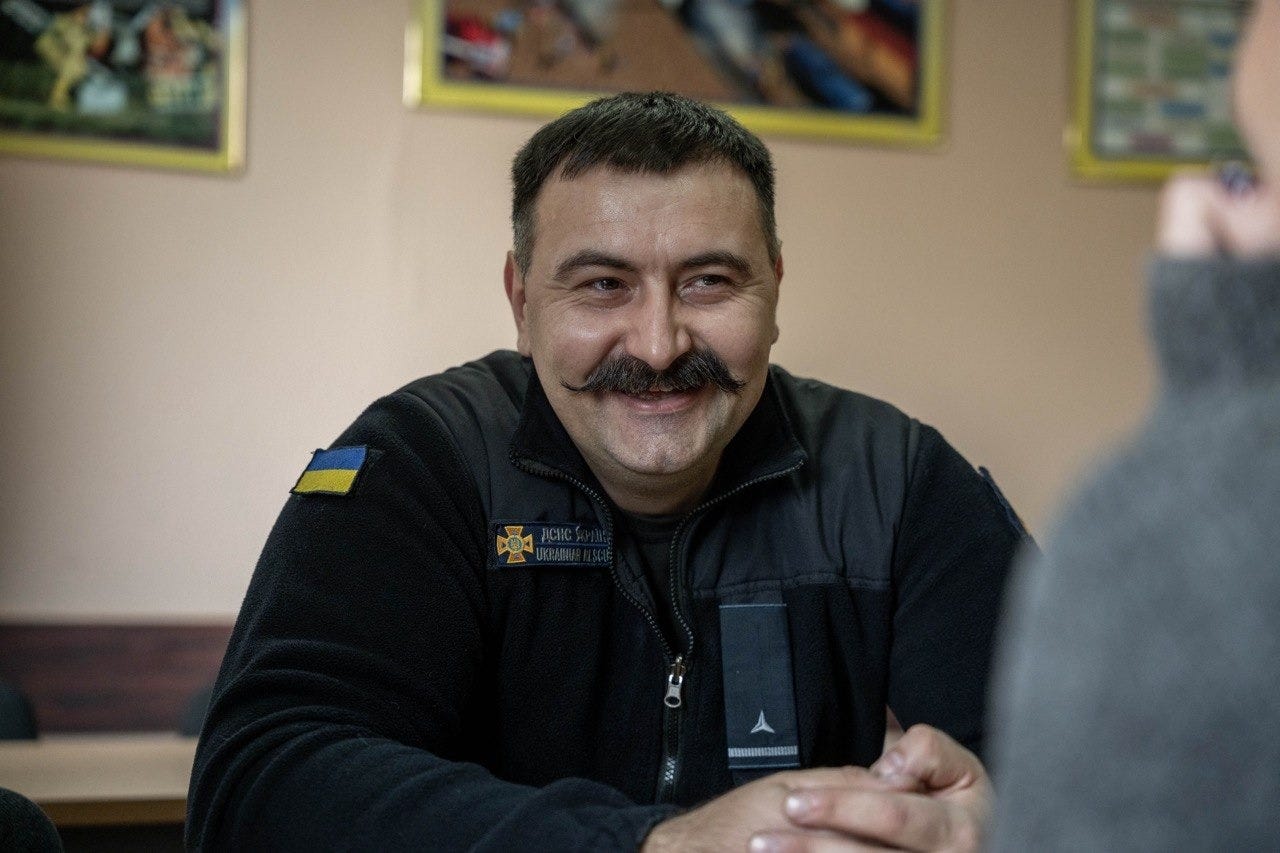
That makes warnings especially important for first responders, who need time to evacuate a strike site. “If you’re on a roof or working inside a building, it can take three or four minutes just to get out,” said Vladyslav (surname withdrawn for security reasons), head of a fire and rescue unit in Dnipro.
However, Vladyslav said that when people are killed or injured, his crew stays at the scene regardless of whether a threat warning is issued. They continue working even if Russia could strike the same location again.
“It would look pretty bad if people were trapped under the rubble and the firefighters ran away,” he said.
What is still surprising is that, unlike in March 2025, when Washington publicly suspended intelligence sharing, there have been no public reports that intelligence for planning military operations was also cut off this time. In August, Politico disclosed that Washington was helping Ukraine carry out deep strikes, including against Russian energy infrastructure.
After the March incident, France also stepped up to become Ukraine’s leading partner in that area. Europe now provides roughly two-thirds of Ukraine’s intelligence, with Paris playing the most important role here. But the methodology for calculating that figure, or the specific data Europe delivers to Kyiv instead of Washington, has not been disclosed. “This is classified information,” Michael Benhamou, a former political adviser to NATO and the French army, told The Counteroffensive.
Still, Russians managed to use the lack of ballistic warning reports to intensify attacks on energy facilities, killing at least 3 people and injuring around 30, a child included.
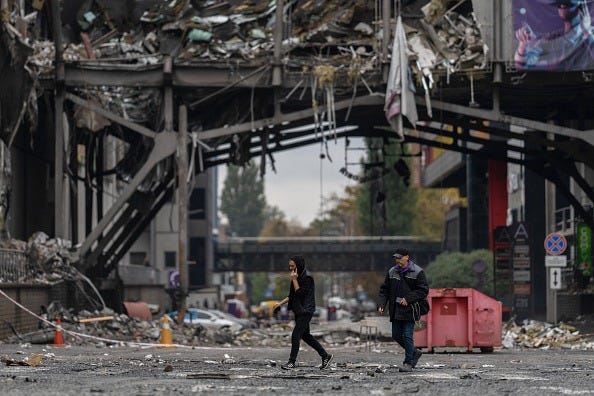
Rescuers under Ruslan’s command can always turn to the service’s psychologists when the emotional toll of repeatedly pulling bodies from the rubble becomes too much. He has never sought that support himself, saying he believes he has “gotten used to it” after so many years on the job.
But some scenes still get to him: “What’s most frightening for me during these operations is when there are small children involved. Especially, God forbid, when they’re among the dead.”
Eight months ago, Ruslan became a father for the second time. He devotes whatever free time he has to his two children, even though he must remain on call, ready to rush out whenever another Russian strike hits, day or night.
On October 20, Zelenskyy said Kyiv and Washington restored intelligence sharing as Ukraine began preparing for yet another round of negotiations, expected in November.
But as long as Trump can use intelligence sharing as leverage to pressure Kyiv, the threat will continue to hang over first responders like Ruslan and his colleagues, leaving them questioning: Will we save people’s lives or become another victim?
Interested in reading more similar stories? Check these out:
Trump’s Starlink betrayal will cost lives by Mariana Lastovyria
What Trump’s intel pause cost Ukraine by Mariana Lastovyria
Can Russia cut off Ukraine’s internet? By Oleksandra Khelemendyk
Editor’s Note:
Here in Kyiv, danger has a routine. The siren goes off, we check the monitoring channels to see what’s coming and where, and then we decide: go back to sleep, head to the shelter, or quickly charge our phones and wash our hair while there’s still time.
That routine depends on intelligence from Ukraine’s partners. This month, on several nights, it broke, and the first to pay were the people who ran toward the explosions.
Thank you for helping us keep reporting; support our journalism!
THE LATEST NEWS AT THIS HOUR:
By: Mariana Stadnyk
Good morning to readers; Kyiv remains in Ukrainian hands.
HUMANITARIAN CEASEFIRE BEGINS IN OLESHKY: At 3:00 a.m. Kyiv time a ceasefire brokered by the U.S. First Lady Melania Trump came into effect in the Russia-occupied Oleshky in the Kherson region of Ukraine. A humanitarian mission is set to take place during the ceasefire. The roads to Oleshky have been mined and around 2,000 people, including children, have been left without food and medicine for months. Ukraine has previously delivered food and medicine using drones.
Civilian representatives from both sides, as well as an “impartial American media organization” will visit Oleshky, determine the needs of civilians and document the process. The mission will clear the roads of mines, deliver necessities and evacuate civilians. Zelenskyy was previously cautious that Russians would create evacuation routes only towards Russia, making it impossible to evacuate to Ukraine.
UKRAINIAN DRONE INTERCEPTION RATE DROPS MINIMALLY DURING STARSHIELD SLOWDOWN: As a result of the Starlink slowdown between October 14 and 24, which impaired Ukrainian air defense systems, the jet-powered Shahed interception rate dropped from 77 percent to 74 percent, the ISW reported.
Ukraine managed to keep up with its interception rates by relying more on fighter jets, than on interceptor drones, affected by the slowdown. The jets shoot down drones with air-to-air missiles or guns. However, this requires extremely skilled pilots and increases aircraft maintenance requirements and diverts them from other missions.
RUSSIAN ATTACKS ON ENERGY FACILITIES ARE WAR CRIMES: The UN Commission of Inquiry believes that Russian authorities knew that the strikes against Ukrainian energy infrastructure would affect civilians, especially in the winter, and carried them out intentionally. The Commission believes that it was Russia’s state policy to deprive Ukrainian civilians of basic necessities.
The consequences of Russian attacks were particularly severe last winter, when temperatures dropped to more than minus 20 degrees celsius. Prolonged periods without heating, electricity and water impaired people’s physical and mental health, especially affecting the elderly and families with children.
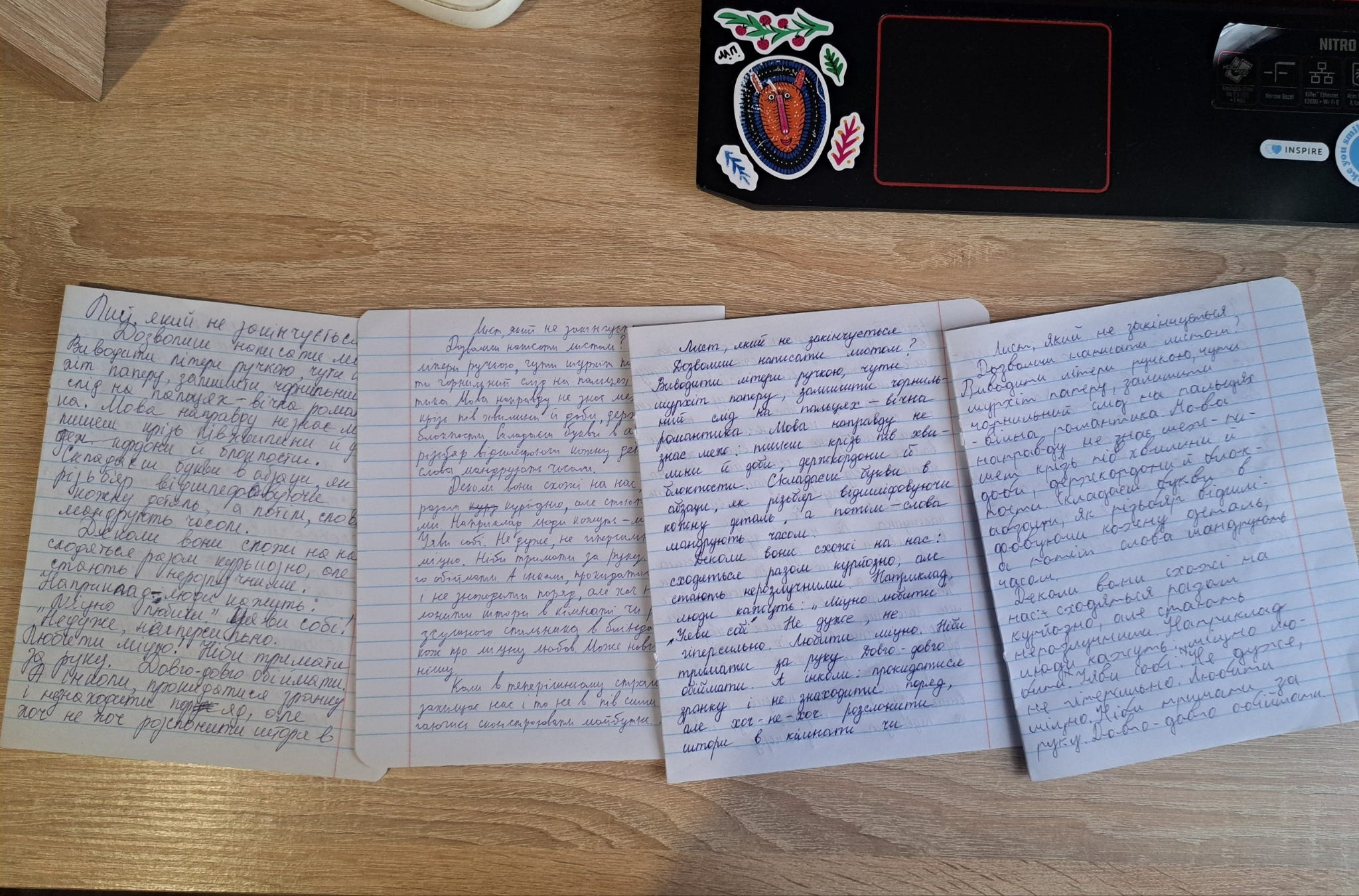
UKRAINE CELEBRATES THE DAY OF UKRAINIAN LITERATURE AND LANGUAGE: Each year on this day Ukrainians write a nation-wide dictation contest to test their knowledge of Ukrainian and remember its importance. The Counteroffensive has already covered this holiday.
Our reporter Daria and her family joined the dictation contest today.
DOG OF WAR:
In this weather, Aster wants to do nothing but sleep.

Stay safe out there!
Best,
Mariana.
Sorry to read about the horrors of Russia's was on Ukraine. Unfortunately, I think it is likely that our gilded leader will take more actions favoring Russia after next weeks election. The time between the election and seating of the new congress, will be a consequence free time for him. I had hoped that he would betray his mentor Putin as he has most of his helpers, but that does not appear likely now. The rage monster will strike somewhere.
I am so sorry.